

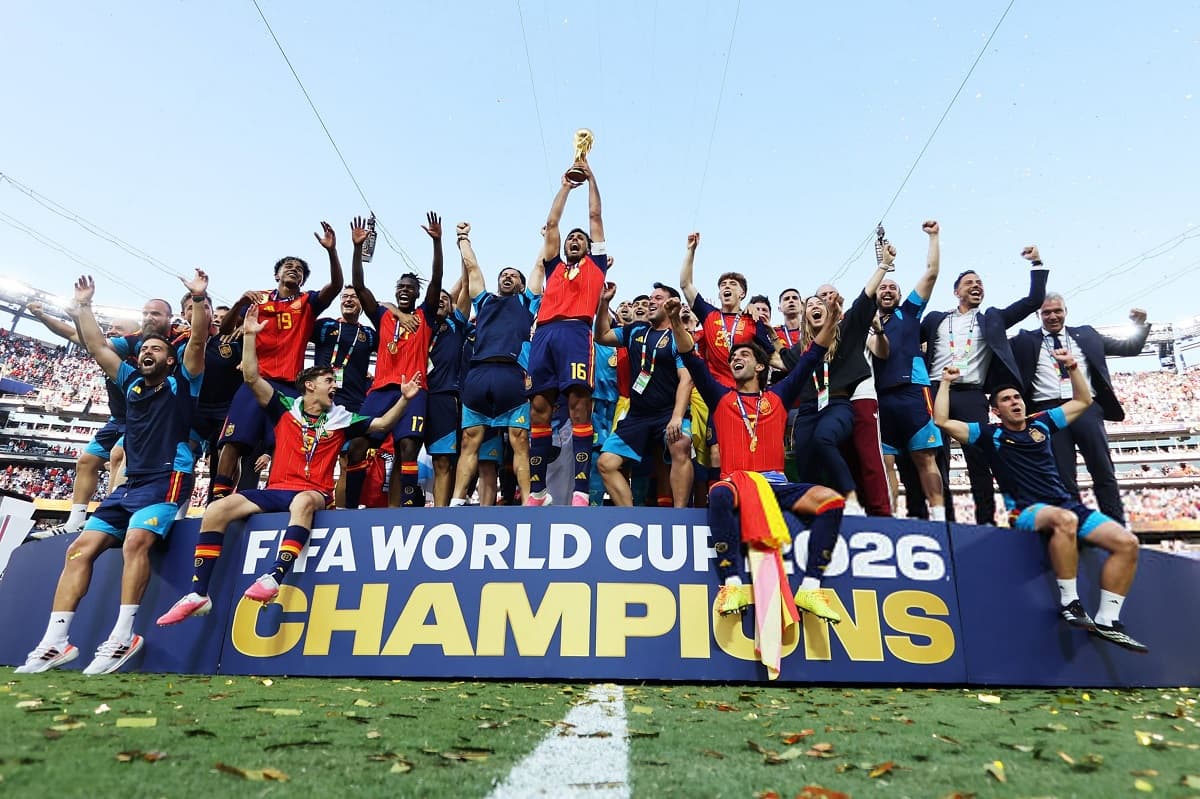
Spain completed their journey to the top of world football on Sunday, moving from elegance to endurance, from fluid passing to defensive resilience, and still arriving exactly where they wanted to be — as World Cup champions with the ball at their feet and confidence running through the team.
Their 1-0 victory over Argentina was not a departure from their footballing identity, but a powerful confirmation of it. Spain continued to pass, control and protect possession as if the ball was a national treasure, refusing to panic as Argentina resisted and the final moved deeper into extra time.
In the end, fittingly for a team built on the belief that no individual is greater than the collective, the decisive moment came from the bench. Substitutes Nico Williams and Ferran Torres combined for the winning goal, marking the third time during the knockout stages that a replacement had produced Spain’s match-winning contribution.
That moment revealed the essence of Luis de la Fuente’s side. This is not a team built around individuals demanding the spotlight. It is a perfectly balanced system where every player understands the role, whether they start the match or enter in the final minutes.
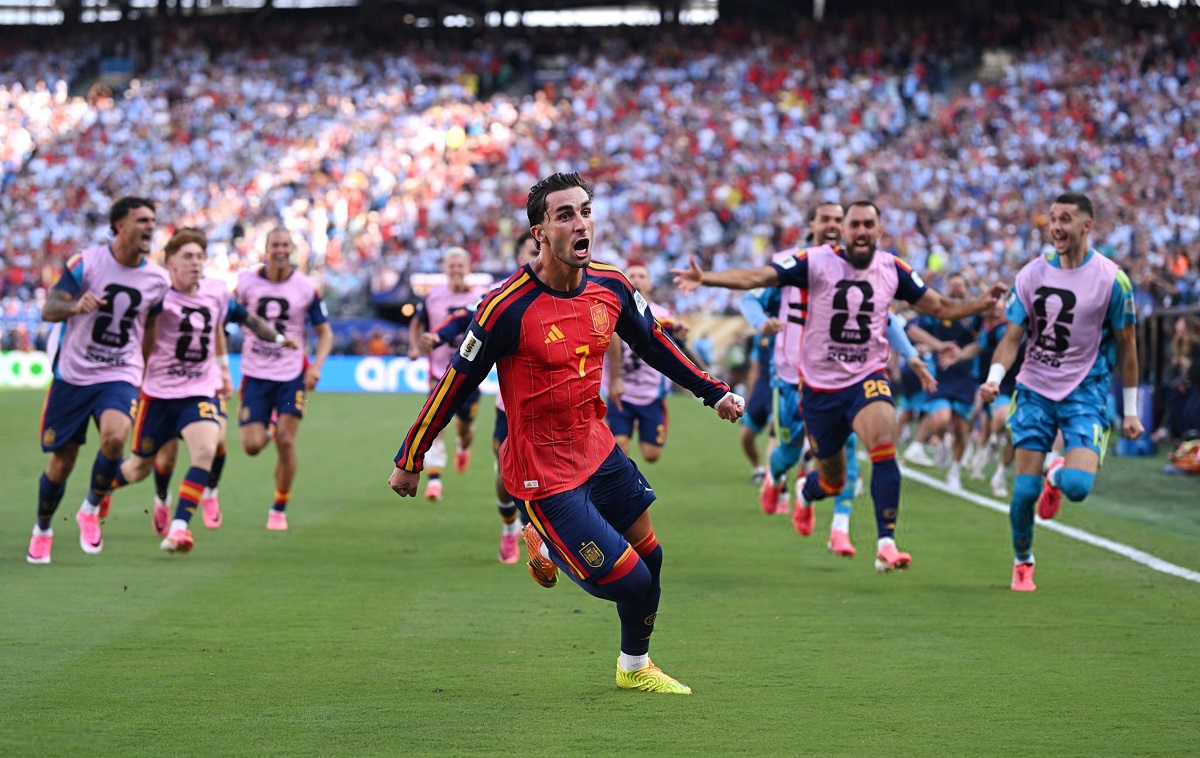
Spain finished the final with more than 65% possession, 12 shots on target and more than twice as many completed passes as Argentina, who managed their first shot — and one off target — only near the end of extra time.
It was dominance, but not destruction. Spain still had to fight for the trophy. Their familiar weakness, the absence of a traditional number nine, was again visible in the number of chances they created but failed to convert.
Yet if a lack of a ruthless striker remains their biggest vulnerability, it is almost the only weakness in a team otherwise defined by collective belief and tactical clarity.
Spain’s stars share the spotlight
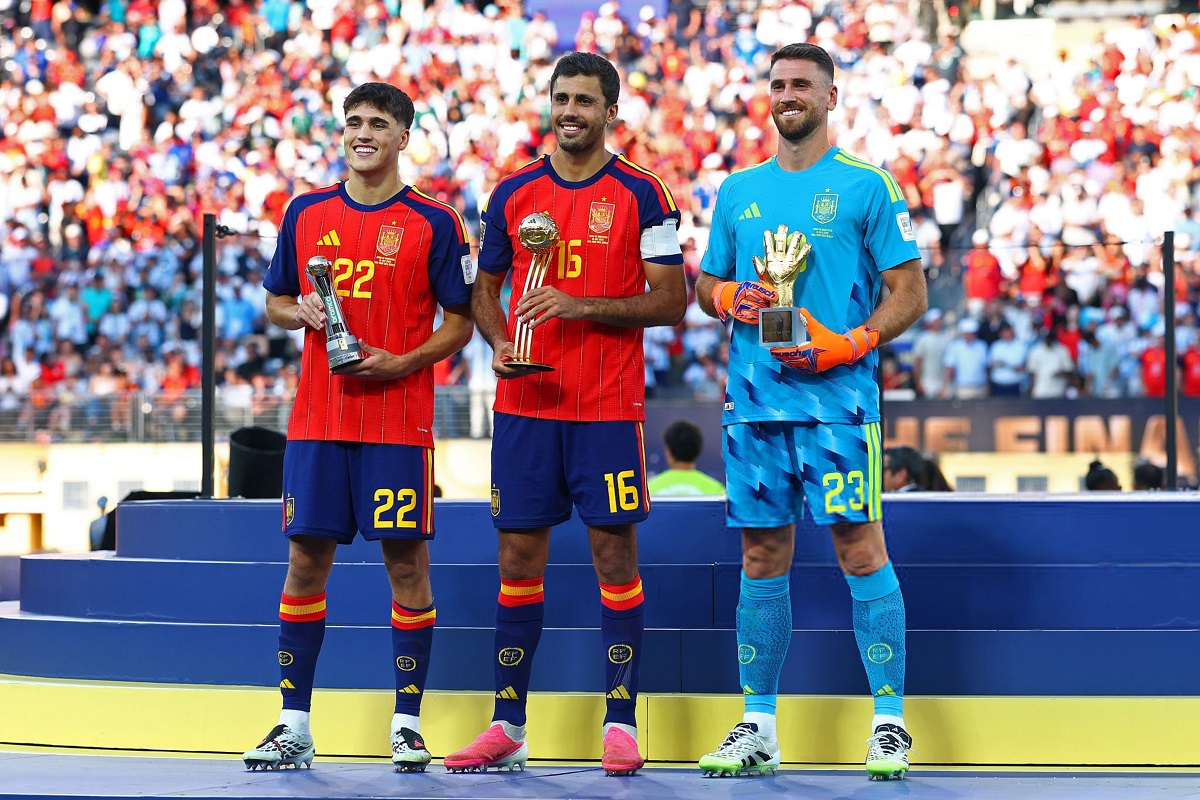
Spain’s triumph was built on teamwork, but several players earned individual recognition for their exceptional performances throughout the tournament.
Pau Cubarsí was named Best Young Player, Unai Simón claimed the award for the tournament’s best goalkeeper, and Rodri was chosen as the Most Valuable Player. The only major individual prize that escaped Spain was the Golden Boot, which went to France forward Kylian Mbappé.
Even that felt appropriate. Spain’s success was never about one unstoppable goalscorer. Their 14 goals across eight matches were shared among eight different players, underlining the depth and balance of the squad.
It followed the same pattern as their European Championship triumph in 2024, when Spain scored a tournament-record 16 goals through 10 different players.
The victory over Argentina also extended Spain’s unbeaten run to 38 matches, surpassing Italy’s previous record and reinforcing their dominance in international football over the past three years.
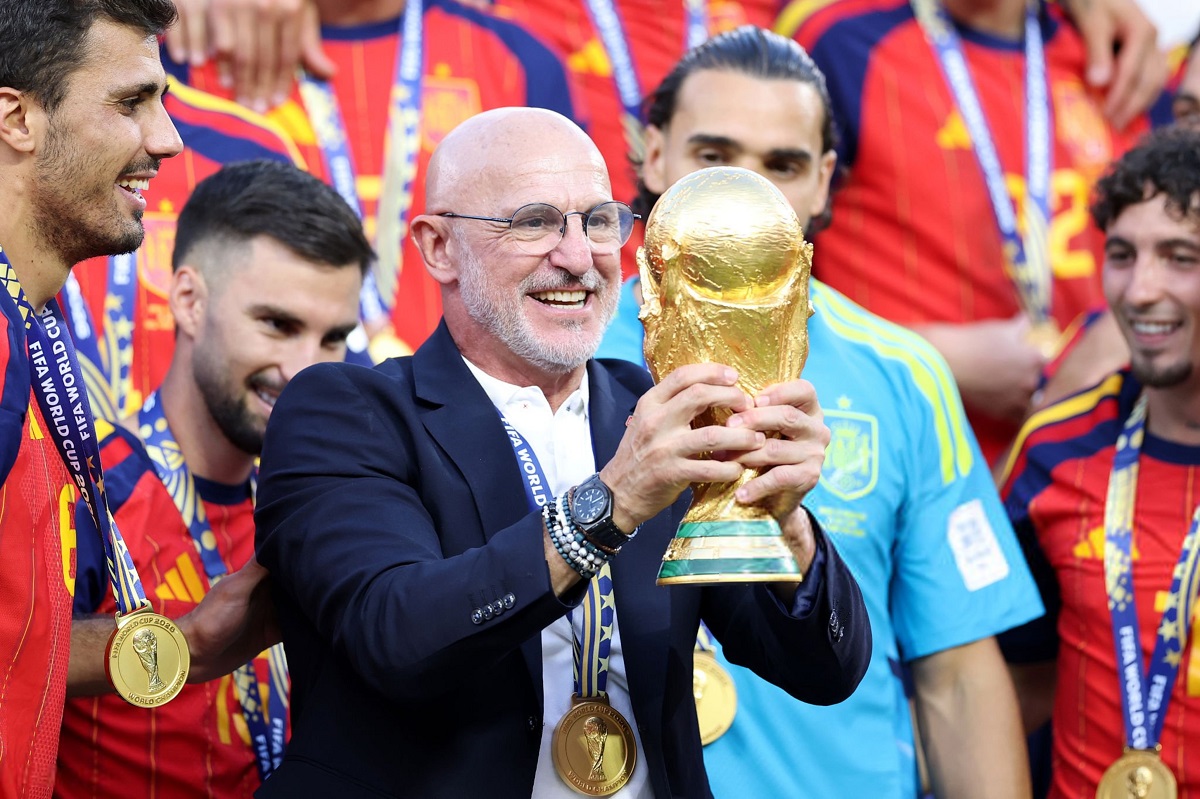
De la Fuente’s vision shapes a world champion
The World Cup title also represents a remarkable personal achievement for Luis de la Fuente, whose journey to the top has been anything but conventional.
Once mocked by sections of the Spanish media as Luis de la “Who?” after spending much of his coaching career working in Spain’s youth system, De la Fuente has now turned years of development work into the biggest achievement in football.
His success has come from building a team where structure, versatility and collective responsibility matter more than individual fame. Every player knows the system, and every player is capable of making the difference.
This Spain is also a reflection of the country itself — a team formed by different regions, cultures and identities.
Players from the Basque Country such as Mikel Oyarzabal, Unai Simón and Mikel Merino share the stage with Borja Iglesias from Galicia, Ferran Torres from Valencia, Rodri from Madrid, Fabián Ruiz and Gavi from Andalusia, and Pedri from the Canary Islands.
Cubarsí and Marc Cucurella represent Catalonia, while Lamine Yamal and Nico Williams highlight the influence of immigration and the modern, diverse identity of Spanish football.
Spain’s strength has always come from its variety of backgrounds and traditions. On Sunday, those differences did not disappear — they became part of the same story.
For one unforgettable night, football achieved what politics often struggles to do: it brought Spain together. And it did so through the game that has always defined its identity — controlling the ball, trusting the system and believing in the collective.