

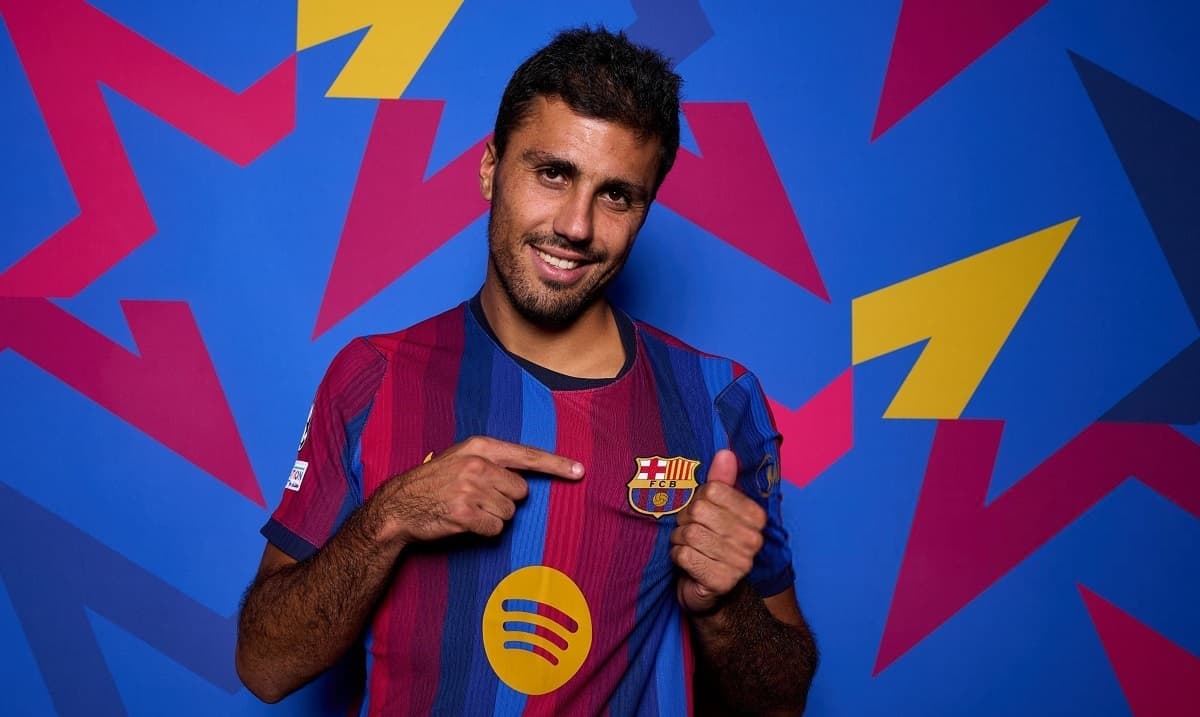
Rodri Hernández Cascante, known as Rodri, was FC Barcelona’s biggest signing of the summer. Somewhat surprisingly, because he had been seen as being closer to Real Madrid, the former Manchester City player ultimately chose the Catalan club. Perhaps that’s why Barça fans have welcomed him with so much affection that he’s genuinely amazed by it.
A Champions League winner, World Cup winner, European Championship winner, and Ballon d’Or winner, Rodri arrives with a message that is both ambitious and realistic: he believes the team is capable of winning the Champions League, but he also thinks there are still areas that need improvement.
Barça have taken 15 points from 15 in La Liga and also won their Champions League game. It’s been a phenomenal start.
Yes, it’s very important to start well. I wouldn’t say it’s decisive, because ultimately what matters is how you finish, but we’re very happy. I think it’s especially impressive considering that a lot of the players have come back from the World Cup without having had an extensive pre-season. So, so far, I’d give the team a 10 out of 10.
When did you feel that, after deciding to leave City, Barça was the right place for you?
It was more of a process than a single decision. First, you have to recognize that your cycle has come to an end and that you perhaps want a new challenge, somewhere you can continue building your career.
I have to thank City for everything they’ve given me. Those seven years were unforgettable, both personally and football-wise. From there, when the opportunity to join Barcelona came up, I realized it was the best option for me for many reasons.
I’ve always based my decisions on the sporting side of things—on where I believe I’ll be able to win, be happy, and, above all, continue growing as a player. That’s why I chose Barça, also because of the generation of players they have and what Hansi is managing to build.
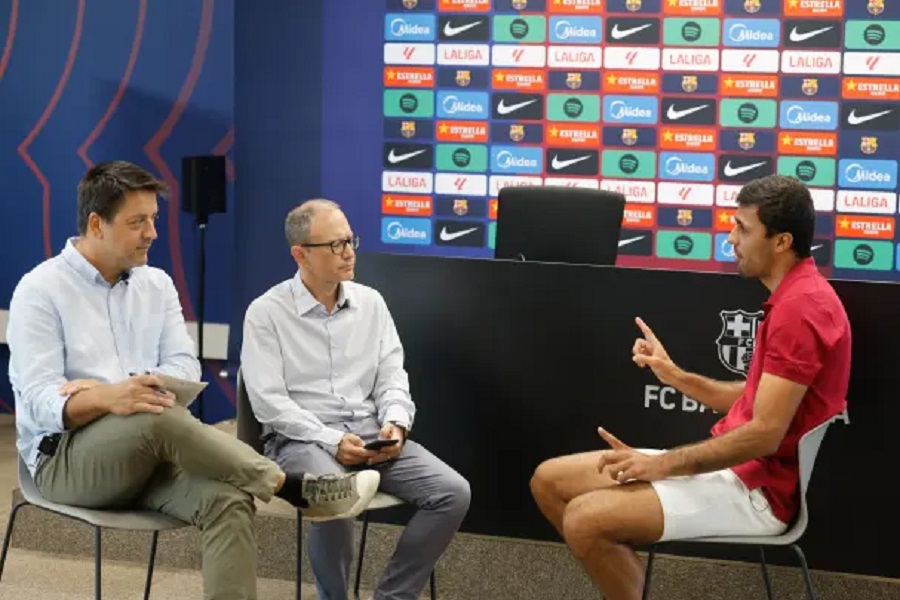
It’s no secret that Real Madrid were also interested in you. What made you choose Barça’s project?
The first thing I have to say is that I would have liked those two or three weeks of vacation to be peaceful, but they definitely weren’t. I had to analyze a lot of things and make such an important decision when both clubs are among the best in the world.
In the end, I made my decision based on the sporting side of things—on what excited me a little more and where I felt I could win and grow more as a player.
It wasn’t an easy decision at all. Saying no to Madrid isn’t easy, especially because they treated me exceptionally well. But in the end, Deco and Hansi’s leadership convinced me.
Mourinho has said publicly that he spoke to you. What did he say?
Well, I don’t think it would be right to reveal the details of a private conversation, but obviously he expressed how much he wanted me to join and what he thought I could bring to the team.
He treated me very well. When I made my decision, I also called him to thank him for his interest and for the way he treated me.
I think he’s a great manager. I’ve seen what he’s done wherever he’s gone during his great spells, and Real Madrid are going to be a very tough opponent in this league.
You also spoke with Flick. How did he convince you?
It’s also important what a club is able to convey to you. When you look at a club from the outside, you see what’s there and what it projects, but you also need to understand what it actually makes you feel.
As for Hansi, what attracted me most was simply the kind of person he is. One of the first things he told me was how much he wants to improve every single day, to never be satisfied, which really fits with my philosophy: never stop, never think you’ve reached your limit, and always demand more from yourself.
That’s what will sooner or later lead you to success. I believe Barcelona are at that stage where they can still improve and reach the level of excellence that can allow them to win major European trophies, having already achieved success domestically.
And how did Deco convince you?
At no point did they put any pressure on me whatsoever. They all expressed how much they wanted me to join, how much they wanted to work with me, and what they felt I could bring to the team.
I really liked the way they handled it. There was no sense of anxiety or desperation. They simply conveyed how excited they were about me becoming part of the project they were building and how they felt they needed someone like me.
Above all, I really appreciated how naturally they communicated all of that to me. It felt very familiar, like a family-oriented club, and that really appealed to me.
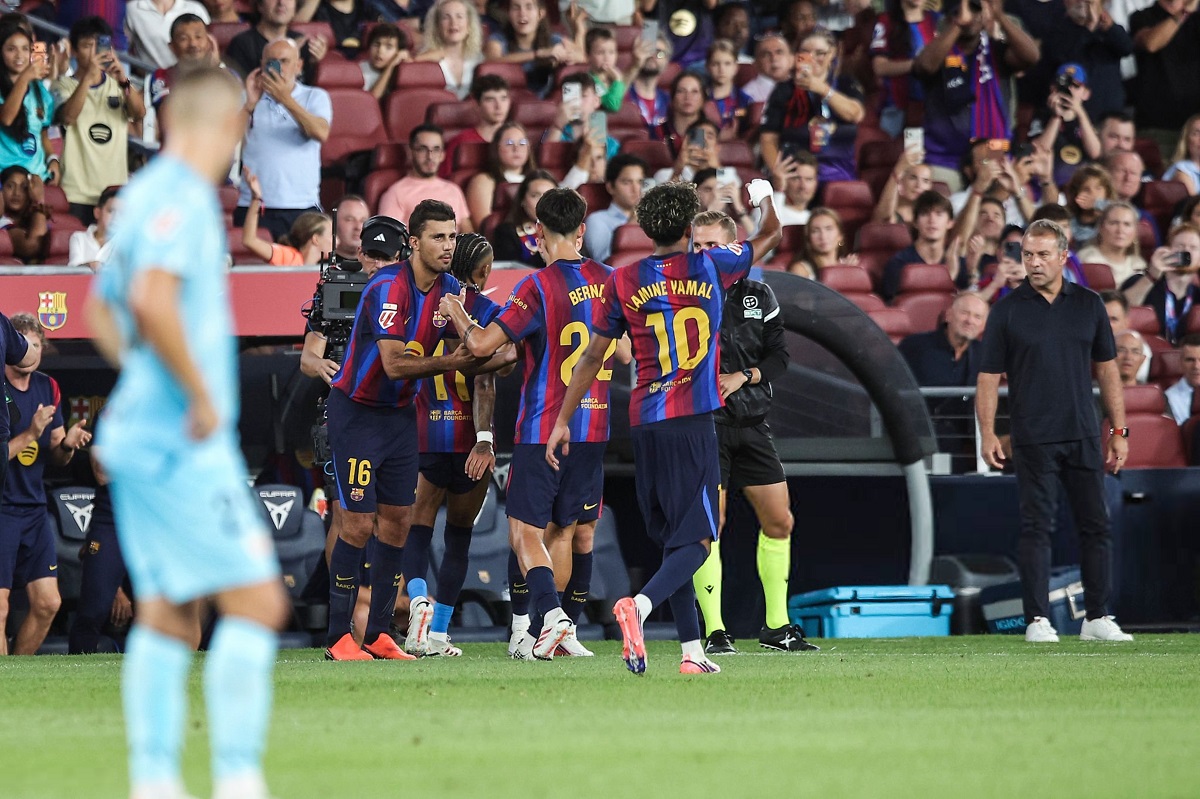
So it wasn’t a case of Barça going after you just to try to derail Madrid’s plans, right?
No. What I mean is that it wasn’t about trying to convince me with financial figures or anything like that. It was much more about football—what they believed I could bring to the team, both on and off the pitch. And I really liked that.
To what extent do you think the fact that you were linked with Enrique Riquelme may have cooled the Madrid hierarchy’s interest in you, so they didn’t go all-in on signing you?
Honestly, I stayed out of all of that because, if I remember correctly, it happened during the World Cup. I was completely focused on my national team and on achieving what is, to this day, the most important milestone of my career.
It was also said that the situation may have cooled because of the boycott he carried out with Vinicius at the Ballon d’Or ceremony that you won.
As I said at the time, it didn’t affect me because that was my day. I didn’t think there was much point in talking about people who weren’t there and who weren’t part of that ceremony or that very special moment for me and my family.
Anyone who knows me knows that I try to distance myself from these kinds of things, as well as from the media side of things. I focus on football. In that sense, I’m very English, you know? The Premier League is about football, and not much else.
What do you think you can bring, both in terms of your style of play and tactically, but also to the dressing room, to this group and this club?
I think I can contribute in several different ways. If we’re talking about experience and leadership, I believe I can make a big contribution to a fairly young group of players who perhaps haven’t faced certain situations as many times as I have. I think bringing that experience is important for a team like this.
From a footballing perspective, I’m here to adapt to the team, contribute, and make the most of my strengths. I’m joining a team that already works well and, as we’ve seen, is already a winning team.
Does Flick’s high defensive line worry you?
Well, from the outside, obviously you have questions about what it will be like to play with such a high line. But in practice, it’s different.
When I was playing at City, Klopp’s Liverpool played the same way. They pushed the defensive line very high and played offside. And when you play against them, you realize that if you have players who press aggressively, like we do, they don’t give you any time to think. And when you get even the slightest second to think, they force you to play that perfect pass—and that perfect pass is very difficult to execute.
We used to try to break Liverpool’s defensive line under Klopp, and we struggled a lot. So for me, having a coach with a different perspective on the defensive line is something that enriches me and excites me, because I can learn from it.
I’ve worked with many different coaches, like Cholo, Pep, Luis Enrique, and De la Fuente, and now I’ve found myself working with a coach who has this philosophy. It gives me another opportunity to develop my tactical understanding of the game.
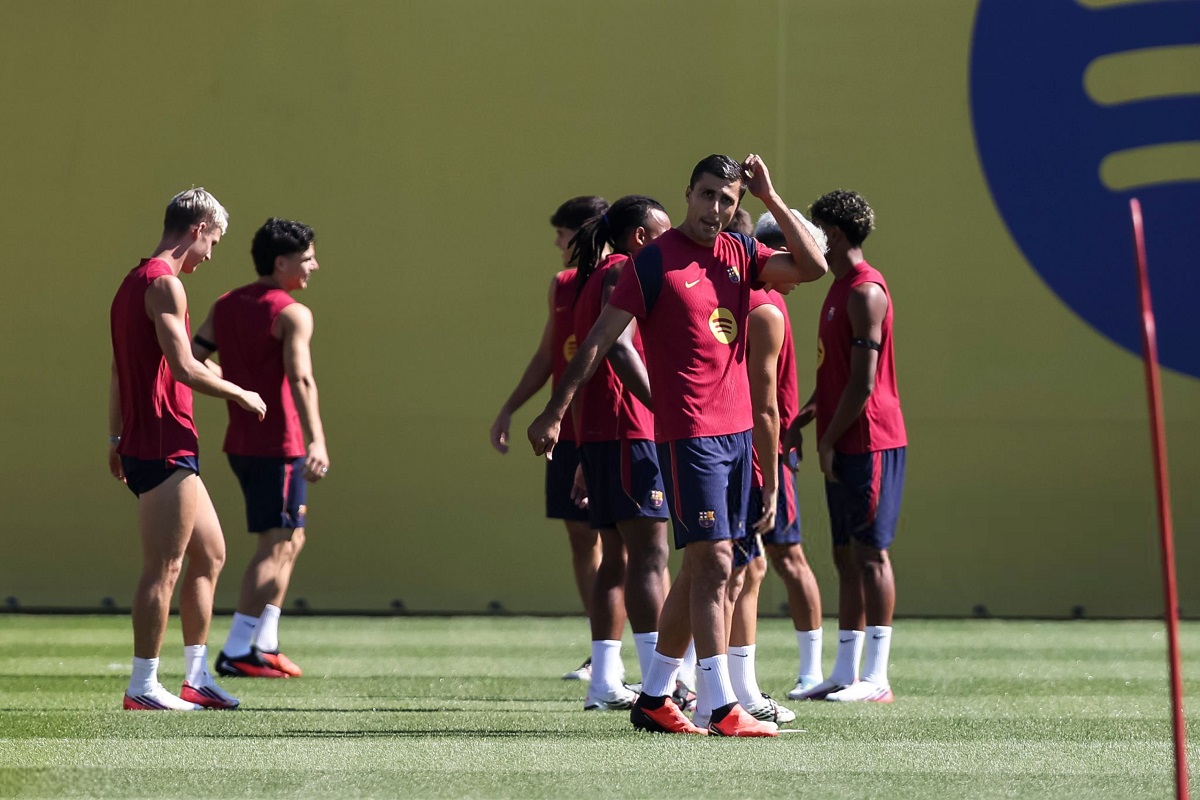
Let’s talk about Pedri. What can he bring to you, and what can you bring to him?
As for what he can bring me, it’s a constant passing option. You know that you can give him the ball and he’ll find a solution to the situation.
And I think that’s the best thing you can have alongside you when you’re playing as a No. 6. Having an outlet, having a player who can link you with the attacking players, with the security and ability he has to evade pressure, play first-time, and make intelligent decisions—it gives you that option, obviously.
I think I can bring him structure and solidity, so he doesn’t have to move around as much. I keep telling him that he’s a player who moves from side to side a lot, and it’s not always necessary.
A lot of the time, if you wait a little longer for the ball, you don’t tire yourself out as much and you can still contribute in exactly the same way.
I also think I can help him with his positioning and space occupation. I believe he still has room to improve without the ball. He’s an intelligent player who can win the ball back a lot—and he already does—but he can win it back even more.
A lot of the time, winning the ball comes from positioning rather than aggression. So I think that’s an area where he can develop, and I can help him with that too.
Which player in the team has surprised you the most?
Raphinha has surprised me a lot. Not because I didn’t know what kind of player he was, but he’s an incredible player, especially considering the level of form he’s in.
I actually laugh about it because he’s the same age as me, yet he seems to have this incredible physical capacity... Obviously, we’re very different types of players, but anyone would look at him and think he was 24 or 25.
But no—he’s 30, just like me, and he has this absolutely phenomenal physical ability.
Everyone knows that the Champions League is Barça’s main objective. Based on what you’ve seen, do you think it’s a realistic target this season?
Yes, obviously I think it’s a realistic target. It’s, so to speak, the one step we’re still missing to establish ourselves and show Europe what kind of team we are.
That said, I don’t think we’re the favorites. We have to understand where we’re coming from, and we have to understand what it takes to become champions. This team still needs to fine-tune a few things to be able to win it.
Players like me have also come here for that reason—to keep improving and give the team certain qualities that are important when you’re trying to win a unique competition like the Champions League.
Because I don’t think the Champions League is a tournament about who is the best team. It’s a tournament about moments—recognizing those moments and knowing how to handle them. And I think that’s perhaps the area where this team still has room to grow.
But if you ask me whether we have a chance, that’s exactly why I came here.
What exactly do you think needs to be fine-tuned? Give us a couple of examples. We’ve seen Barça have a center-back sent off in the first leg against Atlético and another one in the second leg. You go to Inter’s stadium, take the lead, and end up losing. You score six goals over the two legs, but they score seven.
It’s basically what you’re saying: controlling those moments that can make the difference in a knockout tie.
When the big knockout games come around, things like red cards, penalties, or perhaps conceding more chances than you should—those are the things that determine whether you go through or not.
So perhaps it’s more valuable not to be quite as spectacular offensively, but to be more consistent and more solid. The teams that have managed to win the Champions League have shown us that.
That’s the area where we can improve, and I’m sure of it. But it’s also closely linked to experience. I’ve always said that before you win, you have to lose and learn. Those of us who have managed to win important trophies know that.
I’ve played in the Champions League I don’t even know how many times before we were finally able to win it. So I understand that there’s a learning process that comes with that experience, and the players keep learning year after year.
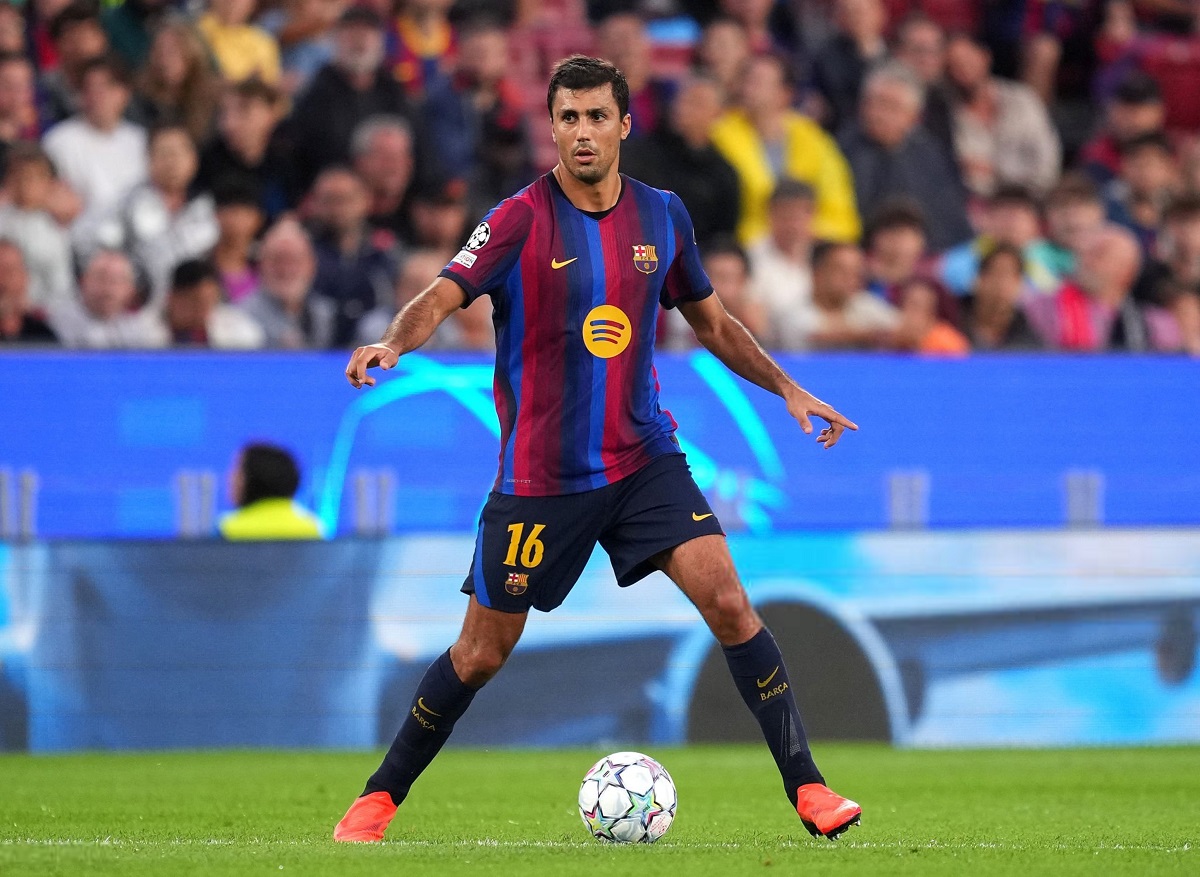
And is that something you achieve through training, or is it more about talking it through among yourselves and with the coach?
I think you achieve it by understanding what you need to improve. If you analyze the previous years and come out with the typical line of, “We didn’t win, but we should have,” I think you’re making a mistake.
When you’re unable to win, you have to figure out what you didn’t do well so that you don’t repeat those mistakes and can improve.
The Ballon d’Or. When you won it, you said Lamine Yamal already had almost everything he needed to win it one day. Do you think his time has come?
I don’t know. You’re asking me something I can’t really answer.
In the end, individual awards... What I can tell you is that he’s a player who has developed incredibly. His growth over the last year and a half has been phenomenal, and without a doubt, you can already put him among the best players in the world.
Beyond that, what does the Ballon d’Or actually measure? Individual performance? The season as a whole?
We’re all attracted to individual awards, but I think what a 19-year-old who has achieved what Lamine has achieved tells you is incredible. It already shows you the level and potential he has as a player.
From there, we’ll see what they decide. I think it’s a very open year, and perhaps every player on the shortlist has a strong enough case to win it.
So it’s not something I’m particularly concerned about. I would like a Spanish player to win it, whether that’s Lamine, Pau Cubarsí, Fabián, or even me if I’m nominated.
I think Spanish football also deserves recognition for the World Cup we had.
The club has chosen to back Lamine. Do you understand that, or does it bother you a little, given that you’ve also won the Ballon d’Or and could be in contention again?
No, I completely understand the club backing a player like Lamine, especially because he’s a product of the academy and means so much to the club. There’s absolutely no resentment.
In the end, it’s such a subjective award, decided by around 100 people casting their votes. Whoever they choose, whoever it may be, we’ll congratulate them.
Do you regret what you said to Cubarsí on the bench at Mestalla?
Yes, I already said the other day that in life, you have to know when to correct yourself and acknowledge when you’ve made a mistake. I have absolutely no problem admitting that I was wrong.
Maybe not because of the fact that I was having a private conversation with someone—I believe we all have the freedom to say whatever we feel is appropriate in a private conversation.
But it was about the moment and the context in which it happened, and understanding that the Spanish league is different and that something like what happened can happen.
So, from there, I apologized. And as I already said, it was absolutely not intended as an insult to any player or any club. It was more a matter of surprise than anything else. So, that’s where I’ll leave it.
I assume that despite all your experience, you didn’t expect the cameras to catch you in that situation, right?
I’ve spent seven years in England, and these kinds of things don’t happen there. But anyway, having learned that lesson, it won’t happen to me again.
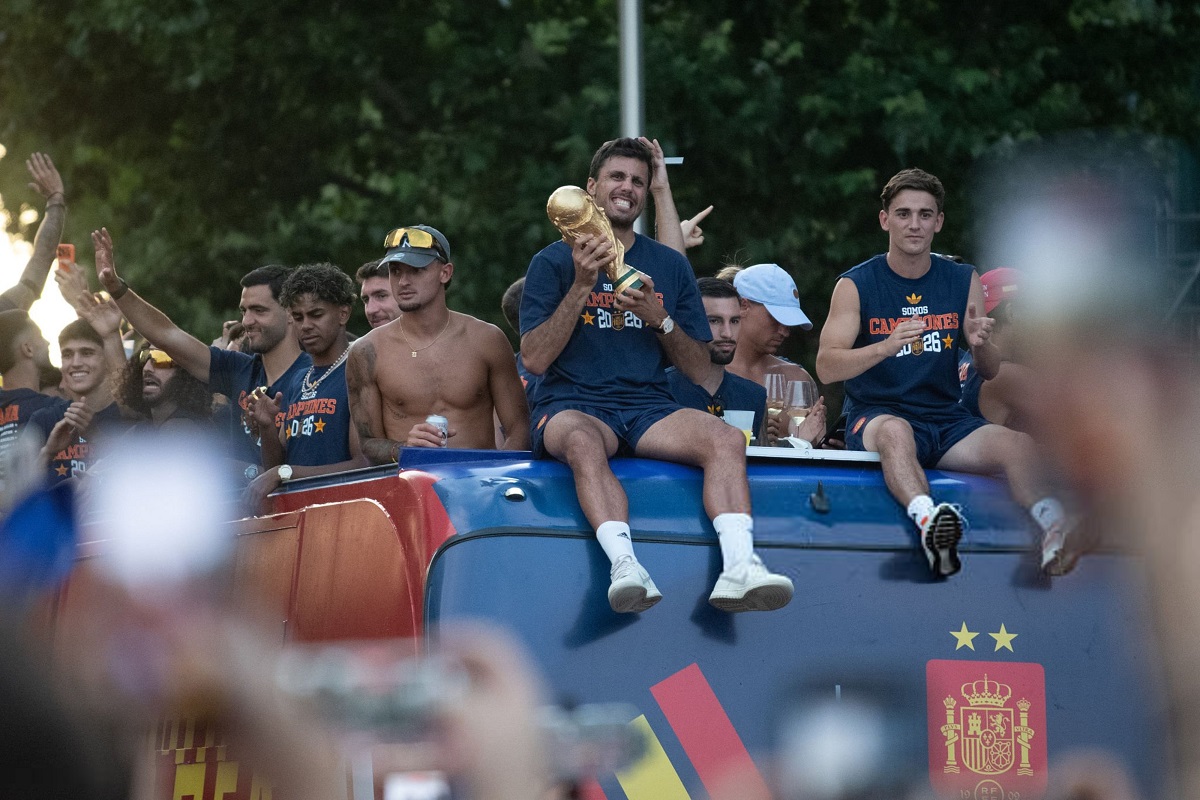
Perfect. You’ve won pretty much everything there is to win as a player, if not absolutely everything. What still motivates you?
A lot of things. You might think that as you get older and achieve more, you gradually lose some of your hunger, but for me it’s actually the opposite.
I think we’re incredibly fortunate to be able to make a living doing this, and if we have the ability to achieve great things, then we have to go for them. I’m very motivated by this new chapter at Barcelona and by the opportunity to achieve great things here.
Aside from winning trophies, does it motivate you to mentor someone like Marc Bernal, who has a profile similar to yours? What do you think he could improve?
Yes. Maybe that means I’m getting older, because I probably wouldn’t have said this when I was 21, but that motivates me too.
Helping other players and teammates develop, just as others did for me in the past—that’s something that motivates me. When you’re younger, you don’t necessarily see it that way, but as you get older and realize you have the ability to influence someone and make them better, it becomes rewarding.
If you can contribute in that way, it really excites me.
As for Marc Bernal, he’s a fantastic kid with incredible potential. He’s a very, very talented player.
I think it’s a huge positive that he can play both as a No. 6 and a No. 8. He has the ability to play both positions.
He’s got the physicality, the technical ability, the intelligence, and the willingness to listen and learn. I think he has everything.
To wrap things up, what would have to happen for you to look back four years from now and say that your decision to join Barça was the perfect one?
Well, what would have to happen? Obviously, you’d have to achieve the goals you set and the reasons you came here in the first place.
Like we’ve been talking about: taking the team to the next level, continuing to grow as a player, having that feeling that you’ve improved every single year, never becoming satisfied, and helping the club grow.
We also have the stadium project, and there’s still so much room for the club to grow. Hansi actually said it in our talk today: we also have to demand that the club continues to develop in different areas.
I think that would be the sign that, when these four years are over, I can look back and say, “Yeah, that was definitely the right decision.”
One question. Perhaps Real Madrid needed a player like you more, given your profile, whereas here at Barça you have players like De Jong, even though he’s injured, as well as Bernal, Gavi, and Pedri. Didn’t it concern you at the time that Barcelona already had so many influential and high-quality midfielders?
I’ll give you an example. I think there’s a time and a time for everything.
When you’re 18, 19, or 20, and you decide to join a big club—as was the case with me—and there’s already someone like Sergio Busquets, Casemiro, or another established player in your position, you know it’s going to be very difficult to develop and establish yourself there.
But when you’re 30, you see things differently.
Obviously, Barcelona have great players in the holding-midfield position, and the club knows that too. You have to make a decision and ask yourself, “What am I going to do?” But you also have to approach it sensibly.
That was one of the things I discussed with the club: that it could be an intelligent decision for everyone. We saw it that way, and I think all the players who are here now can contribute in their own way. That’s how we understood it.
So I think having so many top-quality midfielders has only one purpose and one objective: to raise the level of the team.
And I’m convinced there are other clubs across Europe who would be envious of the midfield Barcelona have.
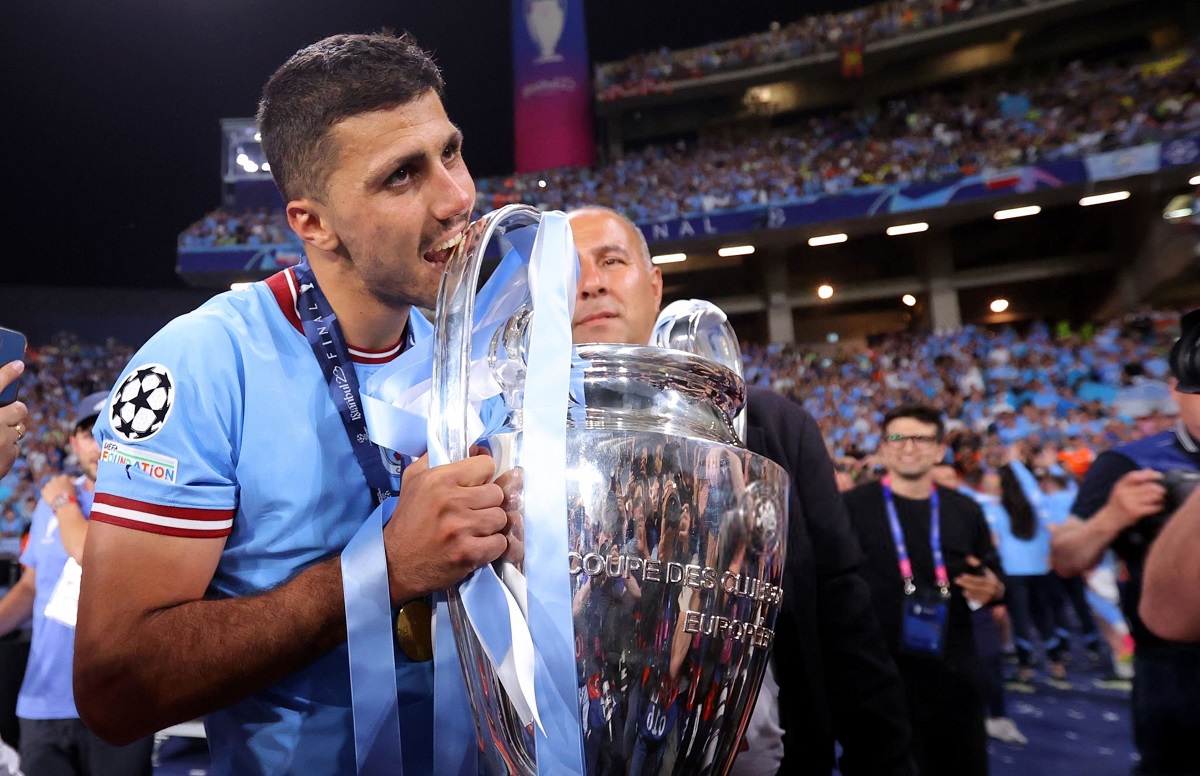
You played with him at Manchester City and know him well. Would you sign Julián Álvarez?
He’s a fantastic player. Obviously, yes, I’d sign Julián. I was lucky enough to spend a couple of years with him, and I think he’s an incredible player.
What makes him so incredible?
He just is. I think he’s an incredible player. He actually played more as a No. 10 than a No. 9 at times, even though he originally came as a striker.
But he’s also adapted to playing in that role. He can play as an attacking midfielder, a link-up player, and he’s even played some games as a No. 8.
I just think he’s an outstanding player.
Well, we’re coming to the end of the interview. We’d like you to send the Barça fans a message of your own. From Barça’s new holding midfielder, a Ballon d’Or winner—what can you promise the fans who are dreaming about that Champions League you’ve talked about as the main objective?
Well, you can’t promise things like that.
What I would like to tell them is that I’ve come here to give absolutely everything, to contribute, to bring the best of what I have, and above all, to try to make them happier than they were yesterday and the day before.
That’s really the message. This team is going to give absolutely everything, and I hope that, as time goes by, they’ll be proud of us.
Has the amount of affection you’ve received from the Barça fans surprised you?
It has surprised me, because you never really know what it’s going to be like when you arrive somewhere, but it has certainly made me very proud.
And honestly, ever since I made my debut, I’ve been blown away. I was blown away on the day of the lunch after my presentation, when I saw everyone waiting outside the restaurant.
It was incredible, really. The amount of affection I received within just a few days was incredible.
Obviously, I carry with me the desire to give that love back with everything I have.