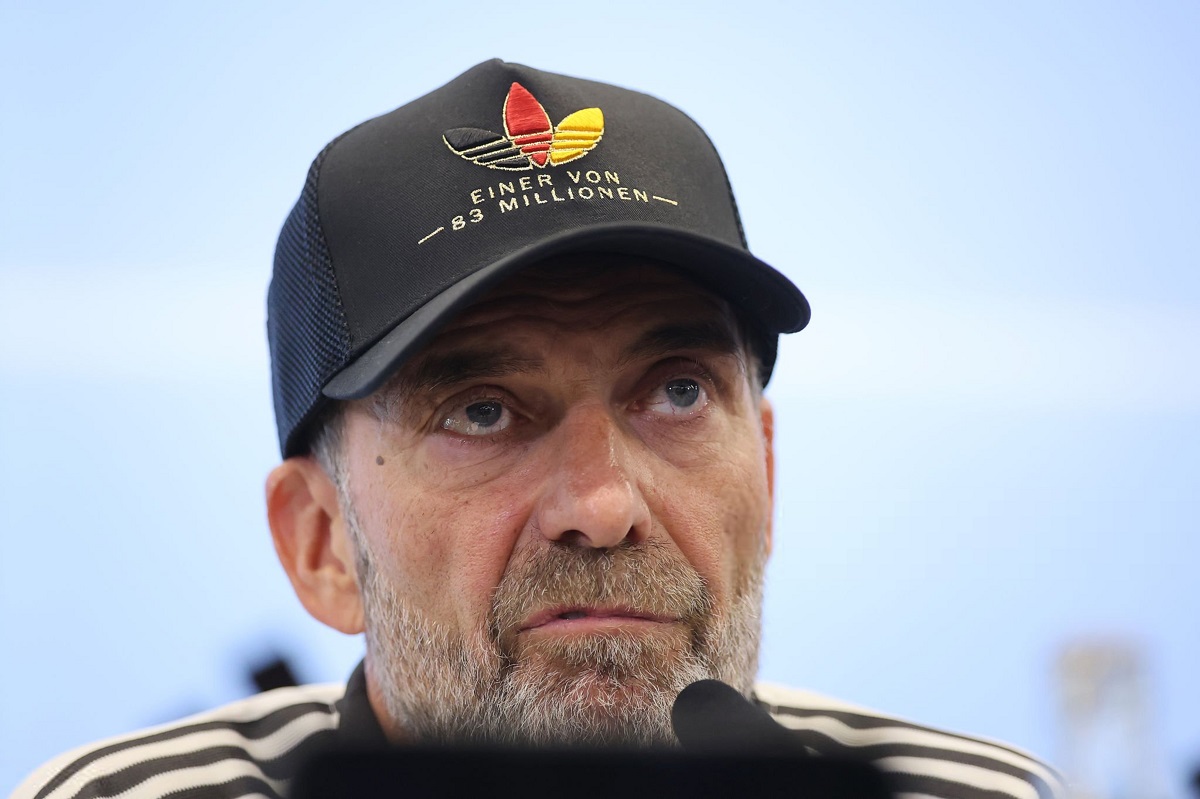
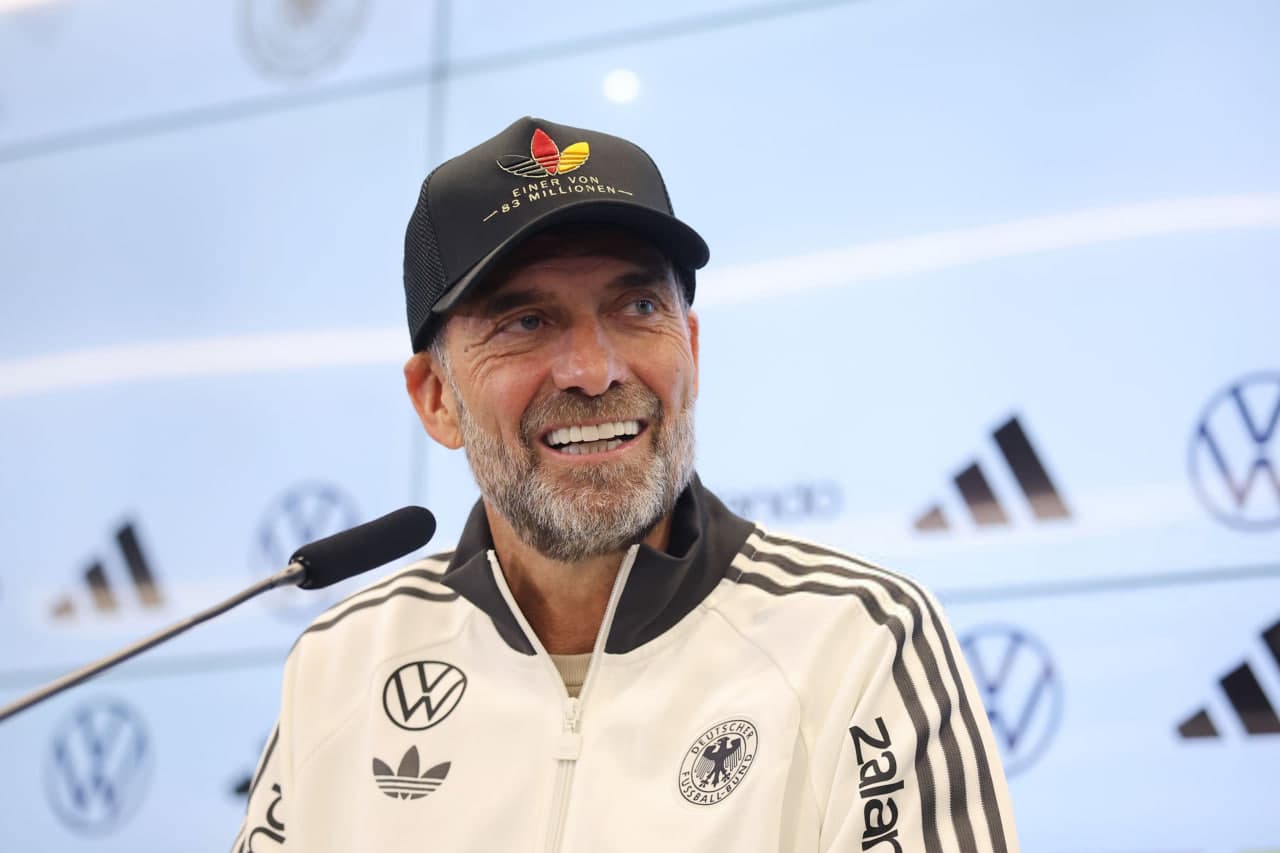
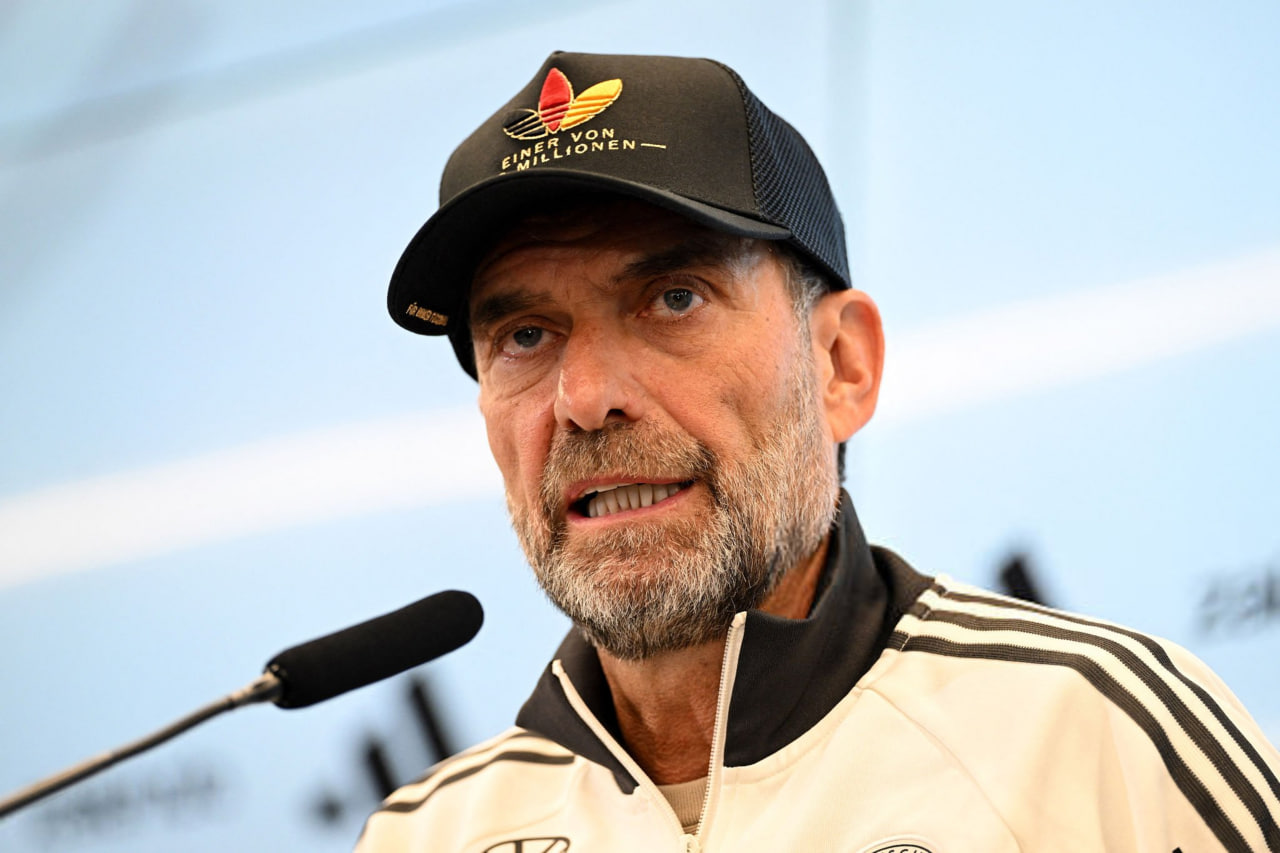
Germany head coach Jürgen Klopp named his squad for the start of the 2026/27 Nations League on Thursday before addressing the media at a press conference. He discussed his squad selection, his plans for the upcoming international break, his tactical approach and his vision for the future of the national team.
On selecting the squad
“We put a lot into this month. Putting the squad together was fun. We took a different approach and didn’t look for what we don’t have, but rather for what we do have.
“We want to prepare the players so that they can be among the best over the next two or three years. It’s important that they want to develop themselves. They have to be given the opportunity, but they also have to take it. That’s exactly what we want to do.
“There are a few lads in the squad who are surprising, but we have seen something in them and want to be part of their development. A lot of talent caught our eye in recent weeks, so much that not all of them could be included.
“I’m very happy with the selection. The conversations with the players were great. It was genuinely enjoyable to exchange ideas with them. I can say that representing the national team means an incredible amount to all of them.”
On splitting the squad
“Above all, it’s about the fact that it’s unusual to have four games in a row in such a short period of time. There are players who will still be playing football on Sunday.
“The time frame in the first week is very tight, so with the first part of the squad we focused heavily on the World Cup, so that the team is well-drilled and knows each other.
“I want to get to know as many players as possible during this period. I’ve been travelling around and have met many players personally, and there is a big difference between that and what I saw on site when it comes to developing a feel for the footballer.
“We haven’t created an A team or a B team. We want to win all four games. The squads are structured so that the positions and personalities fit together well, as does the balance between experienced and inexperienced players.”
On his approach
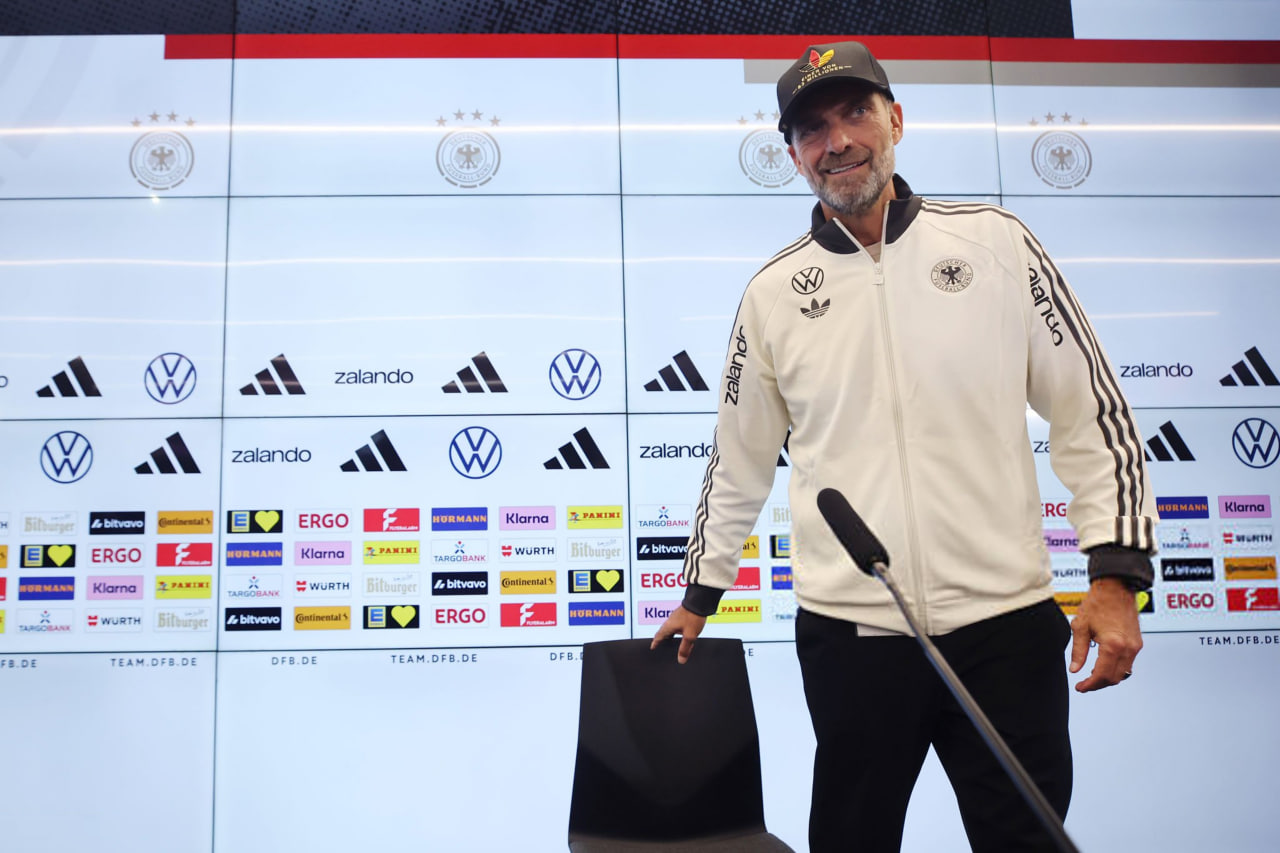
“I’m new as a national association coach and I’m aware of the situation. What isn’t new to me is putting a squad together. It is always about winning the next game.”
On players appearing in both squads
“It is planned that some players from the first squad will remain with us.
“We have a few players — three, to be precise — who have been through a difficult period. Nico Schlotterbeck, Jamal Musiala and Serge Gnabry will be with us for the full two weeks because we want to get them back into a rhythm. It is tailored to their individual situations.
“Finn Dahmen is also in both squads. He is a very talented goalkeeper whom I would like to see for a longer period.”
On the No. 1 goalkeeper
“For the moment, the goalkeeper who will play the first game is Marc-André ter Stegen. The team needs stability and a spine. If the spine is stable, you can mix in a lot of youth around it.
“I’ve known Marc-André for an eternity. For many years, he was the best goalkeeper in the world behind Manuel Neuer. He picked up an injury at an unfortunate moment, but he is fit and is the same goalkeeper he was before. He brings the necessary experience. He is doing a very good job at Ajax Amsterdam.”
On selection and performance
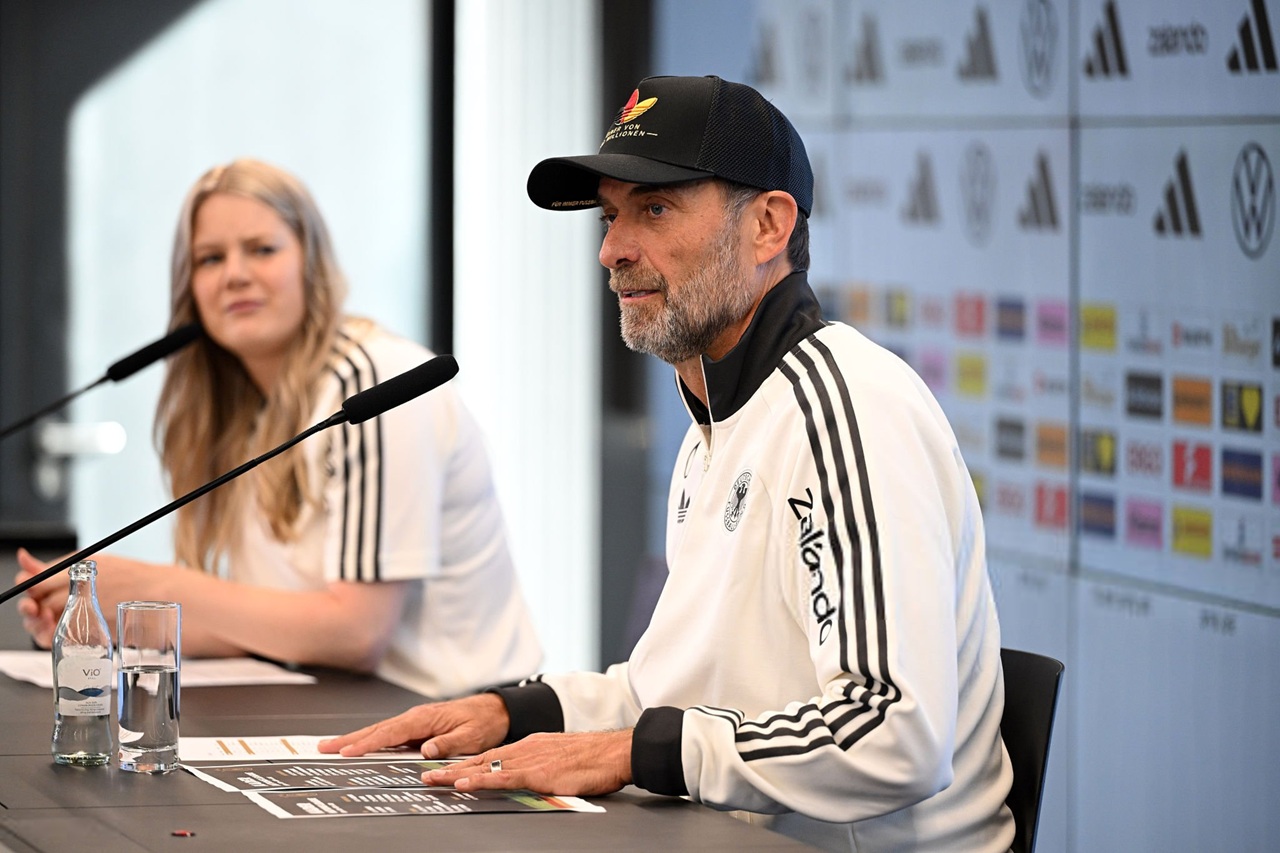
“Everything depends on performance. If the players don’t perform, then that will obviously have an impact. But for some of those who aren’t here now and are currently having problems, the door is not closed.
“It’s about being ready for the next game and giving the feeling that it means everything to me to play now.”
On Joshua Kimmich in midfield
“I want to see what he produces for Bayern week in, week out. A player with his experience has to lead the way, without question. We have to adapt to a new way of playing football and there are tactical issues that we want to address quickly.
“Stability only comes from the defence, and I need every single player there. I expect him to bring his full potential every time he plays for us. But I have no doubts about that. We see him as a midfielder.”
On the value of pressure
“Lesson number one: we learn to have fun under pressure. When there is pressure, when something is at stake, when it matters, you can focus completely.
“If you look at the potential, they are all good enough. We have to look at how we can help the lads, together with their club coaches. I don’t believe a player has to go through every level within the association to be good enough.
“We will support the lads, and of course it depends on them. It’s not important who plays, but how we play. We have to establish ourselves through the way we play, and we don’t have much time for that.
“We will do everything we can to make a new approach visible. I expect more immediately. It could get a little wild, but I’m fine with that — it just has to be lively.
“I intend to use the time between international breaks to stay in contact. Footballing quality becomes visible when the team has defensive stability. We can help turn this incredible potential into quality; that is our job.”
On the challenge of being a national-team coach
“The job is different from that of a club coach, but that doesn’t matter at all. Would I like to have more time with the national team? Yes! Do I have it? No!
“Every conversation I’ve had already gives me a feeling for the player, and vice versa. Not having enough time is completely normal in football. It’s clear that we have to grow together as a team. There have to be steps along the way.
“I didn’t choose the players based on the age structure. I said that whoever wants to be involved has a chance. It doesn’t matter if I don’t have enough time; other national-team coaches are in the same situation.
“We’re starting to build the squads, and this isn’t the final step — it’s the first.”
On players who were not selected
“All the players took it respectfully. For no player is this a final decision; it is just the decision for the moment.
“For example, I chose Marc-André ter Stegen for this experienced position, and behind him I wanted to have the next generation. Where possible, they also received feedback on why they were not selected.”
On ‘positive patriotism’
“I would like to take the flag back for myself and for us. I want us to always wave it in such a way that nobody thinks, ‘What’s wrong with you?’ Instead, I want people to simply have the feeling that you are happy and understand that you were lucky to be born, raised or to have moved to this wonderful country.
“I don’t want to leave national pride to the wrong people. But I no longer know whether you can even use that word, or whether you’re allowed to, without it being misunderstood.
“I would like to talk about positive patriotism. I genuinely think we are a wonderful country. I can be proud to be German while still being open, diverse, kind and friendly.”