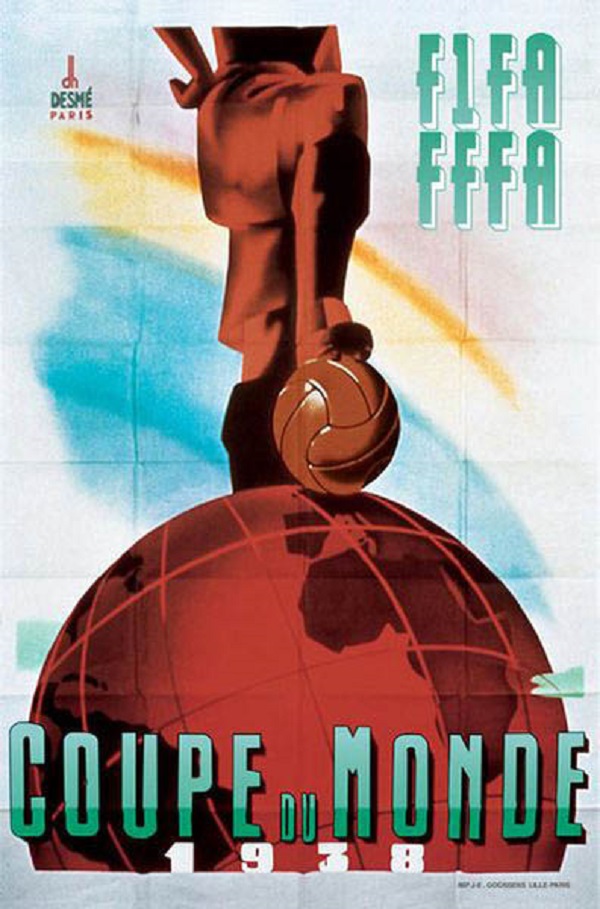
The 1938 FIFA World Cup marked the third edition of the tournament and the last before World War II. Hosted by France, the competition saw Italy defend their crown and become the first team in history to win back-to-back World Cups, cementing their dominance in the pre-war era of international football.
Historical Background
The tournament took place from 4 to 19 June 1938 in France. For the second consecutive time, qualification rounds were held to determine the 16 teams that would compete in the final tournament.
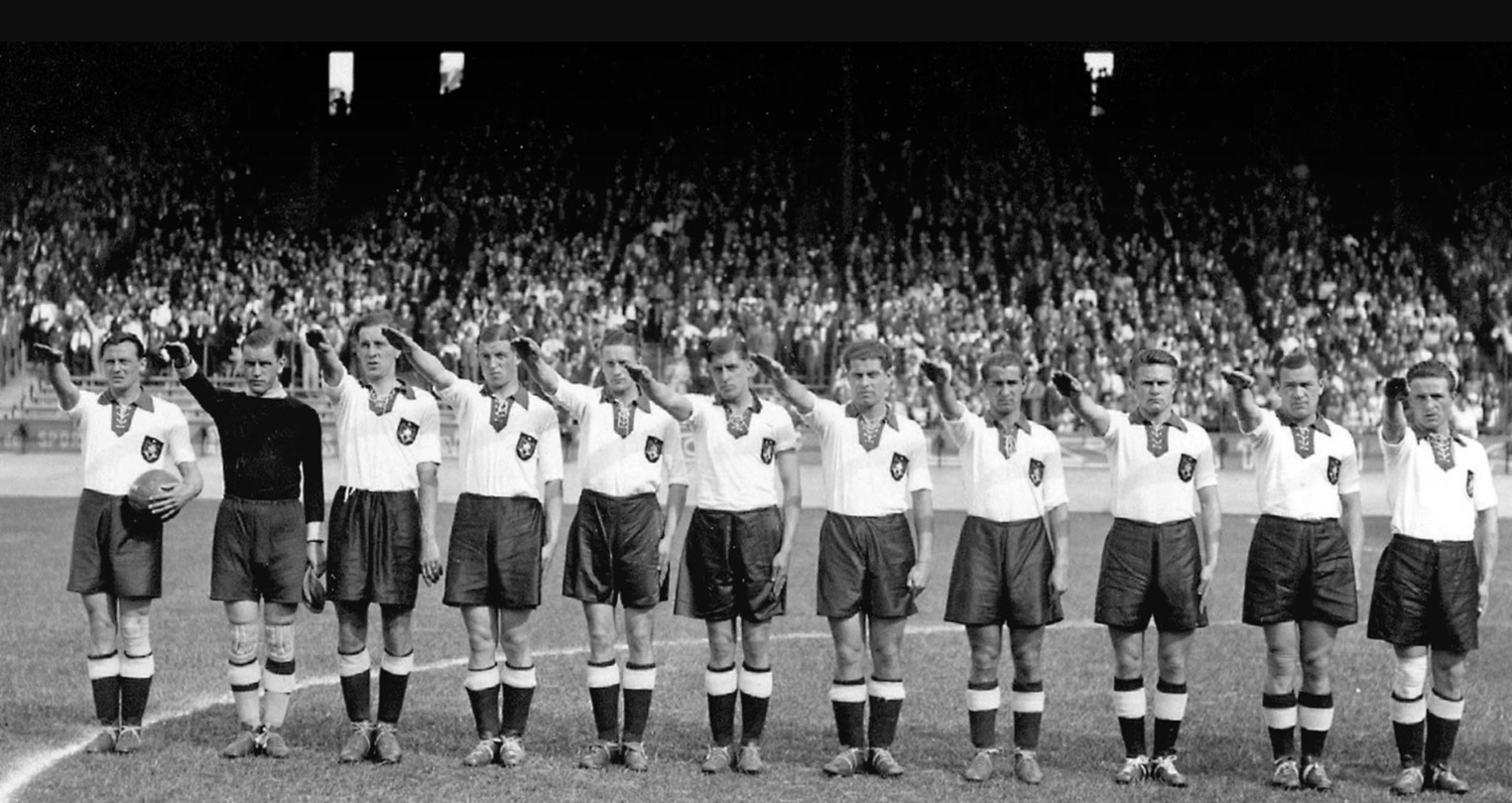
Political tensions were rising across Europe, and several nations withdrew from the competition. Notably, Austria qualified but was annexed by Nazi Germany before the tournament began, and their team was absorbed into the German squad.
Despite the unstable atmosphere in Europe, the World Cup went ahead as scheduled, becoming the final edition before the tournament was suspended due to World War II.
The Road to Glory: Italy’s Second World Cup Triumph
Italy began their campaign with a 2–1 victory over Norway after extra time in the Round of 16. In the quarter-finals, they defeated host nation France 3–1.
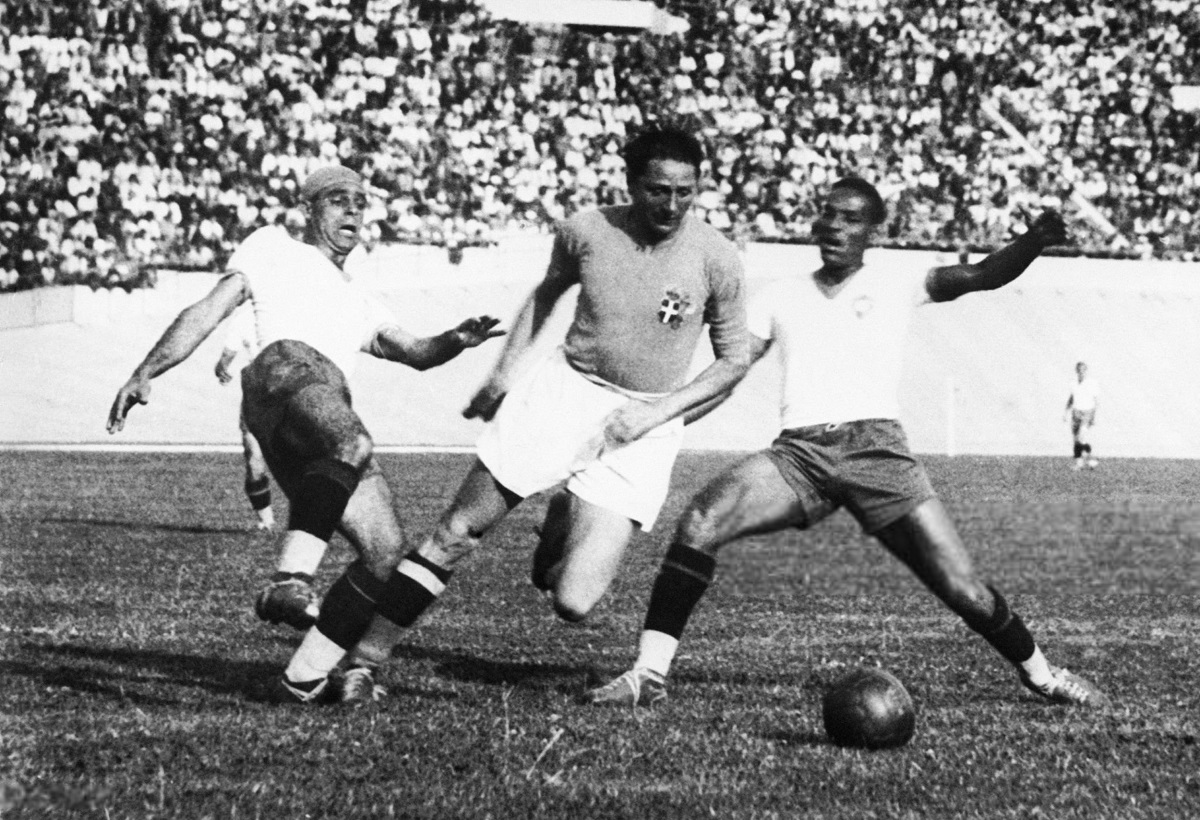
In the semi-final, Italy overcame Brazil 2–1 in a highly competitive match, securing their place in the final.
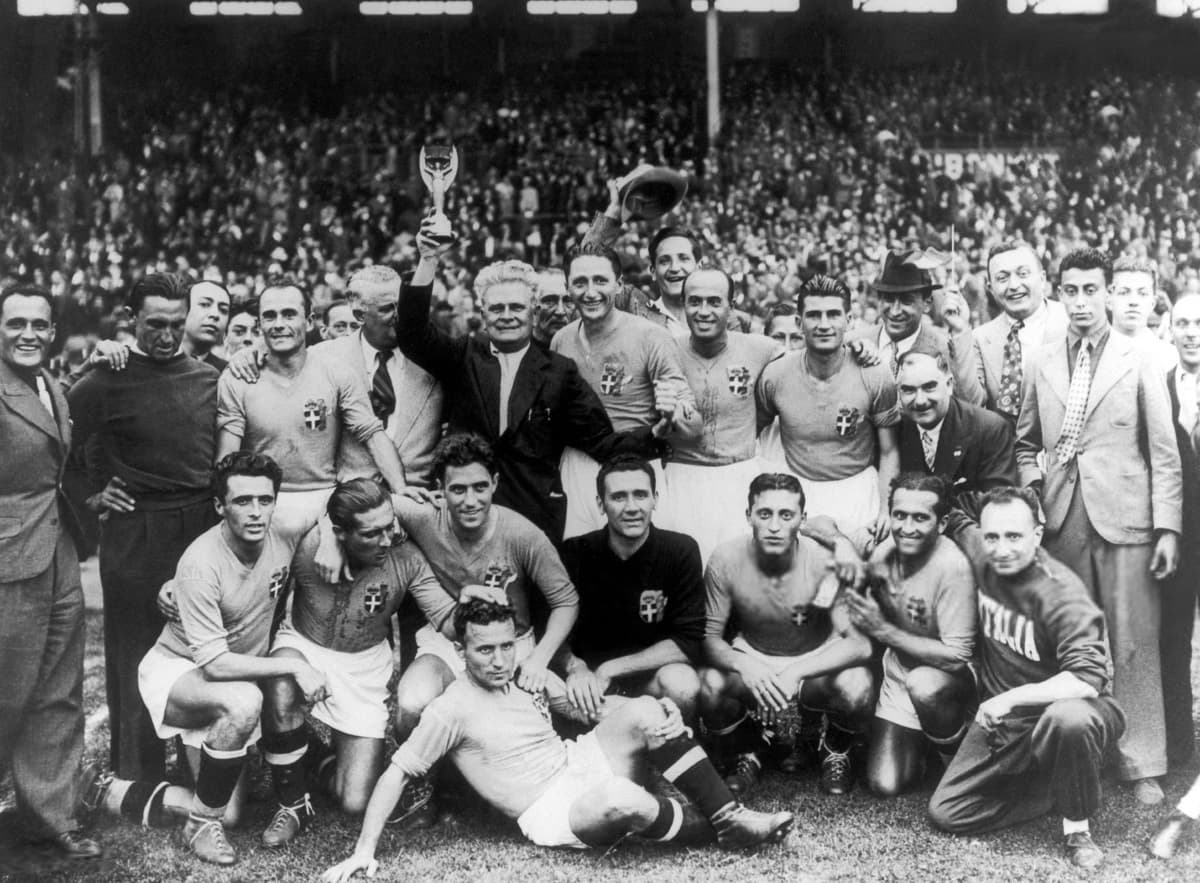
The final was played in Paris against Hungary. Italy delivered a strong attacking performance and won 4–2, successfully defending their title and becoming the first team ever to win consecutive World Cups.
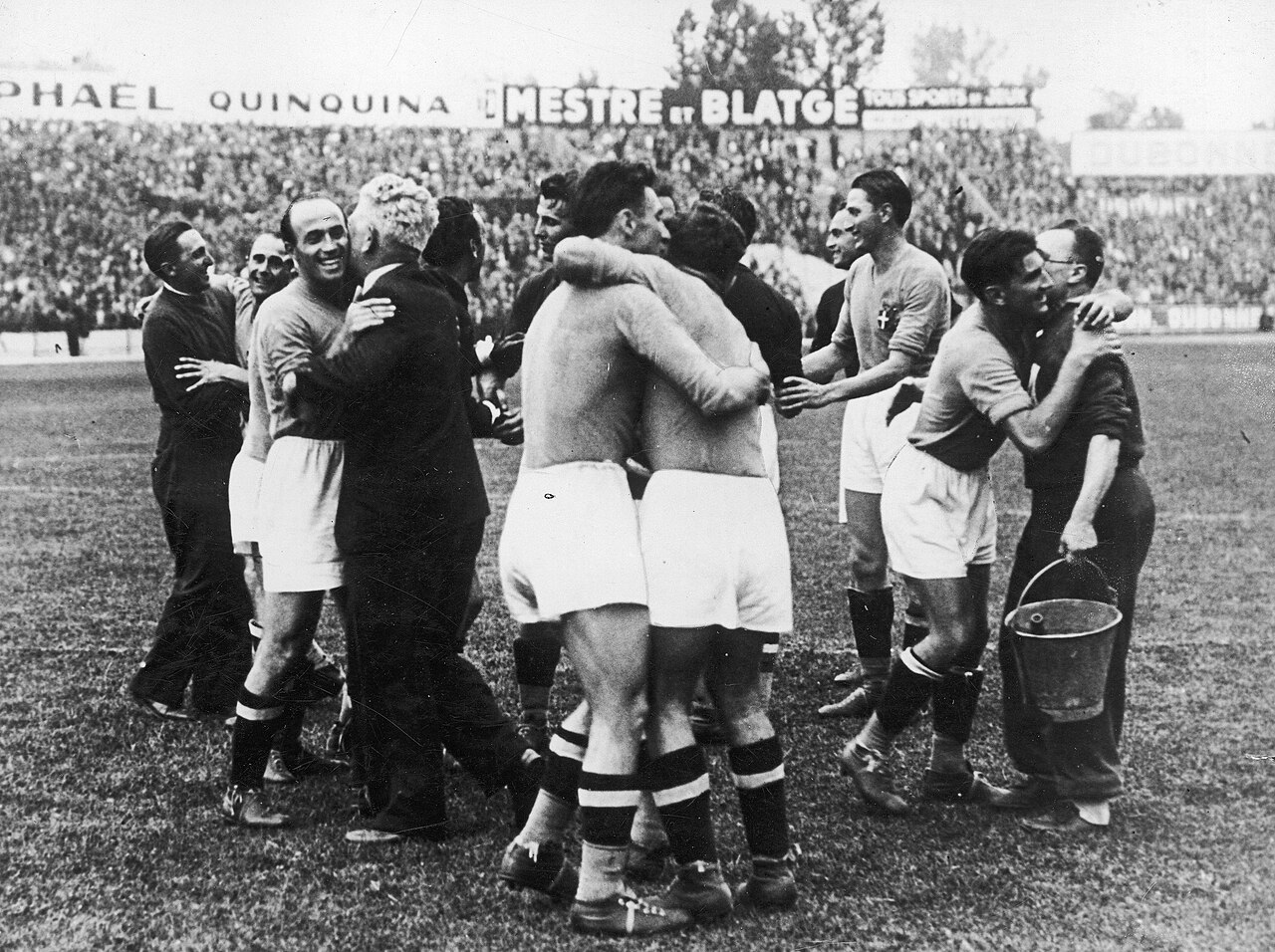
Interesting Facts from the 1938 World Cup
Italy became the first nation to win two consecutive World Cups (1934 and 1938).
It was the last World Cup held before a 12-year interruption due to World War II.
Austria qualified but did not participate following the Anschluss.
The tournament continued the straight knockout format introduced in 1934.
Brazil finished third, marking their first major World Cup breakthrough.
Top Scorer and Key Players
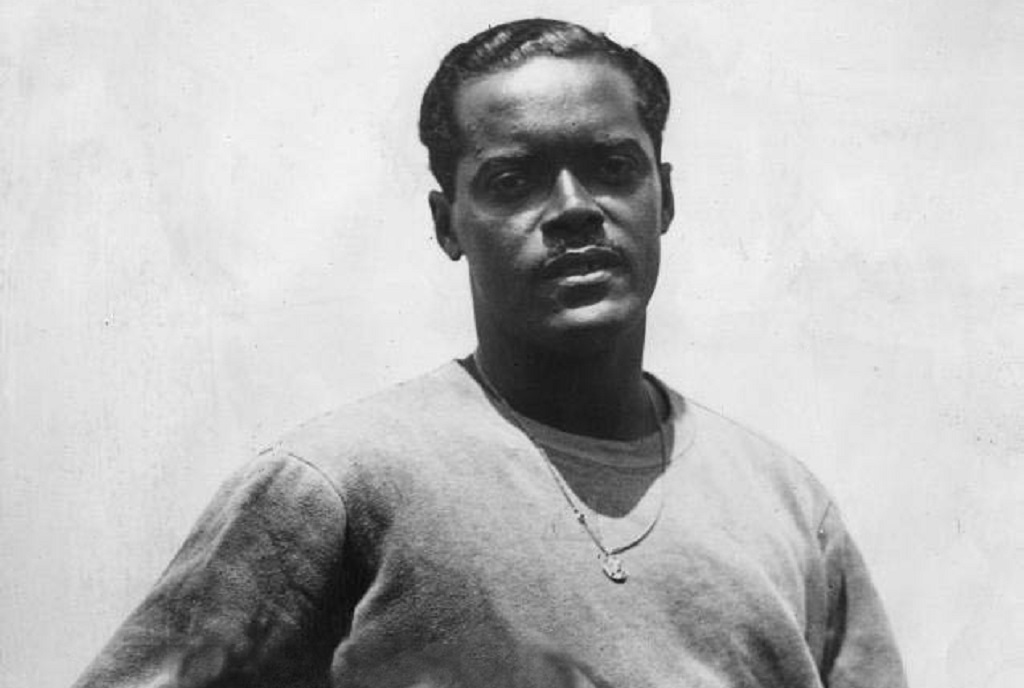
Leônidas da Silva of Brazil finished as the tournament’s top scorer with 7 goals and became one of the first global stars of the World Cup.
For Italy, Silvio Piola played a decisive role in the final, scoring twice against Hungary and leading his team to another historic triumph.