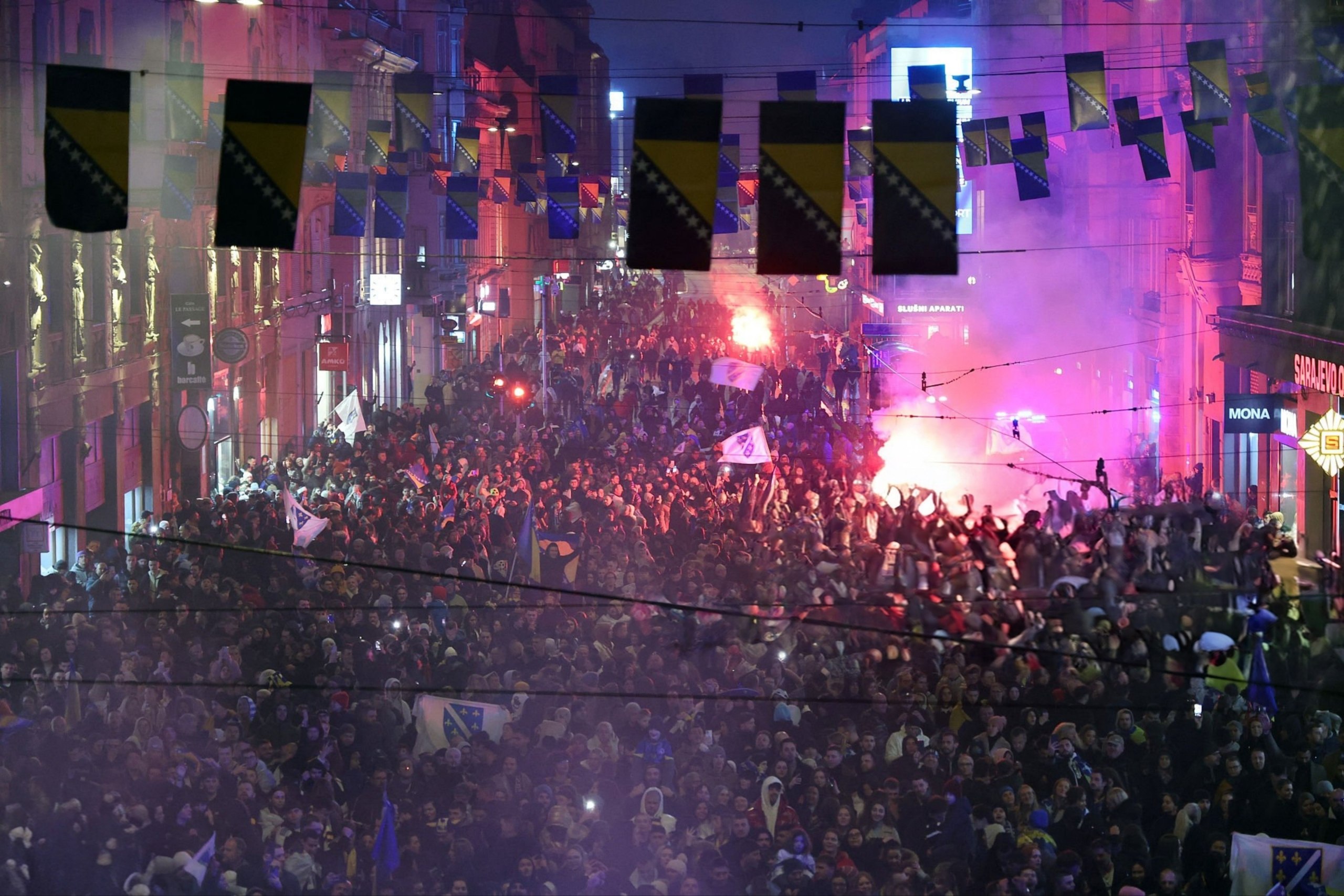

Far from its European heartland, Bosnia and Herzegovina is poised for its second World Cup appearance, buoyed by an unexpectedly fervent fanbase in the American Midwest.
St Louis, Missouri, home to an estimated 60,000-70,000 Bosnians who largely arrived in the early 1990s fleeing the Bosnian War and the dissolution of Yugoslavia, is set to become a temporary epicentre of national pride.
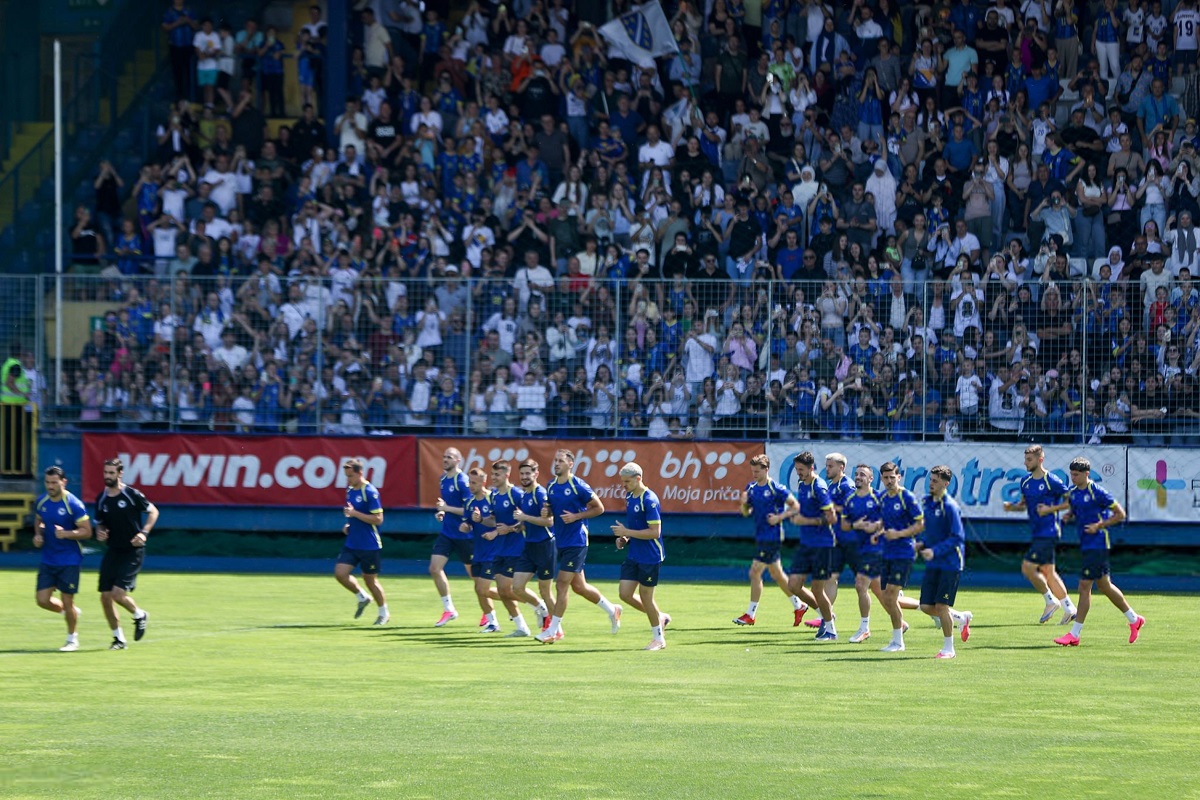
The team will face Panama in an international friendly this Saturday at St Louis' Energizer Park, before heading to North American venues for their World Cup group matches against Canada in Toronto, Switzerland in Los Angeles, and Qatar in Seattle.
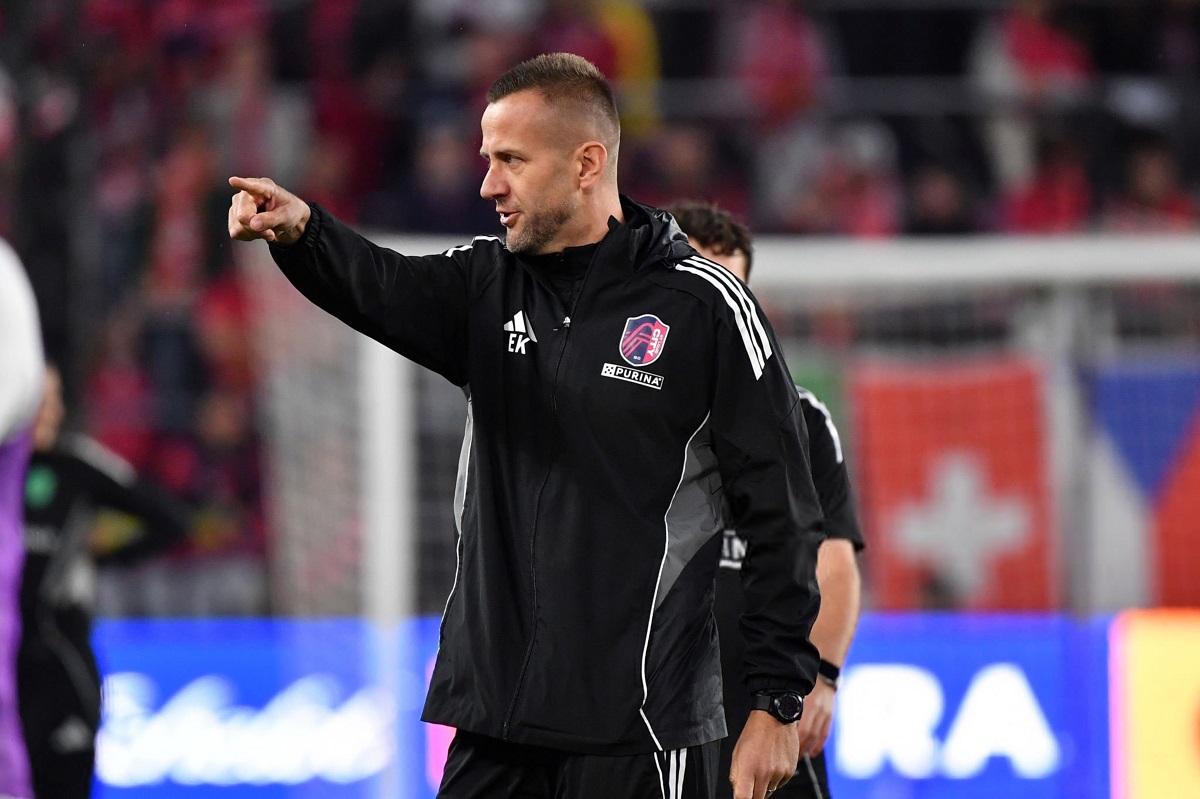
"We should be able to create an atmosphere like a home match," remarked Elvir Kafedžić, a Bosnia-born St Louisan and assistant coach for the city’s MLS team, St Louis City SC.
Kafedžić’s own journey mirrors that of many in the community. He was just nine-and-a-half when he fled Bosnia in 1992 with his mother and brothers.
"Unfortunately, I remember a lot of it," he said, recalling a meandering path through Montenegro, the Czech Republic, Sweden, and Germany. Their temporary protection in Germany ended in the late 1990s, prompting a move to St Louis in 1999 where relatives had already settled. "We didn’t have anywhere to go back to in Bosnia," he explained.
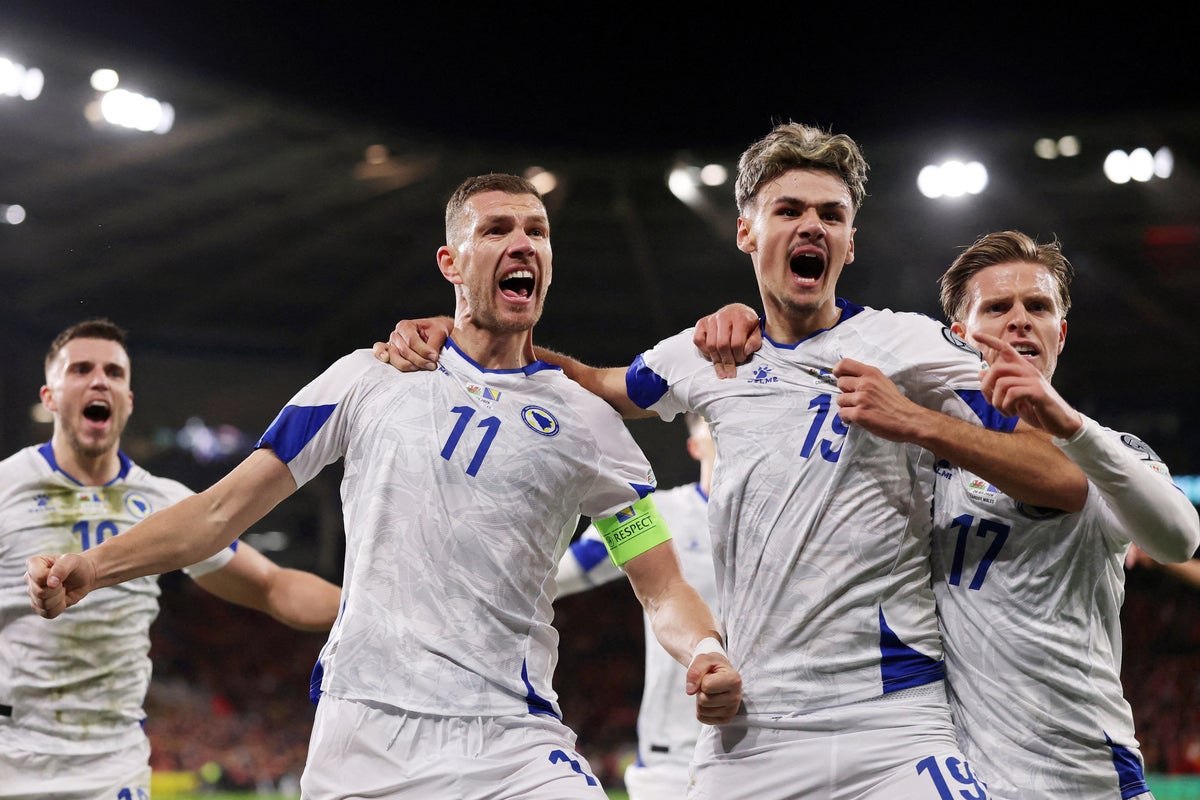
Bosnia secured their World Cup spot two months ago, dramatically defeating four-time champions Italy 4-1 on penalties after a 1-1 draw. The decisive penalty was converted by Esmir Bajraktarević, a Bosnian-American from Appleton, Wisconsin. The qualification sparked jubilant scenes in St Louis.
"That day you could see cars flying Bosnian flags in the streets," Kafedžić recounted. "All the restaurants, all the coffee shops were packed wall-to-wall with strangers hugging each other. For me, this goes beyond soccer. This shows who we are, the pride, where we come from and how deeply we’re connected to our roots."
The national squad is led by 40-year-old captain Edin Džeko, who has scored over 50 goals across the English Premier League, Italy’s Serie A, and the German Bundesliga, alongside 18-year-old winger Kerim Alajbegović.
Bosnia’s only previous World Cup appearance was in Brazil in 2014, where they were narrowly eliminated in the group stage. Their first World Cup goal was scored by Vedad Ibišević in a 2-1 loss to Argentina – a player who honed his skills in St Louis high school football, starred at Saint Louis University, and went on to a successful professional career, primarily in the Bundesliga.
St Louis emerged as a haven for Bosnian refugees due to its job opportunities, affordable housing, and an existing small community.
"We all came looking for a better life because everything was taken away from us at home," Kafedžić stated. "You can’t put in words how thankful we are." A vibrant section of the city’s South Side is now affectionately known as "Little Bosnia”, characterised by neat rows of red-brick houses, bustling bars, cafes, and bakeries, and a replica wooden fountain, the Sebilj, mirroring one in Sarajevo.
"It represents Sarajevo in the heart," said Jasmina Silić, working at the Skala Bar on Gravois Avenue, a central artery of the community.
Just doors away from Skala Bar stands the "Association of Survivors of the Srebrenica Genocide”, a stark reminder of the war’s atrocities and the ethnic cleansing perpetrated by Bosnian Serb forces.
More than 8,000 Bosnian Muslims perished in Srebrenica, an event declared a genocide by the United Nations and the International Court of Justice. The war claimed an estimated 104,000 lives, displaced two million, with 83 per cent of civilian deaths being Bosnian Muslims.
The Bosnian imprint extends across St Louis, a metropolitan area of nearly three million. The MLS stadium’s best-selling food comes from a Bosnian restaurant, the "Balkan Treat Box”, while Saint Louis University hosts the Center for Bosnian Studies.
Books like "Bosnian St. Louis: Between Two Worlds" by Patrick McCarthy and Akif Cogo document the diaspora’s story of tragedy, resilience, and enduring ties to Europe.
"One woman in St. Louis still carries the keys to her house in Bosnia," they wrote. "Another man describes his feelings toward Bosnia as a divorce he did not want from a woman he still loves."
Before the war, Bosnia was a multi-ethnic and multi-religious nation, predominantly Muslim but with significant Croatian Roman Catholic and Serbian Orthodox Christian populations.
This diverse heritage binds the World Cup team, making it a powerful symbol of pride and reconciliation.
"A lot of people from here go to Bosnia every year to see families," Silić noted. "The team represents unity because it’s all three religions and everybody is one like it used to be when it was still Yugoslavia."