

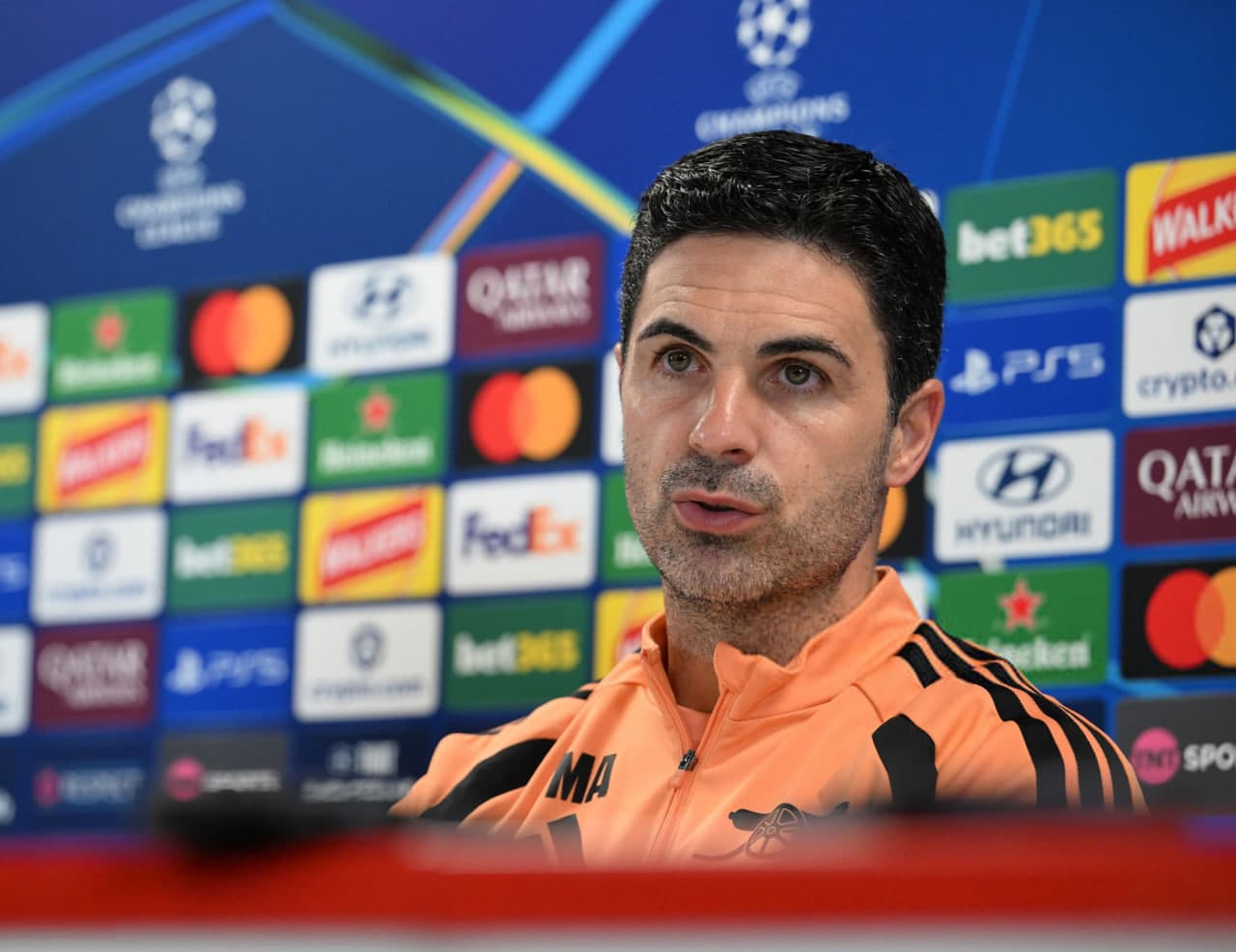
Mikel Arteta said Arsenal had planned a training session for players who had not played enough minutes after their previous game, but two unfortunate incidents resulted in injuries to Hincapie and Zubimendi.
“We had a training session planned after the game for the players who hadn’t played enough minutes. The idea was to give everybody a recovery day on Sunday and get everyone back into the right rhythm.
“In two very unfortunate incidents, we lost two players. It’s not great.”
Arteta confirmed that both players would undergo further scans to determine the extent of their injuries and establish how long they would be sidelined.
“Yes, we need to assess them today. They’ll have further scans to determine the extent of their injuries and establish a timeframe for how long they’ll be out.”
Arteta said Arsenal had taken several positives from their win over Leeds, particularly the team’s reaction and ability to turn the game around in difficult circumstances.
“There were many positives from the game, particularly the way we reacted and managed to turn things around in a really difficult context.
“The way we started the game was really impressive as well. We created a lot of opportunities, but our finishing is something we need to improve. The way we defended our box is another area we need to work on.
“Overall, especially after the break, I was really happy with the result.”
Arteta said Arsenal had been creating chances at a high level but needed to become more clinical in front of goal.
“I think it’s going pretty well. The way we’ve finished our chances is probably a different story.
“Before the international break, I think we were creating more than we had in any other season. Then we had the Brighton game and another match in a different context.
“We’re certainly getting into some great positions. Now we need to be more clinical and finish more of our chances.”
Arteta said Eberechi Eze would have further opportunities to establish himself in the team, stressing that players must earn their place through training and their performances on the pitch.
“Like everybody else, he needs to earn the right to play. That comes through training sessions and the impact you make on the pitch to give the team what it needs to achieve its objectives.
“He’s going to have many opportunities to do that. His attitude has always been phenomenal, and we also have to adapt to his qualities.”
Arteta described losing two players during a warm-down session as far from ideal. “Far from ideal.”
Arteta said avoiding injuries altogether would mean not training, but stressed that players needed training sessions to maintain their fitness and match rhythm.
“It’s very easy: you don’t train. Never train, and you won’t get injured.
“But the consequence is that when players have to play, they have no rhythm. When you ask them to perform, they won’t have the same impact on the game.
“That could happen at the Emirates. It never happened in the seven years I’ve been here, but it could happen in the next training session. It has happened before, and hopefully it has happened now and won’t happen again.
“What can you do? If I had a crystal ball, I’d tell everyone to go into the jacuzzi and see you tomorrow.”
When asked whether he was concerned about Hincapie’s injury, Arteta declined to discuss the matter further.
“That’s something else we shouldn’t discuss here.”
Arteta said Arsenal must remain emotionally dominant regardless of the circumstances during a match, acknowledging that his side had paid the price for failing to do so against Brighton.
“We have to be emotionally dominant, regardless of the context. It’s easy to say, but actually very difficult to do.
“We’ve done that in the majority of our matches, which is great. We didn’t do it against Brighton, and we paid the price for that.
“There are always lessons to learn and areas where the team can evolve. That’s extremely important because, when you play every three days at this level, things will happen. You have to be able to adapt and resolve those situations.”
Arteta praised former Arsenal teammate Olivier Giroud ahead of the striker’s return to face the Gunners, highlighting his character and contribution during their time together at the club.
“We were teammates. First of all, he’s a great character and a great person to have around the dressing room.
“I remember when he arrived after winning Ligue 1 with Montpellier. He came here and had a real impact on the team. He was a completely different profile from what we were used to.
“What a career he has had. He has certainly earned everything he has achieved.”
Arteta said Giroud was not underrated by his teammates or Arsène Wenger, describing the Frenchman as an intelligent striker who posed a significant threat inside the penalty area.
“Not by his teammates, certainly, or by Arsène Wenger. I don’t know about everyone else.
“He was extremely intelligent and a real handful for defenders. Whenever you had him on the pitch, he was a massive threat inside the box.
“He was very smart, excellent at linking up with other players, and his work rate was phenomenal. So he certainly wasn’t underrated by us.”
Arteta said William Saliba had been training on grass for more than a week as the club carefully managed his workload and continued his recovery.
“It’s been over a week now, I think. Obviously, we’re managing his workload, including how many repetitions he does and how many consecutive sessions he can complete.
“He’s building his capacity to a good level now. Let’s see over the next few weeks whether we can start integrating him into the team and assess when he might be available for the squad.”
Arteta said it remained uncertain whether Saliba would return before or after the November international break, explaining that the defender’s recovery would depend on how he responded to treatment.
“I don’t know. We’re still talking about weeks, and there’s a big difference between returning just before or just after the international break.
“It’s a very specific injury, and I can’t tell you exactly how he’s going to respond during the healing process.”
Arteta confirmed that both Hincapie and Zubimendi had suffered ankle injuries.
“Both ankles.”
Arteta said being emotionally dominant meant understanding what a match demanded and responding accordingly, whether that required greater intensity or slowing the game down.
“It’s about owning the moment, leading it and making sure we’re in the emotional state the game requires, rather than being in a different one.
“If the game requires a reaction, energy, spirit, boldness or courage to deliver something different or change the situation, that’s how we have to respond.
“If the game demands that everyone brings the temperature down, we have to be capable of doing that as well.
“To achieve that, we need to understand what’s happening.”
Arteta said Eze had not approached him to discuss his playing time, adding that he had been proactive in communicating expectations and explaining the roles of his players.
“He hasn’t. I think I’ve also been very proactive in trying to speak to everyone and stay engaged with the players.
“I want them to understand what we need from each of them, what our standards are and, whenever possible, be very specific about when they’re going to play and when they’re not.
“So far, that’s been good, but we need to maintain it because we’re going to need every player to be ready, whether they start or come off the bench.
“They’ve been doing that well, changing games and making an impact. Ultimately, that’s what we need to win football matches.”
Arteta said Max Dowman had primarily been trained in two positions but believed the youngster had the talent to adapt to a different role in the future.
“We haven’t seen much of Max on the left. Given the way we’ve involved him and trained him in those two positions, those are probably the easiest positions for him at the moment.
“But with the talent he has, we’ll need to try him in a new position at some point. I think he’ll have the ability to adapt.”
Arteta said Arsenal would have to earn the right to reach another Champions League final after losing last season’s showpiece, warning that Lille would present a difficult challenge.
“You have to earn the right to get back into that position.
“We know how difficult it is and how many times we’ve achieved it throughout the history of our club. First of all, we have to recognise that.
“Tomorrow, we’ll face a really tough opponent. They’re very well coached, and what Davide Ancelotti has done is remarkable.
“You can see the way they compete and play, and the problems they’ve caused big teams. Tomorrow will be no different unless we’re ready to deal with them.”
Arteta said his team selection would depend partly on how he expected the match to develop, with substitutes likely to play an important role in deciding the outcome.
“Sometimes I select a team or certain players based on what I expect to happen, especially at the beginning of the game, and on who I think can finish the match strongly.
“At this level, that’s where most games are decided. We have the bench and players capable of making that impact, and we’re obviously going to use that resource.”
Arteta confirmed that Hincapie and Zubimendi would both miss the Lille match, adding that Zubimendi’s injury appeared to be more serious.
“They’re both going to miss tomorrow’s match, that’s for sure.
“They’ll have further scans today, and we’ll probably know more tomorrow. Then we’ll see how things develop.
“Piero’s injury looks a little more serious, I think, but we’ll have to wait and see.”
Arteta said Arsenal would still have conducted the warm-down session despite the injuries, explaining that small-sided games involved contact and that such incidents could happen in football.
“The temptation now is to avoid taking that risk and do something else, but we were going to do that session anyway the following day.
“When you play these kinds of small-sided games, there’s contact, and these things can happen. They didn’t happen once last season, and I think we did those sessions 37 times.
“The fact that it has happened now, and people are watching, can raise other questions. But it’s very difficult.
“If the question is whether we would do it again, given the way we planned those seven days for players who hadn’t had enough workload, the answer is yes.
“Football is a contact sport, and these things can happen. What we can do is tell the players: ‘You’re all so competitive, but when we do these sessions, please don’t get into too much contact with each other. That’s it.”