

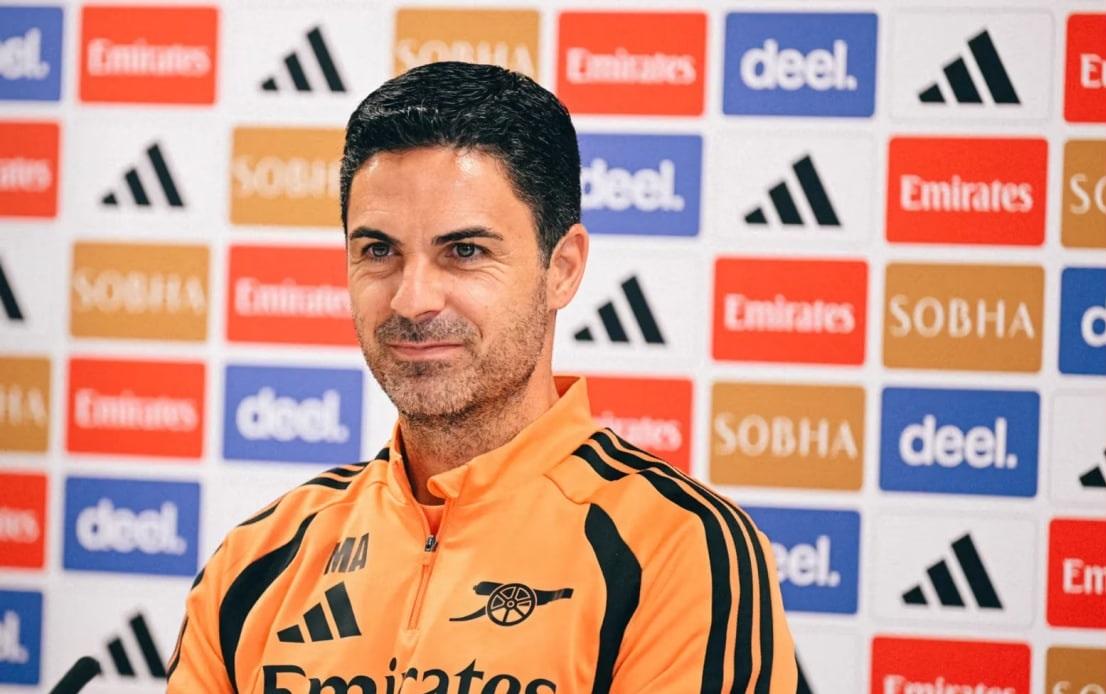
Mikel Arteta has expressed optimism over Bukayo Saka's recovery from a quad injury, revealing that the Arsenal forward has been showing "some very good symptoms" during the early stages of his rehabilitation.
Saka has been unavailable for the last four matches after being forced off just ten minutes into Arsenal's clash with Bayern Munich last month.
The club initially feared the winger could spend up to eight weeks on the sidelines, with the build-up of fluid around the injured muscle making it difficult to assess the full extent of the damage through scans.
Arsenal are set to face Hull on Saturday in their final fixture before the international break, before returning to action two weeks later for a demanding run of games.
From the end of November through to Christmas, the Gunners will take on Borussia Dortmund, both Manchester clubs and Real Madrid, alongside challenging away trips to Newcastle and Brentford, as well as an away north London derby.
Saka is expected to miss a significant portion of that schedule. A more accurate indication of his return date should become available after the international break, when he is expected to resume individual training on the grass.
Asked whether Saka could remain out for at least another month, Arteta agreed with the suggestion but provided an encouraging assessment of the winger's recovery so far.
"I think so but I don't know," Arteta said.
"The way it happened, it wasn't a really aggressive action. So that gives you some hope as well that the tissue will repair in a more efficient and faster way as well and he has some very good symptoms right now. So we have to wait and see."
Saka had started the Bayern Munich encounter brightly before suffering the injury in an incident that appeared relatively harmless.
He accelerated past Alphonso Davies but subsequently went down while playing a pass out wide, despite being under no pressure from an opponent.
Asked whether Arsenal had identified the reasons behind Saka's injury, Arteta replied: "Yeah, there are a few things that we believe can contribute.
"I prefer not to mention that here. But in reality as well to put a finger on something, maybe after you are totally wrong because there was something else. So it's very difficult.
"We have obviously thought and think and openly discussed a lot of things even with him to understand what could possibly have gone wrong. But the reality probably is that unfortunately we don't know.
"We can think that it is that but nobody has a certainty that it was just that."