

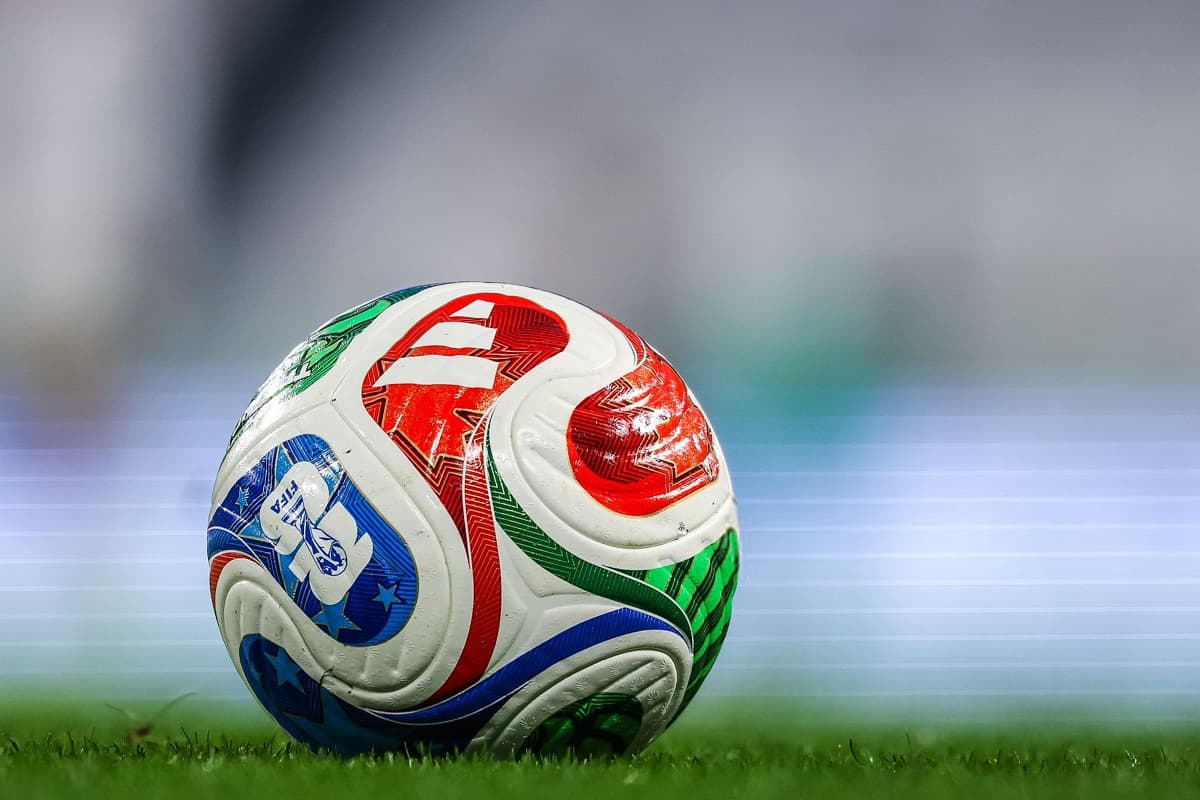
Revolutionary new World Cup match ball from Adidas needs to be CHARGED before games despite eye-watering price
The new World Cup ball made by Adidas needs to be CHARGED before matches.
The German sports manufacturer has designed the ball for the World Cups since 1970 – four years after England were last champions.
The 2026 edition is one of the most advanced pieces of technology that will be used at the tournament across Canada, Mexico and the USA.
The TRIONDA includes a built-in motion sensor that will be able to track every movement and touch in real time.
The ball had a 500Hz motion sensor chip that has been developed by Adidas.
It records data 500 times per second, which means every touch on the ball is detected and its position is constantly being tracked.
As a result, the ball requires charging before kick-off so it can be ready for each match.
The battery lasts up to six hours which means it should have plenty of juice for each match.
The extra tech put into the ball does affect the price tag as it costs a staggering £130.
It is emblazoned with colours from the flags of host nations the US, Canada and Mexico.
Not surprisingly it is the most expensive World Cup ball to date.
The sensor in the ball weighs just 14 grams, meaning that players will not be able to tell the difference. It is embedded into one of the ball’s panels and does not affect its balance.
The data it collects becomes more useful when it is combined with the tracking systems in place in the stadiums.
The World Cup venues all have cameras that can track players and create a full 3D model of the match.
This is fed straight to the VAR in real time and means that it will help them make decisions more accurately and in less time.