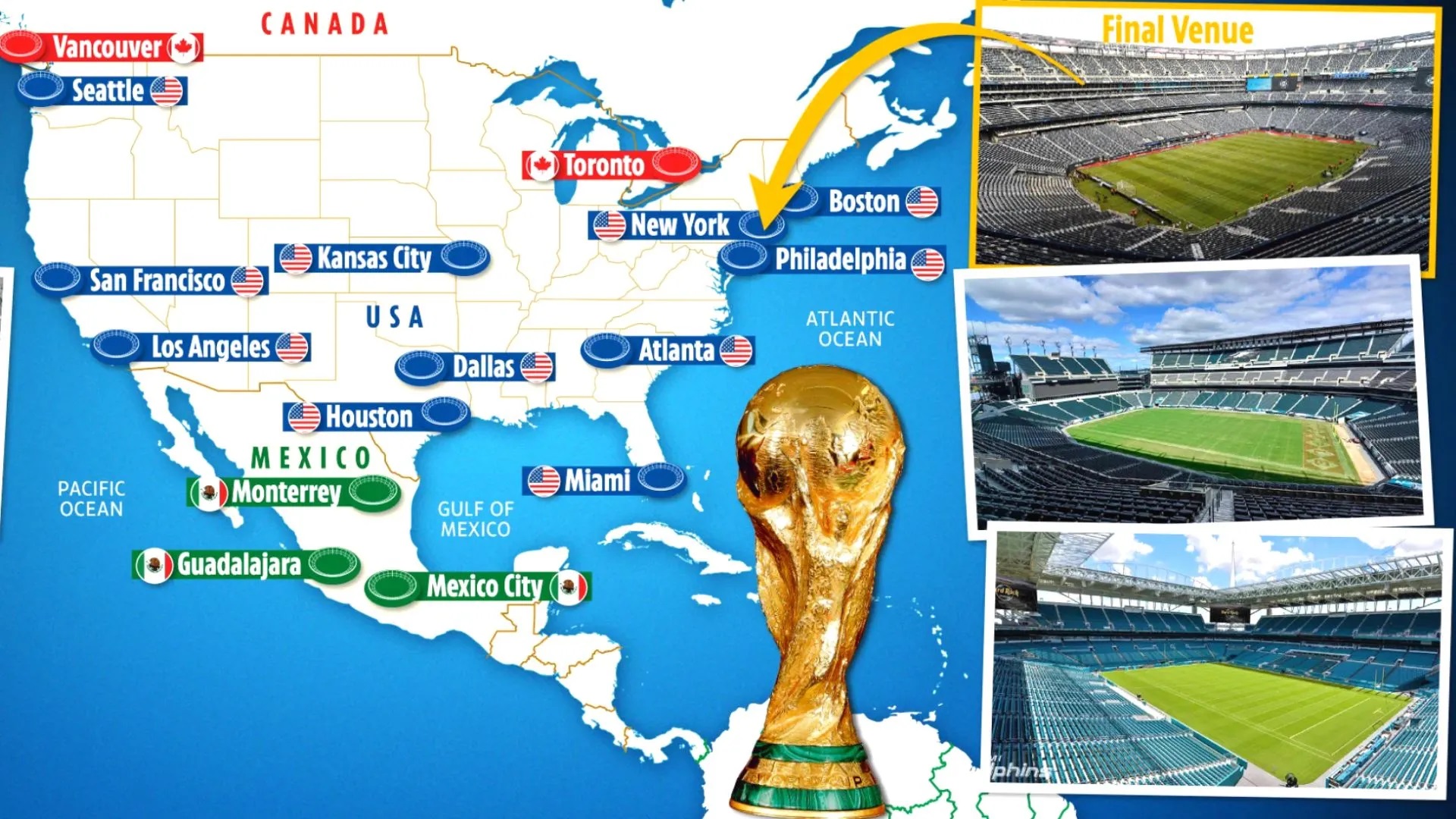
It is a World Cup across an entire continent, featuring 48 countries and 104 matches.
And that means needing a lot of places to play matches to cram them all into five weeks of sheer footballing drama.
Thankfully, USA, Mexico and Canada have provided no fewer than 16 stadiums for the 2026 World Cup.
And every single one has a story to tell with its own quirks, notorious curses, secret cow sheds, rude nicknames, world records and even vegetable patches on roofs.
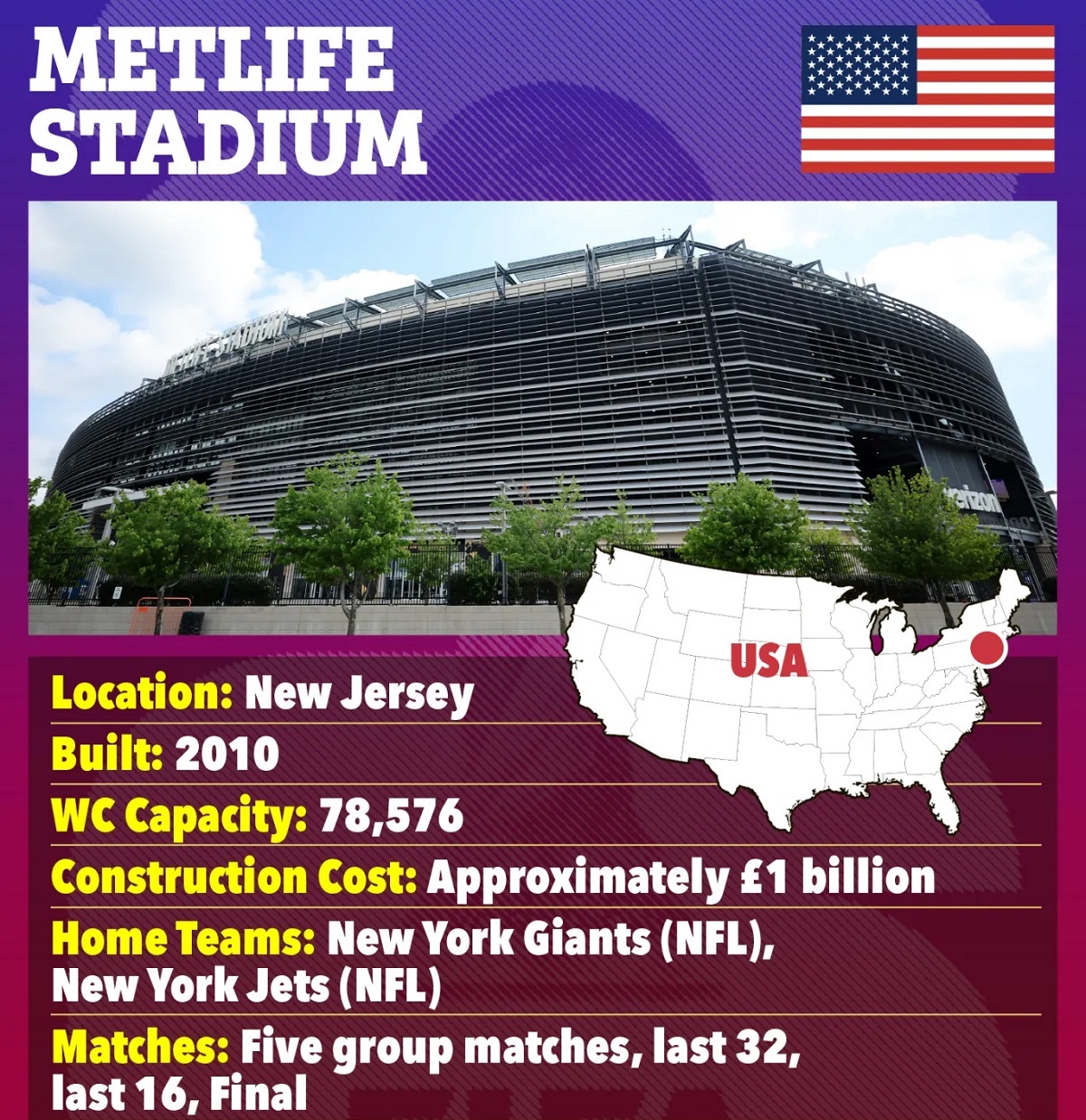
MetLife Stadium (New York New Jersey Stadium) – Capacity: 78,576
The MetLife will stage the biggest sporting event on the planet on July 19: the World Cup final.
But many of the world’s best footballers will be fearing the worst – due to the stadium’s curse as the ‘ACL Cemetery’.
That is because a number of NFL stars have suffered horrific ACL knee injuries – including New York Giants ace Malik Nabers this season plus San Francisco 49ers pair Nick Bosa and Solomon Thomas in the very same game in 2020.
It is not just ACLs, though, with Odell Beckham Jr breaking his ankle before both Jaelan Phillips and Aaron Rodgers snapped their Achilles.
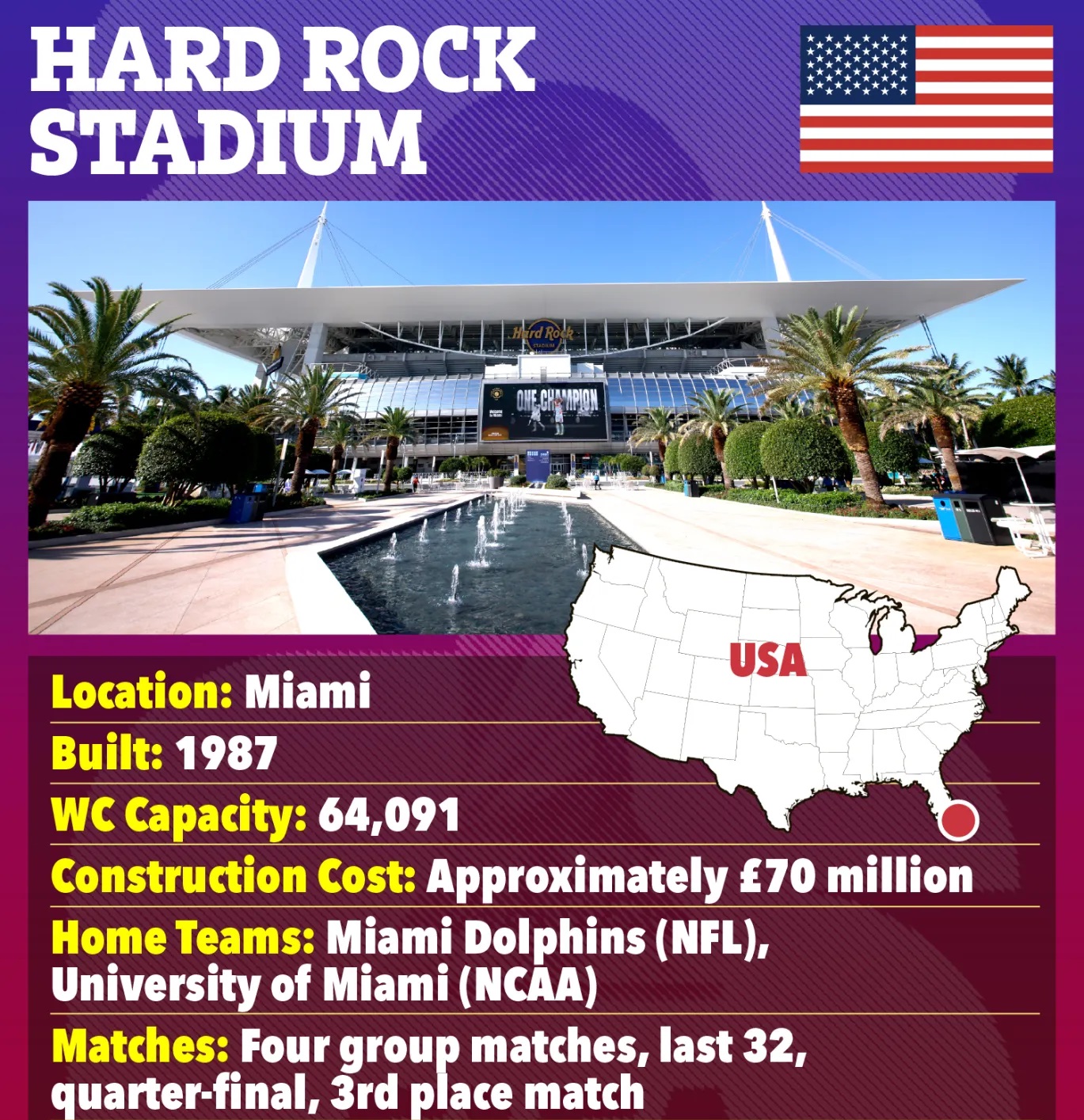
Hard Rock Stadium (Miami Stadium) – 64,091
While the MetLife has become known as the ‘ACL Cemetery’, the Hard Rock Stadium is built on top of a real-life cemetery.
That’s right – the home of the Miami Dolphins is understood to be on an area used by the Tequestas as a burial ground until around 800 AD.
Native American remains were discovered and there are even suggestions of spooky bad luck for home teams.
Uruguay will be hoping they don’t suffer a terrible fate this summer with two of their Group H matches at the Florida venue.
NRG Stadium (Houston Stadium) – 68,311
As well as being the home of the Houston Texans and staging two Super Bowls, the NRG Stadium also hosts the Houston Livestock Show and Rodeo.
The event takes place for three weeks every March and is the biggest of its kind in the world, with 2.7million attending last year.
The field is transformed in order to put on various cowboy activities including bull riding, bareback bronc riding, chuckwagon racing, cow wrestling and team roping plus livestock competitions, pig racing and auctions.
Animals are housed in what are effectively hidden stables and sheds beneath the main bowl of the stadium before being brought out for the public.
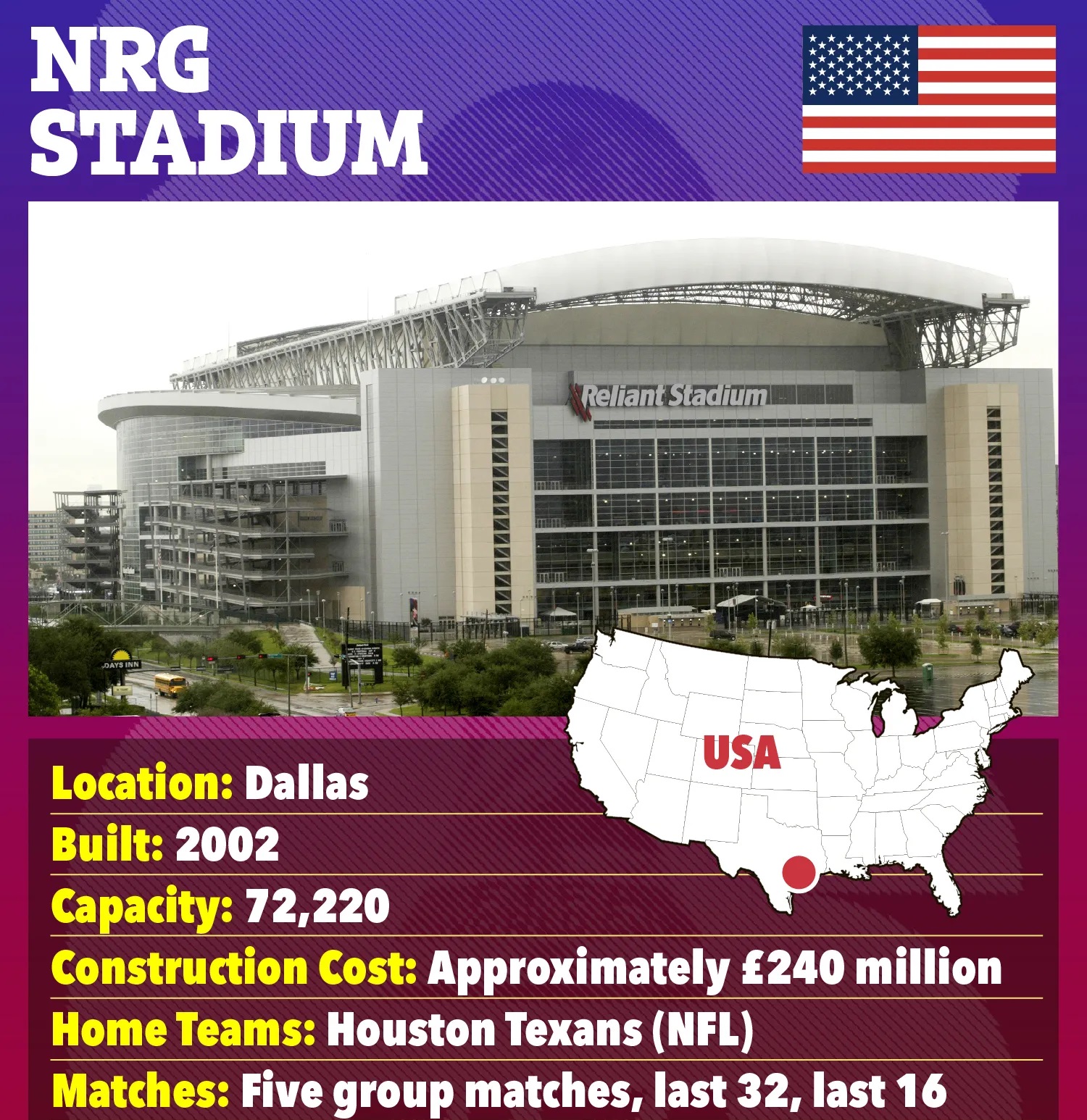
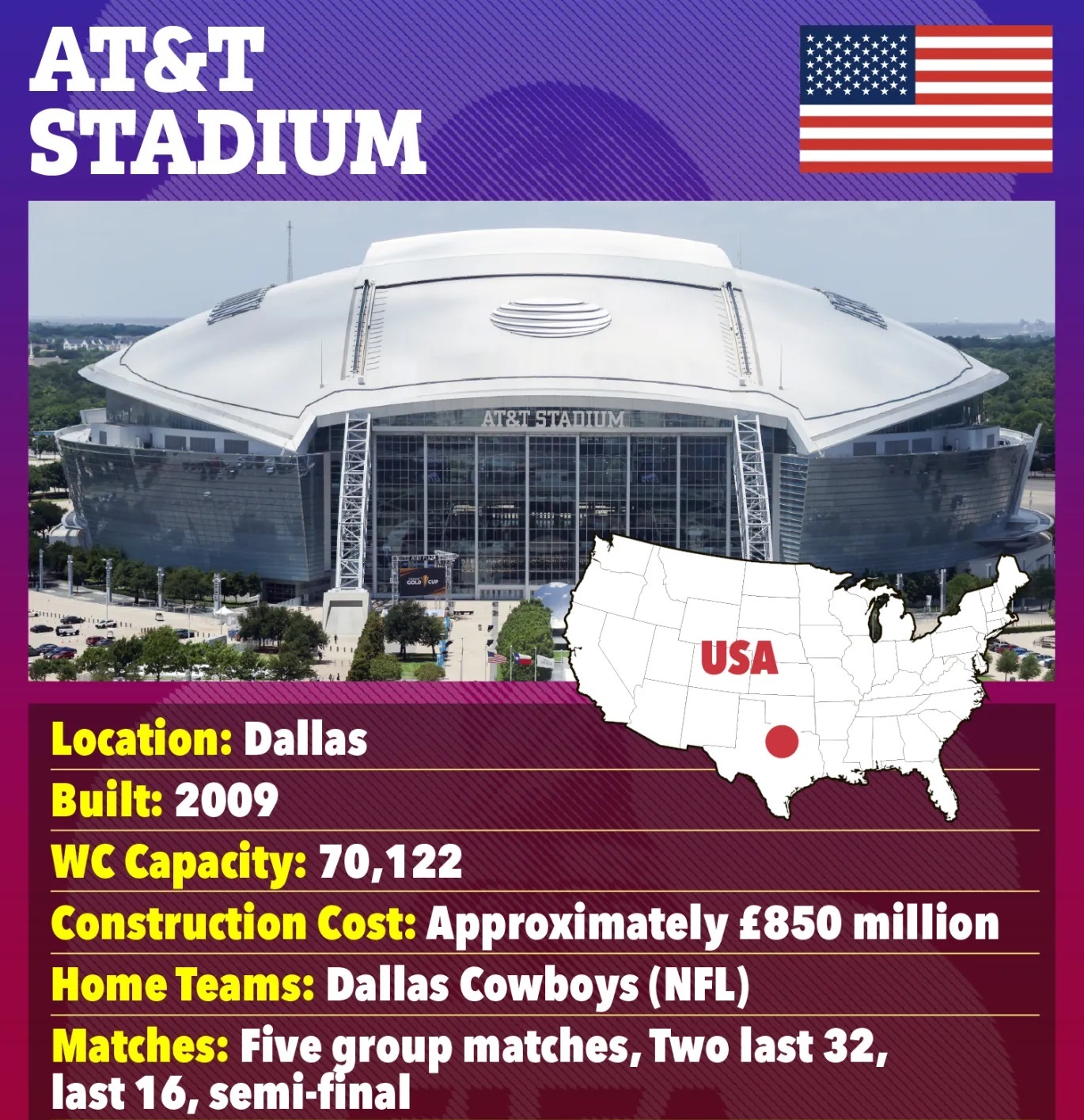
AT&T Stadium (Dallas Stadium) – 70,122
Staying in Texas and the AT&T Stadium in Dallas is the biggest venue being used this summer, with a capacity of 94,000 – but like with many NFL grounds, the changes to the pitch and configuration means the official Fifa capacity is significantly reduced.
Fans sat in the next back seats – aka the so-called cheap tickets – won’t have to worry about being unable to see the action, though.
Because there are whopping 175ft-wide giant HD screens that hang down from the retractable roof – they were a world record when used for the first time in 2009 and are even bigger than a basketball court.
However, they hang so low that it is not uncommon for the screens to be hit by flying footballs – whoops.
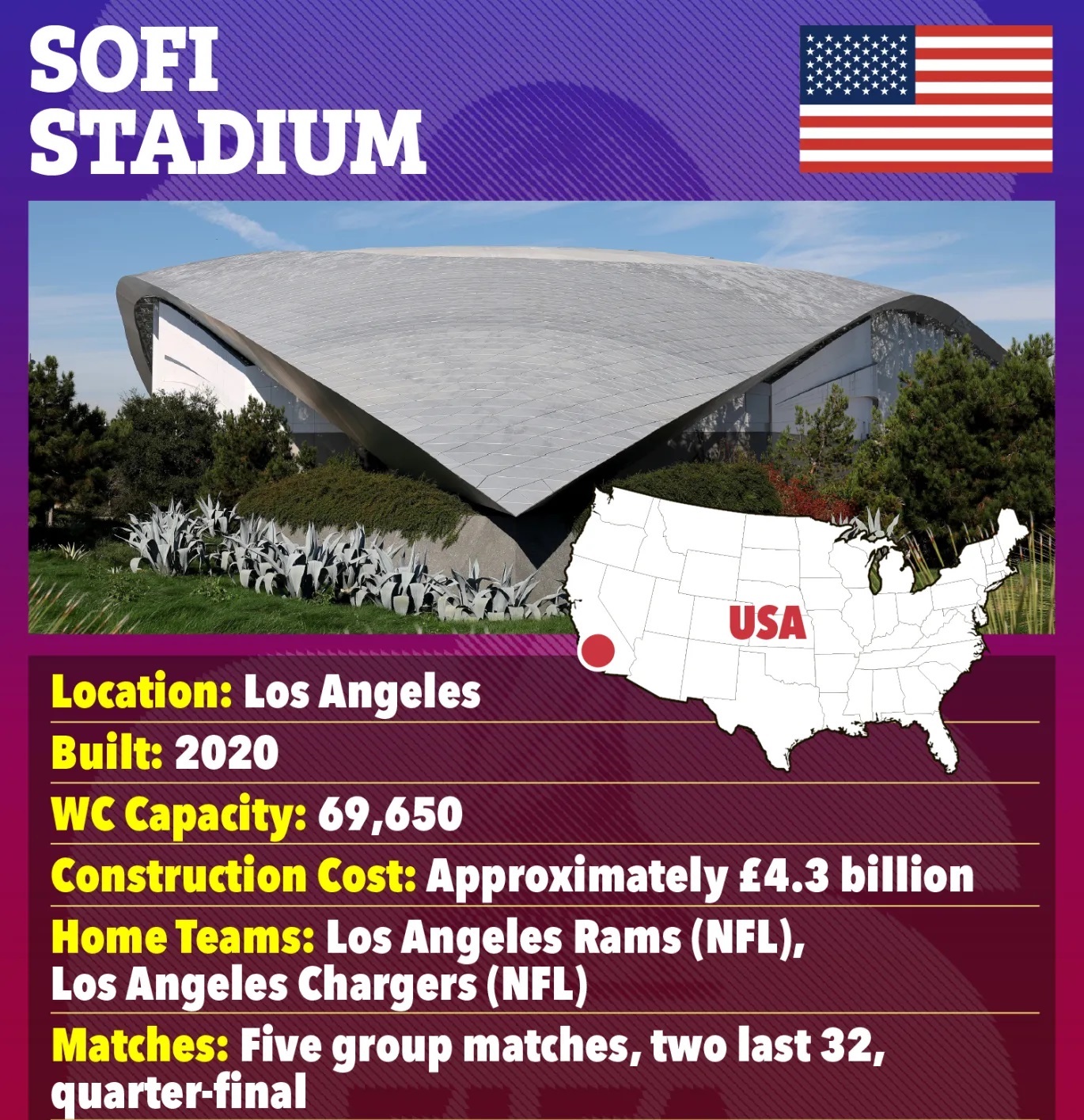
SoFi Stadium (Los Angeles Stadium) – 69,650
If the AT&T is the biggest, then the SoFi is surely the most impressive – and the ‘spaceship’ is the most expensive sports venue of all time.
Positioned right under the flight path for their neighbours at LAX Airport, the SoFi was opened in 2020 at a cost of a reported $7.3billion (£5.3bn) and will be used for the 2027 Super Bowl and 2028 LA Olympics.
The pitch is submerged more than 30m underground because architects were not allowed a tall structure so close to the runway, meaning it is barely noticeable in the streets surrounding it.
Its stunning features include a translucent canopy roof which has LED panels to display images and videos for plane passengers flying overhead plus the first-of-its-kind, double-sided, 4K HDR, 80m-pixel, 1,000-tonne, suspending ovular Samsung Infinity Screen running around the inside.
Mercedes-Benz Stadium (Atlanta Stadium) – 67,382
When you’ve got a nickname of Megatron’s Butthole, you know you have made a bold design choice.
Another relatively new venue, opened in 2017, the Mercedes-Benz Stadium in Atlanta is full of impressive tech.
One of its standout features is its unique retractable roof, which is made up of eight ‘petals’ that are designed to open and close like a camera aperture and look like a falcon’s wings – a nod to the NFL team who call this place home.
However, some reckon it looks like something else, prompting the unfortunate moniker referencing the backside back of a Transformer’s anatomy.

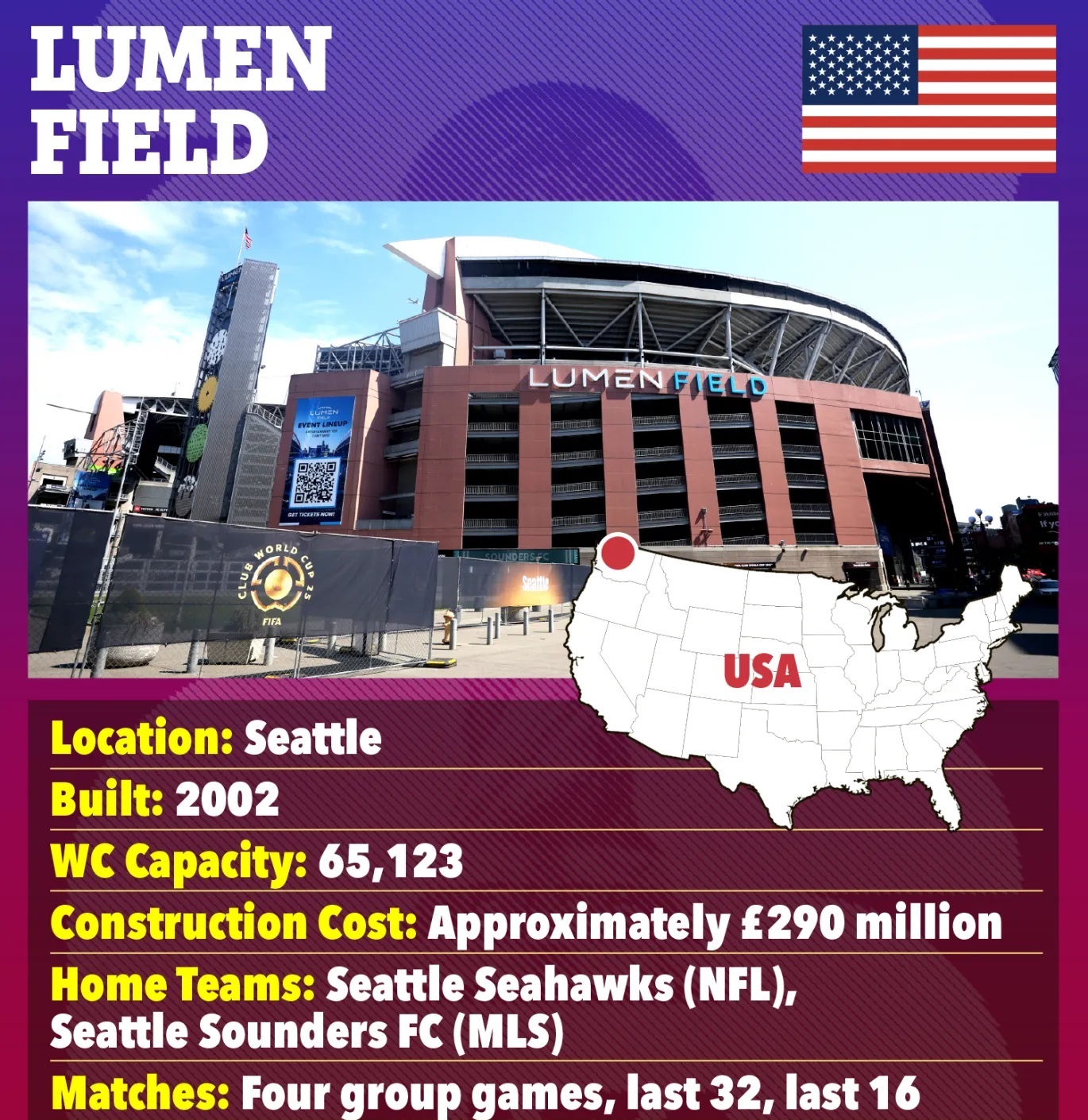
Lumen Field (Seattle Stadium) – 65,123
Make no mistake about it, Lumen Field will be absolutely rocking when hosts USA take on Australia there on June 19.
And it has got history. Lots of it.
Various earthquakes have been recorded by excited fans celebrating at Lumen Field.
It all started with the ‘Beast Quake’ when Seattle Seahawks star Marshawn Lynch scored an epic touchdown in January 2011 and the 66,000 inside the stadium went so wild the ground shook and hit 2.0 on the Richter Scale on a nearby seismometer.
Similar earth-shaking feats have been achieved since, including during the Seattle Sounders’ MLS Cup final in 2019 and a 2.3 effort during Taylor Swift’s Eras Tour concert.
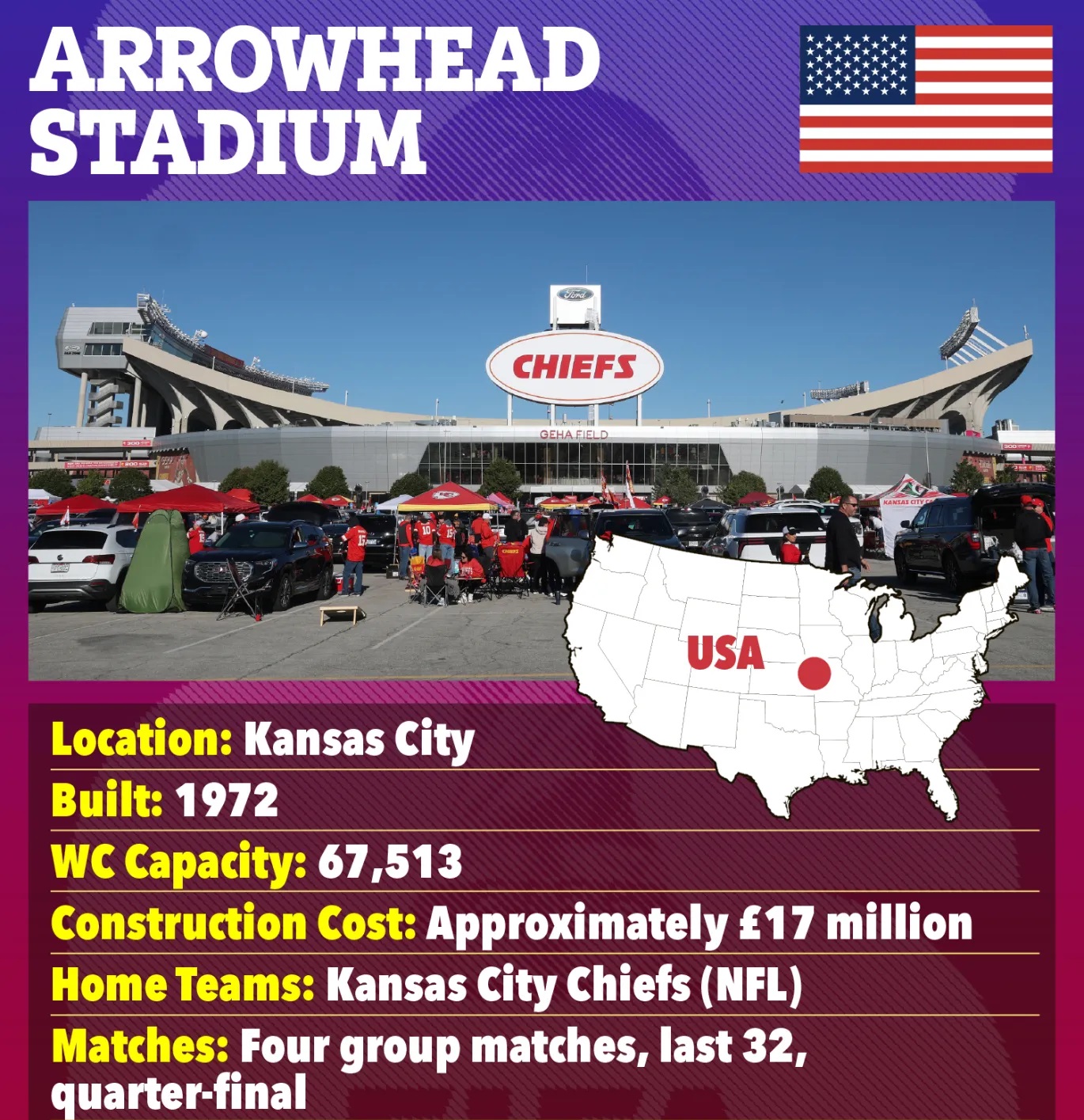
Arrowhead Stadium (Kansas City Stadium) – 67,513
Lumen Field is the bounciest stadium and the Arrowhead Stadium is the loudest.
The home of the Kansas City Chiefs is known for its incredible atmosphere.
In 1990, the Chiefs were threatened with a penalty if the crowd did not quieten down against the Denver Broncos.
And in 2013, the fans set a world record for the loudest stadium.
Their crown was pinched by Lumen Field but they reclaimed it in 2014 with a staggering 142.2 decibels against the New England Patriots.
Will the Argentina and Algeria fans get close on June 16?
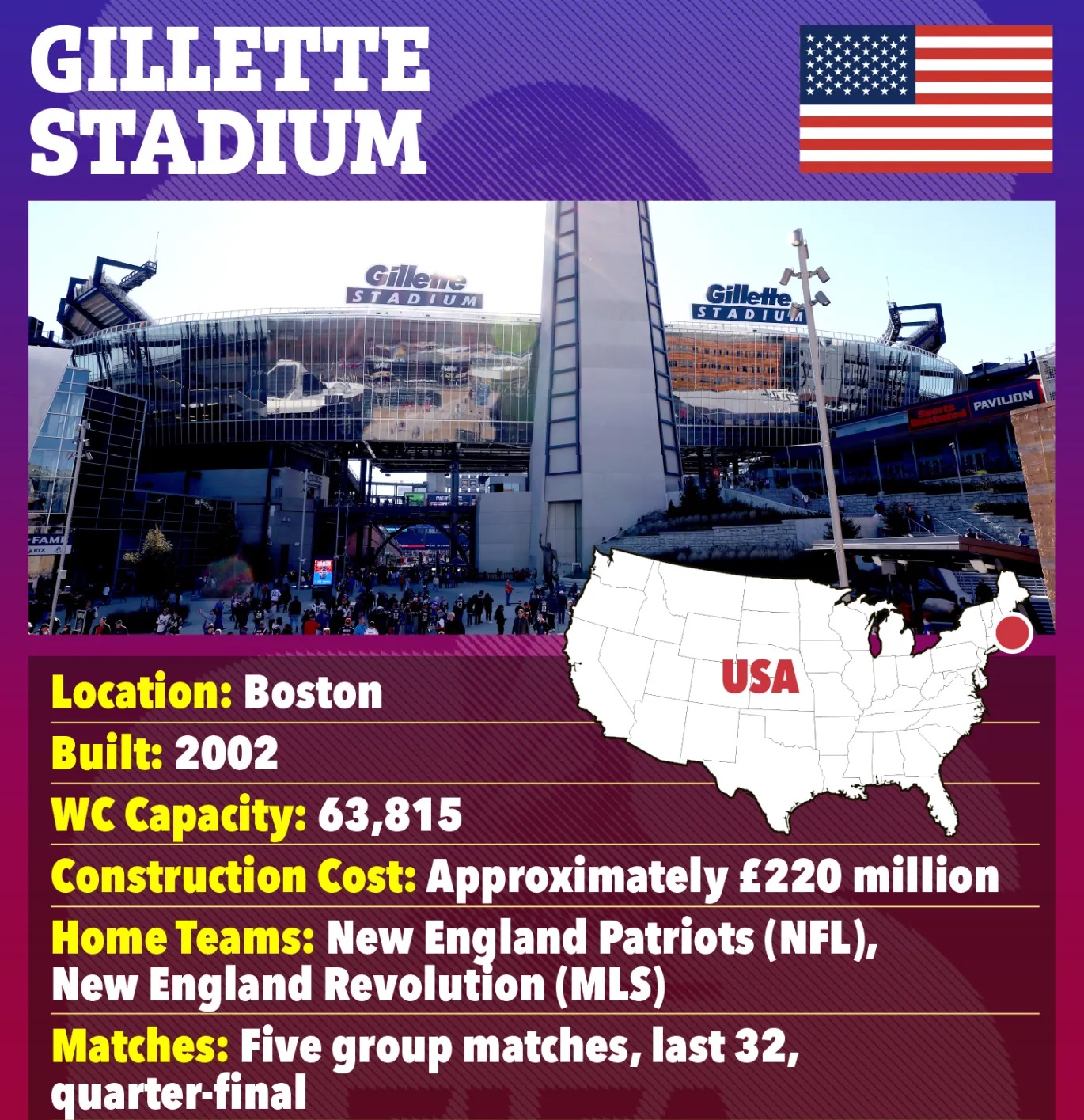
Gillette Stadium (Boston Stadium) – 63,815
Boston may not be known as the City of Bright Lights, but the Gillette Stadium boasts a very bright light incorporated into the north end.
Fans can watch action from the top of a 22-storey lighthouse which towers over the stand.
The lighthouse was replaced in 2023 with a 66m tall version which has a 360-degree viewing platform at the top.
Adjacent to the unusual feature is a bridge – modelled on Boston’s Longfellow Bridge.
Because who doesn’t want a bridge and a lighthouse at a stadium?
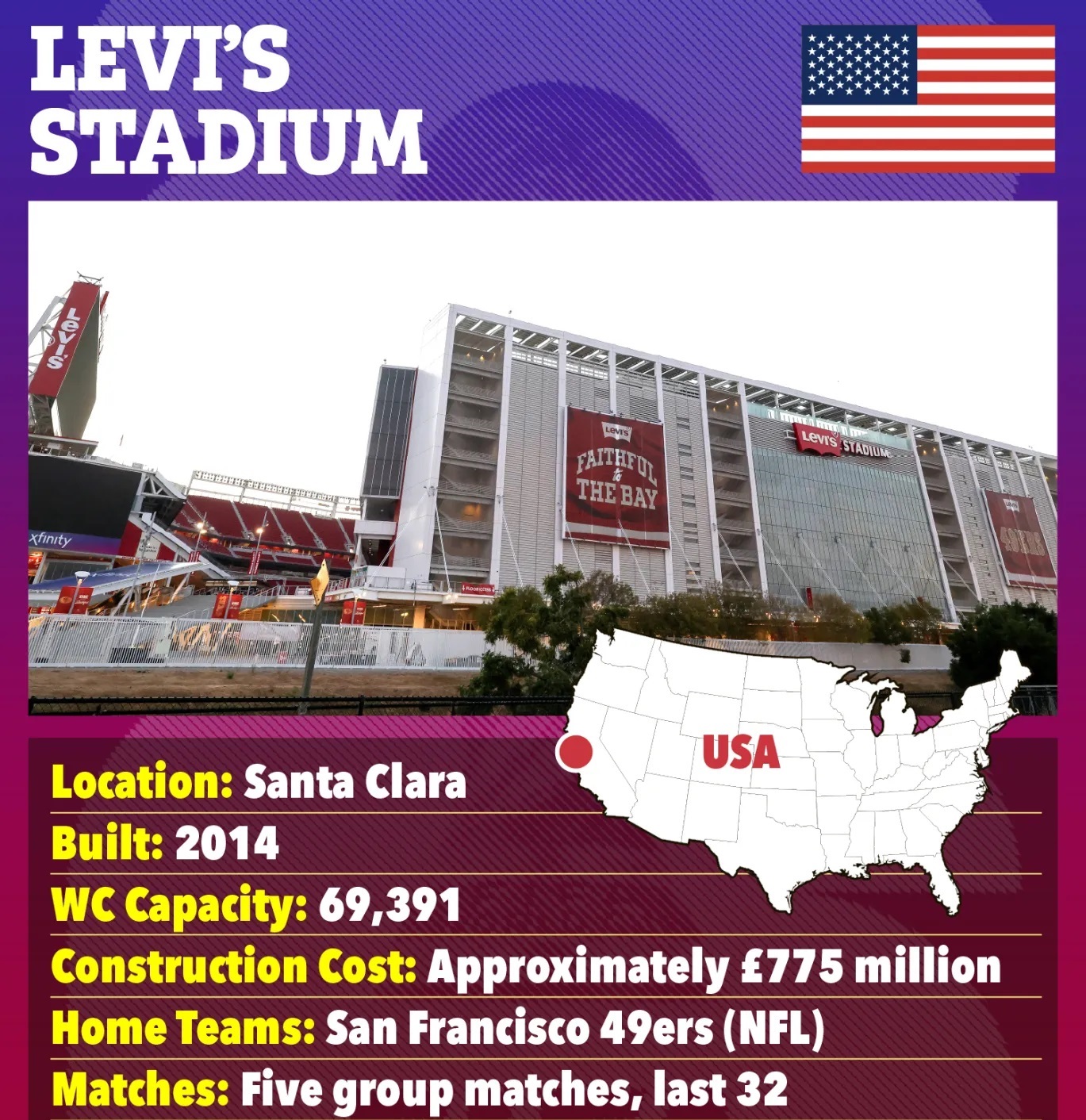
Levi’s Stadium (San Francisco Bay Area Stadium) – 69,391
The Levi’s Stadium has a football pitch on the ground… and a vegetable patch on the roof.
It was designed to be a leading venue for sustainability and the environment, with recycled water for landscape irrigation and flushing toilets, special solar reflectant paving and a strong emphasis on recycling.
But the standout feature is on the ’green roof’, where fans find the Faithful Farm.
First planted in 2018 and enjoying the Santa Clara sunshine, 40 different crops are grown on rotation including tomatoes, courgettes, aubergine and peppers as well as herbs like basil, sage and lavender.
The crop yields approximately 3,400kg of produce each year, much of which is then used in the food on the menu at the stadium’s high-end hospitality and restaurants.
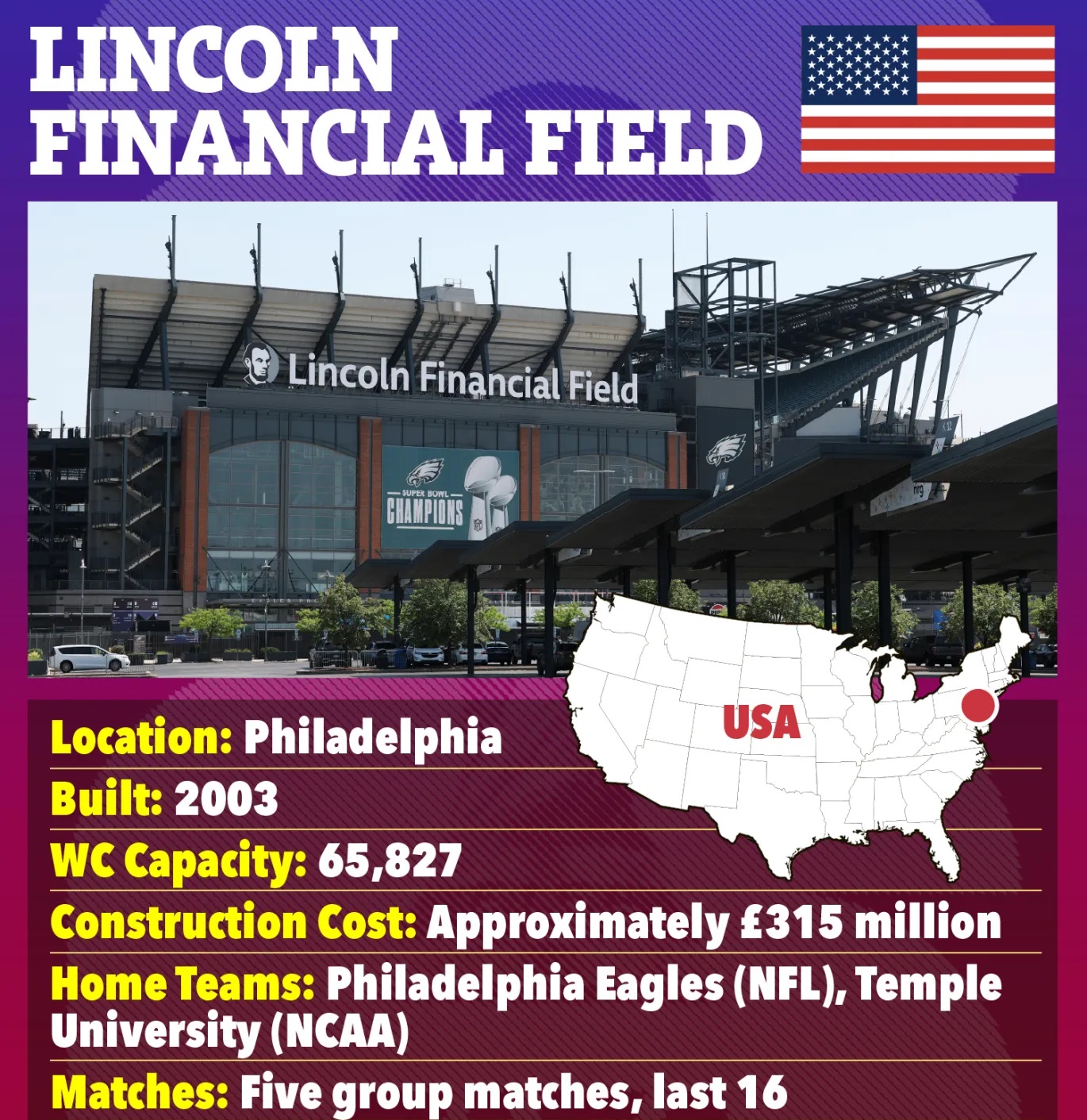
Lincoln Financial Field (Philadelphia Stadium) – 65,827
The final stadium in the USA is Lincoln Financial Field – and it rivals the Levi’s for being the greenest.
In fact, the Philadelphia venue is one of the best sports stadiums in the world for creating and using renewable energy.
There are 11,000 solar panels on the roof and 14 wind turbines outside, making Lincoln Financial Field carbon neutral.
Estadio Akron (Estadio Guadalajara) – 44,330
Heading across the border into Mexico and all three stadiums in the country are fascinating and totally unique.
The Estadio Akron in Guadalajara is dubbed the ‘football volcano’ because it has been built into a man-made hill – and its sides are covered by natural grass.
The volcano theme continues with a white tent-like roof to represent a cloud of steam, and the red seats the red-hot crater.
The idea was designers did not want a concrete eyesore, so opted to make it look like a mountain – or better still, a volcano rising out of the earth and ready to explode with noise, colour, drama and energy… just like it did when Canelo Alvarez fought and Shakira performed there.
And no doubt when the World Cup arrives in town, too.
Fun fact: the grassy exterior catches CO2 and acts like a sponge to collect rainwater which is redirected for irrigating the pitch and flushing the toilets.
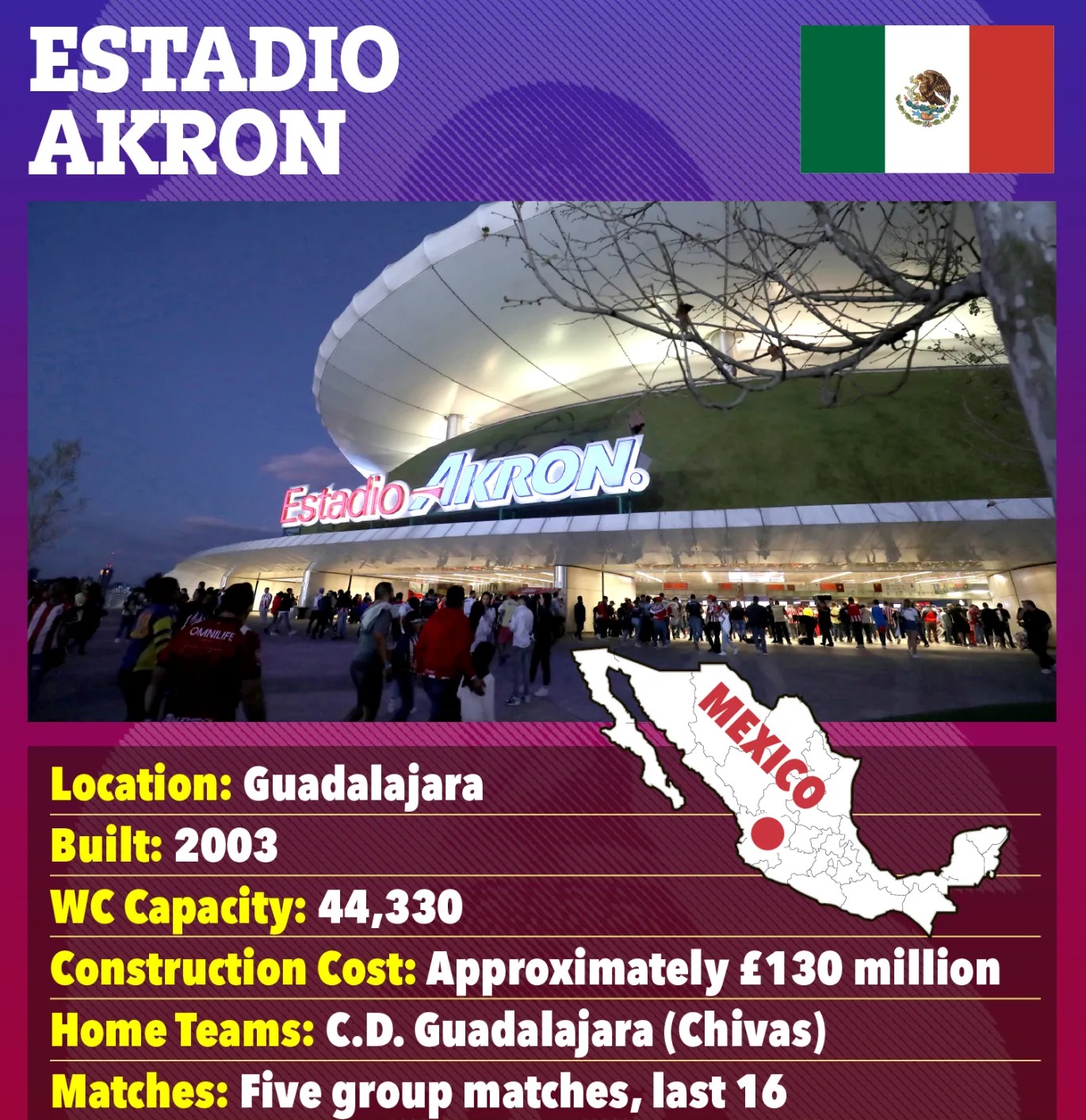
Estadio BBVA (Estadio Monterrey) – 50,113
While the Akron is designed to look like a mountain, the Estadio BBVA is designed to look at a mountain.
The ‘Steel Giant’ in Monterrey opened in 2015 but was specifically designed asymmetrically for a genius reason.
The north side stands at 46m in height – but the south side is only 32m.
And that is so that some fans get a brilliant, unobstructed view of the 5,970ft Cerro de la Silla mountain which towers over the stadium to the south.
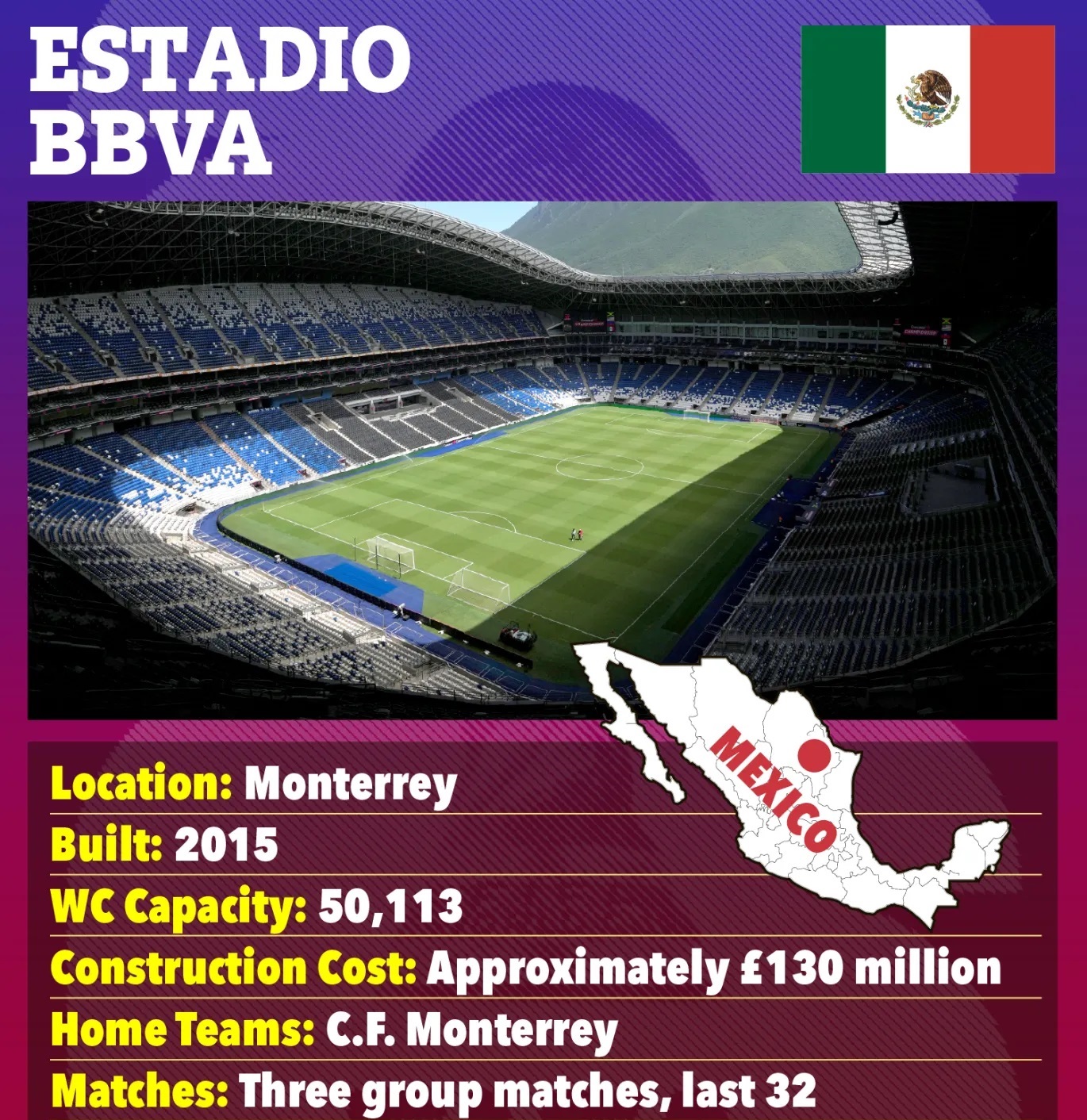
Estadio Azteca (Mexico City Stadium) – 72,766
The name Azteca immediately evokes nostalgic memories for plenty of football fans with the stadium staging the 1970 and 1986 World Cup finals – won by Pele’s Brazil and Diego Maradona’s Argentina respectively.
But it may evoke some tricky memories for players because Mexico City is situated 2,200m above sea level.
That altitude makes the air thin, often leaving players gasping for breath in the high humidity, while the ball flies around that bit faster.
As well as NFL matches and huge concerts, the Estadio Azteca has played host to various big Christian conferences attracting as many as 105,000 participants on a single day and even staged a public funeral for Club America fan and comedian Roberto Gomez ‘Chespirito’ Bolanos.
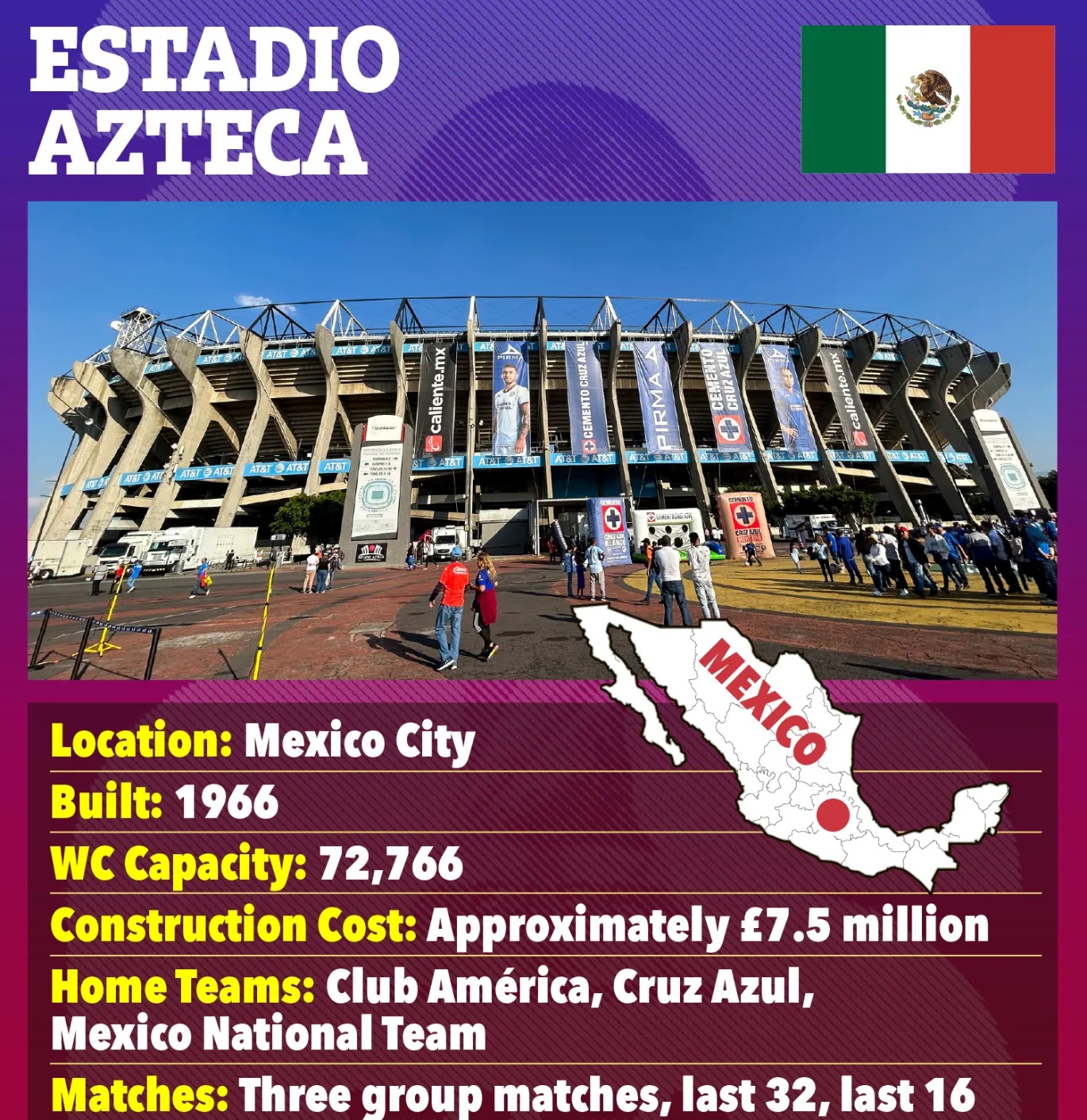
BC Place (Vancouver) – 48,821
There are two stadiums for the World Cup in Canada, including BC Place in Vancouver.
The stadium was used as the arena for the opening and closing ceremonies of the 2010 Winter Olympics.
Three years before the Games, the old air-supported roof had to be deflated and re-pumped up after snow and ice accumulated and caused a tear in the fabric.
But after the Olympics, the stadium’s inflatable roof was replaced with the world’s largest cable-supported retractable roof as part of a huge renovation, from which hangs a giant scoreboard over the pitch.
Like the Azteca, BC Place has religious links – Pope John Paul II visited in 1984, months before world-famous evangelist and Queen Elizabeth II’s friend Billy Graham held an eight-night crusade.
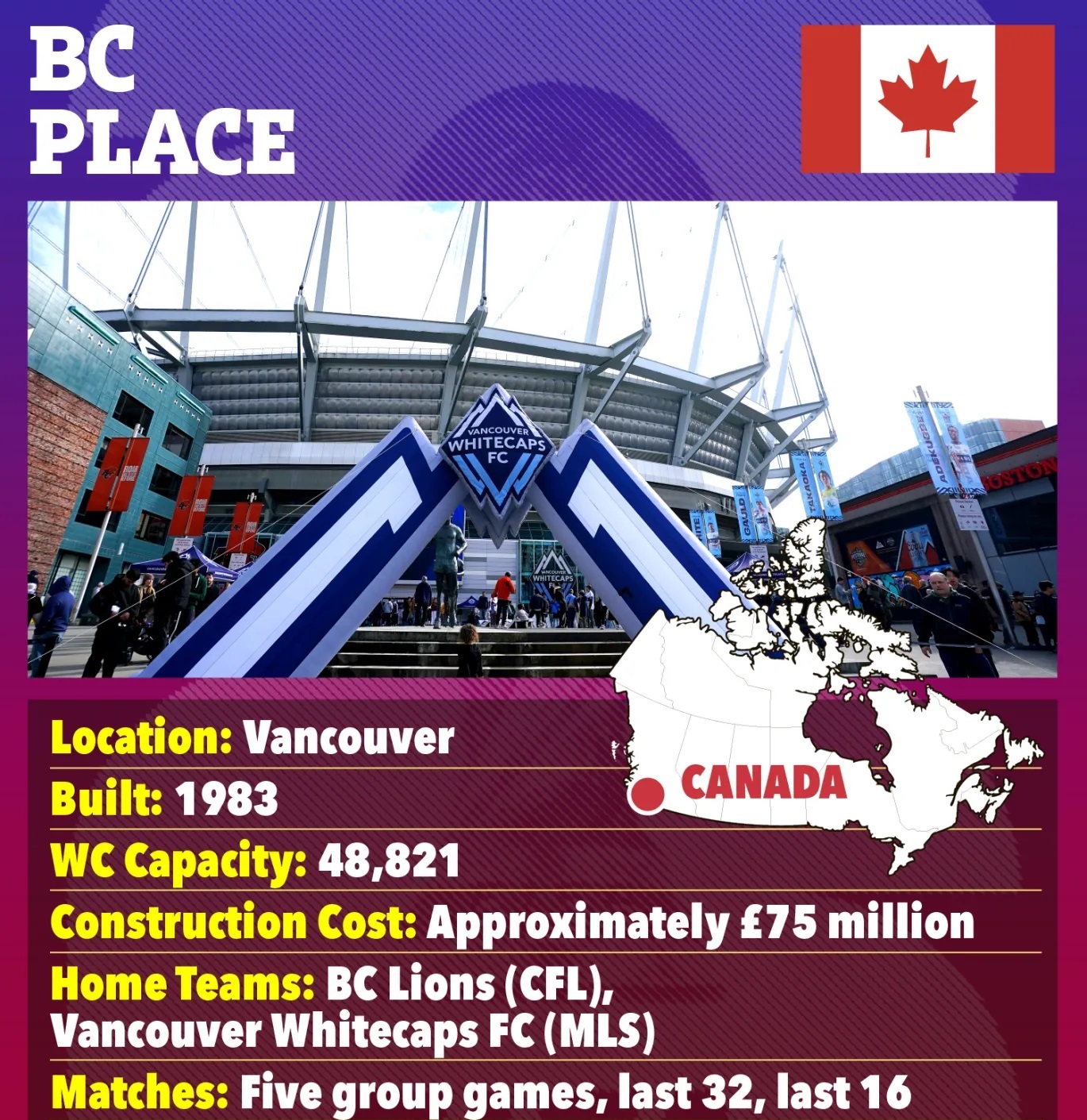
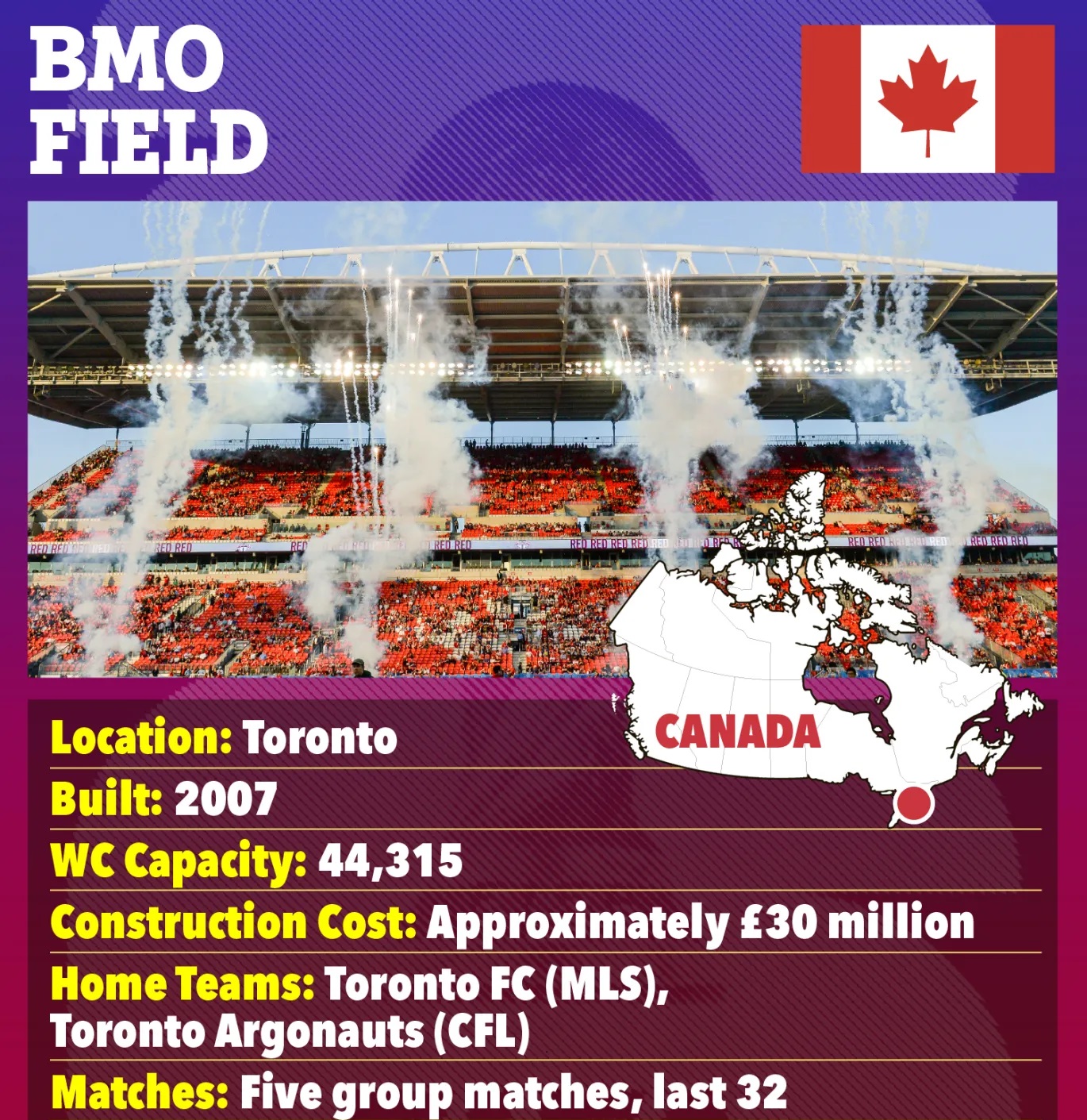
BMO Field (Toronto Stadium) – 44,315
Ironically, it is last and very much least when it comes to BMO Field in Toronto.
The stadium usually only has a capacity of around 30,000 for Toronto FC MLS games – well under the Fifa minimum requirement of 40,000.
So Toronto are frantically adding nearly 15,000 seats to take it up to almost 45,000, still the smallest 2026 World Cup venue, by building temporary grandstands over the permanent north and south stands.
And much like Stadium 974 made of shipping containers at Qatar 2022, the makeshift structure will be dismantled as soon as BMO Field has staged its sixth and final game, a round-of-32 clash on July 2.