Iranian soccer executives were unable to attend an annual meeting of the sport’s Asian governing body here in Canada due to visa issues, the body’s general secretary said Tuesday at a gathering impacted and dampened by war in the Middle East.
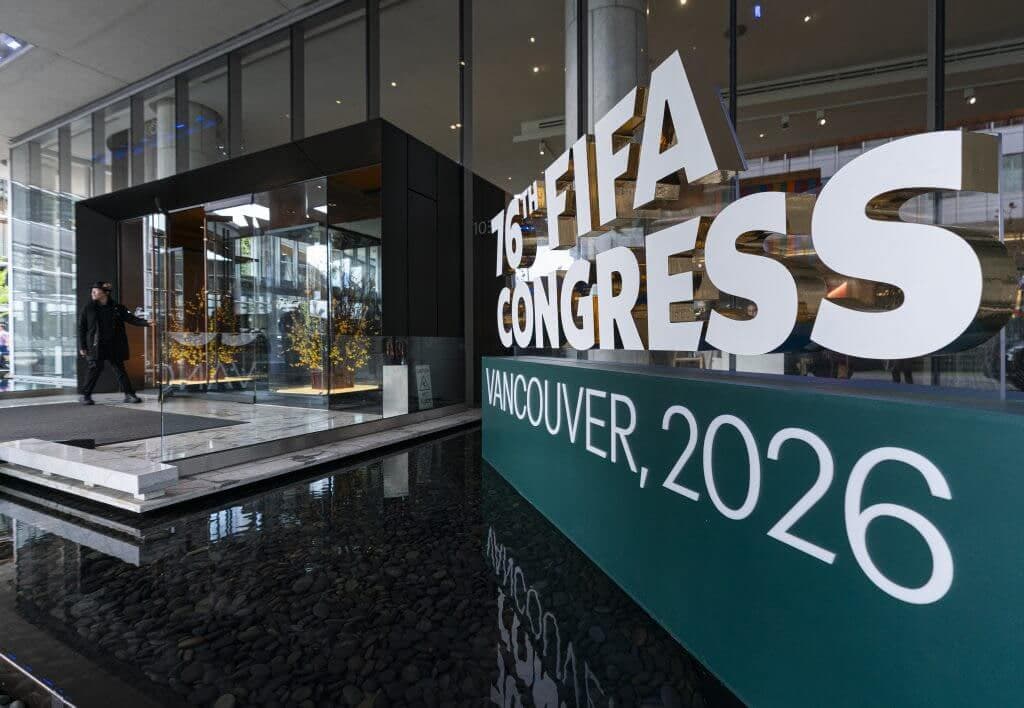
Held at the Vancouver Convention Centre two days before the broader FIFA Congress at this same venue, the Asian Football Confederation Congress brought together officials from 46 of the 47 AFC members, a group of national soccer federations stretching from the Middle East to Japan and Australia.
Most participated, though some joined via Zoom. Some were “not able to join us today due to the conflict affecting their regions,” Sheikh Salman bin Ibrahim Al Khalifa, the AFC’s Bahraini president, said.
And Iran’s delegates did not participate at all.
“Kindly note that the Football Federation of Islamic Republic of Iran is unable to attend the 36th (AFC) Congress 2026 due to some visa formalities issues,” the AFC general secretary Windsor John said as he opened a roll call. Two chairs designated for Iranian delegates were empty.
Later, when Sheikh Salman and FIFA president Gianni Infantino awarded commemorative shields to representatives from each Asian country that has qualified for the 2026 men’s World Cup, John said that Iranian officials would be presented with theirs “once they arrive.”
FIFA had been anticipating all 211 of its member associations to be represented at Thursday’s Congress, an event that doubles as a meeting and convention but also something of a month-early World Cup kickoff event. Tuesday’s absences inserted some doubt, though Iran is still expected to arrive in time.
The nature of the visa issues is unclear. Canada’s Immigration, Refugees and Citizenship department (IRCC) has not yet responded to Monday and Tuesday questions from The Athletic seeking clarity. FIFA has not commented.
Susan Shalabi, vice president of the Palestinian Football Association, also detailed her delegation’s troubles securing visas, and told reporters that they were one of 10-12 federations “who had problems with their visas.”
Initially, she said, the PFA’s president, general secretary and legal counsel were all unable to get visas. But “after a lot of contacting on the political level, on the social level, on the media level … the government changed their minds, and we were able to get that visa.”
The PFA president, Jibril Rajoub, did not receive one in time to attend Tuesday’s AFC meeting, but was expected to arrive Tuesday night in time for Thursday’s FIFA Congress, Shalabi said.
“But some members,” she said of FIFA’s delegates more broadly, “will not be able to make it.”
When asked if she and other PFA officials planned to travel to the World Cup itself, which will be co-hosted by Canada, Mexico and the United States, Shalabi said: “Let’s hope we don’t face problems and we are able to. We hope so, certainly.” (Palestine did not qualify.)
Iranian soccer officials also struggled to get visas to enter the U.S. ahead of the World Cup draw, held in Washington, D.C., in December. Multiple had their applications denied, and the entire delegation threatened to boycott the event, but a few representatives ultimately attended.
When asked about the denials at the time, Andrew Giuliani, head of the White House’s World Cup task force, said that “every visa decision is a national security decision.”
Amid similar questions about whether Iranian officials will be able to attend the World Cup itself in June, U.S. Secretary of State Marco Rubio said last week that “the problem with Iran would be not their athletes, it would be some of the other people they would want to bring with them, some of whom have ties to the IRGC (Islamic Revolutionary Guard Corps).
“We might not be able to let them in, but the athletes themselves (will be allowed),” Rubio said. “What they can’t bring is a bunch of IRGC terrorists into our country and pretend that they’re journalists and athletic trainers.”
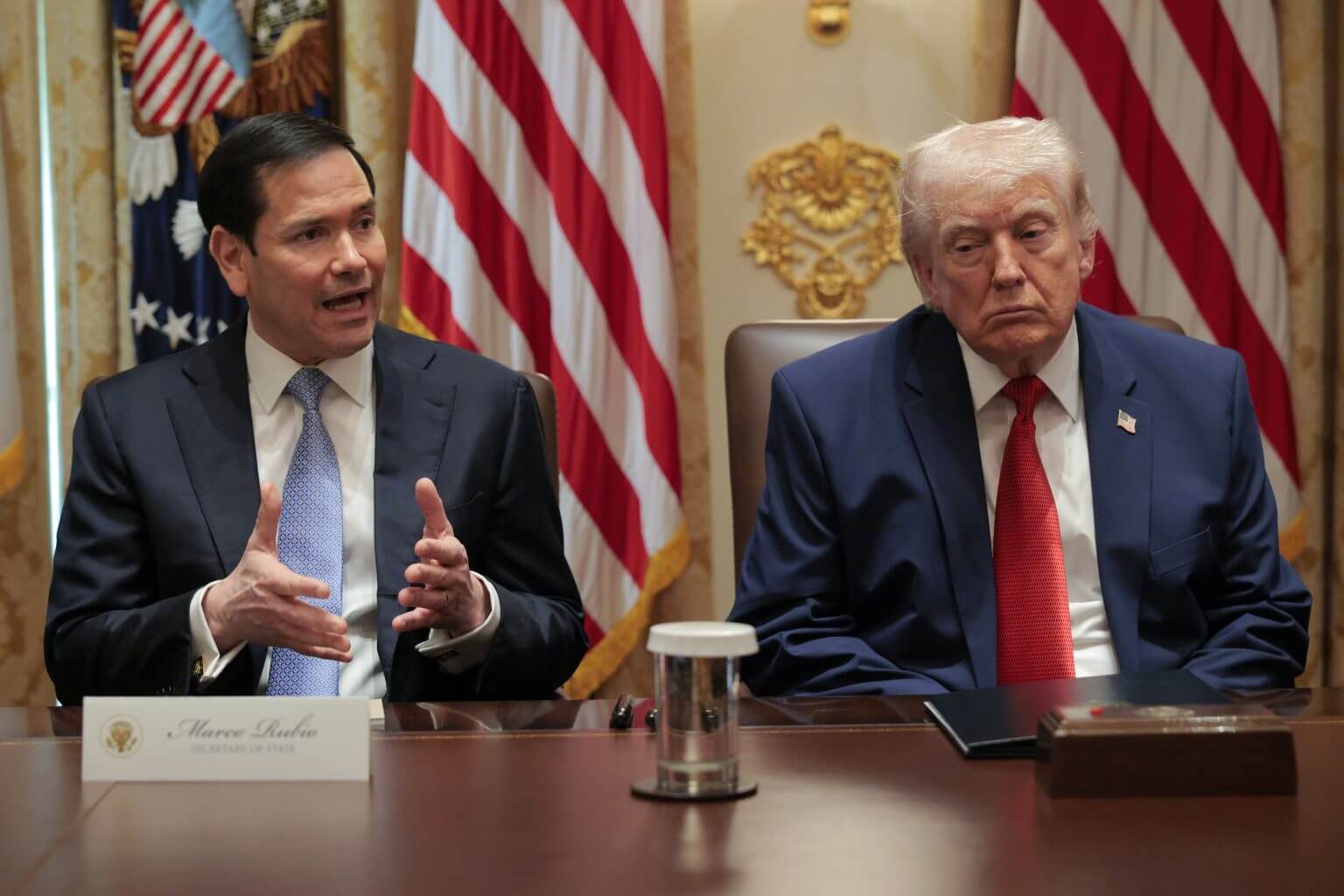
Doubts about the participation of Iranian officials and staffers first arose when U.S. President Donald Trump signed a proclamation last year restricting travel to the U.S. by people from a dozen countries, including Iran and Haiti. (Trump has since expanded the ban; it now includes two more World Cup qualifiers, Senegal and the Ivory Coast.)
The ban carves out an exemption for “any athlete or member of an athletic team, including the coaches, persons performing a necessary support role, and immediate relatives, traveling for the World Cup.” But it does not necessarily extend to executives; many decisions remain at the discretion of U.S. authorities.
The American and Israeli military attacks on Iran, and the subsequent wider war in the Middle East, have added to doubts. Iranian authorities have recently said their team will participate in the World Cup, but it is not known which staffers and officials will be able to accompany them.
The war affected the mood at Tuesday’s AFC Congress. “I want to begin by recognizing the realities beyond football that weigh heavily on many of our Asian football family,” Salman said at the beginning of his opening remarks.
“To those who are not here physically,” he continued, “please know that our hearts and minds are with you and your loved ones. We pray for your safety and strength during this difficult time.
“So much of what we have faced — the global shifts and uncertainty — has been entirely outside of our control.”
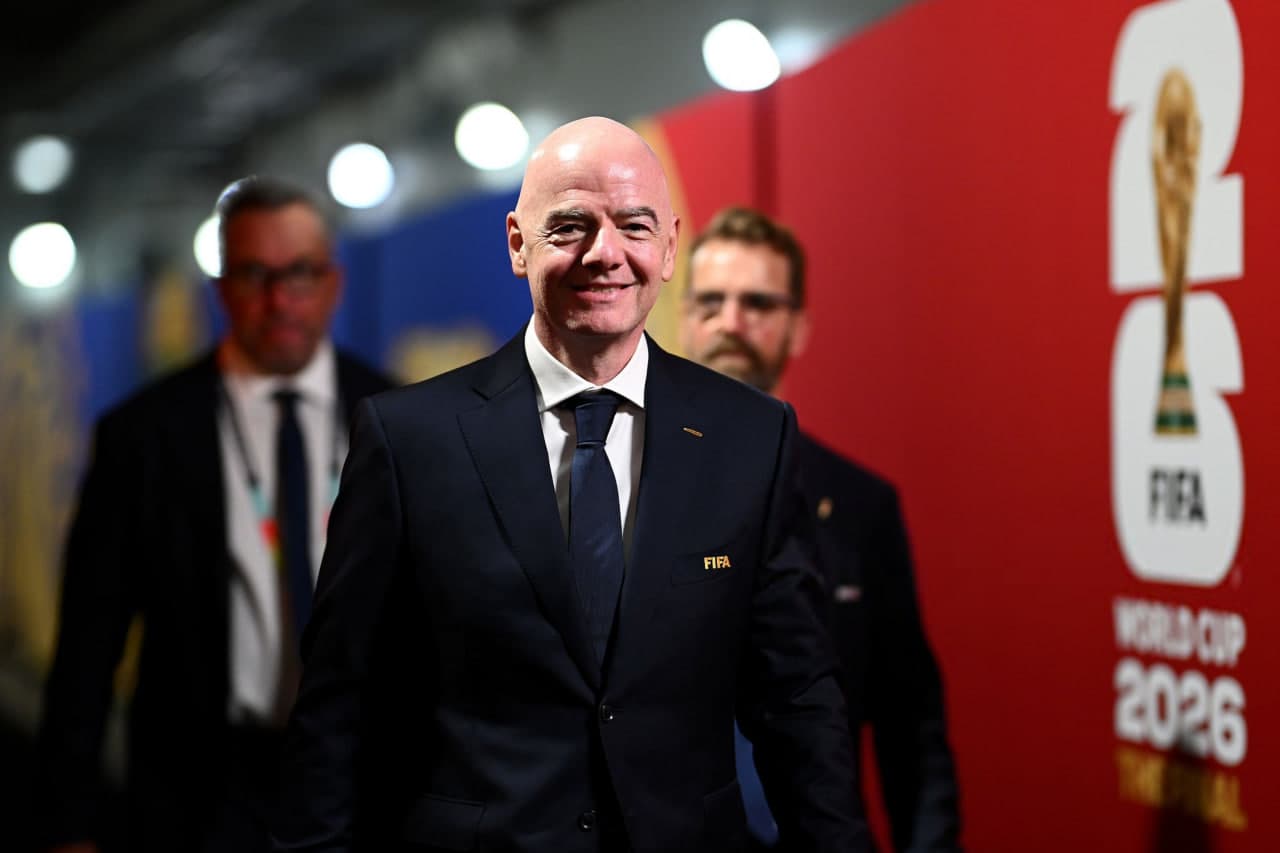
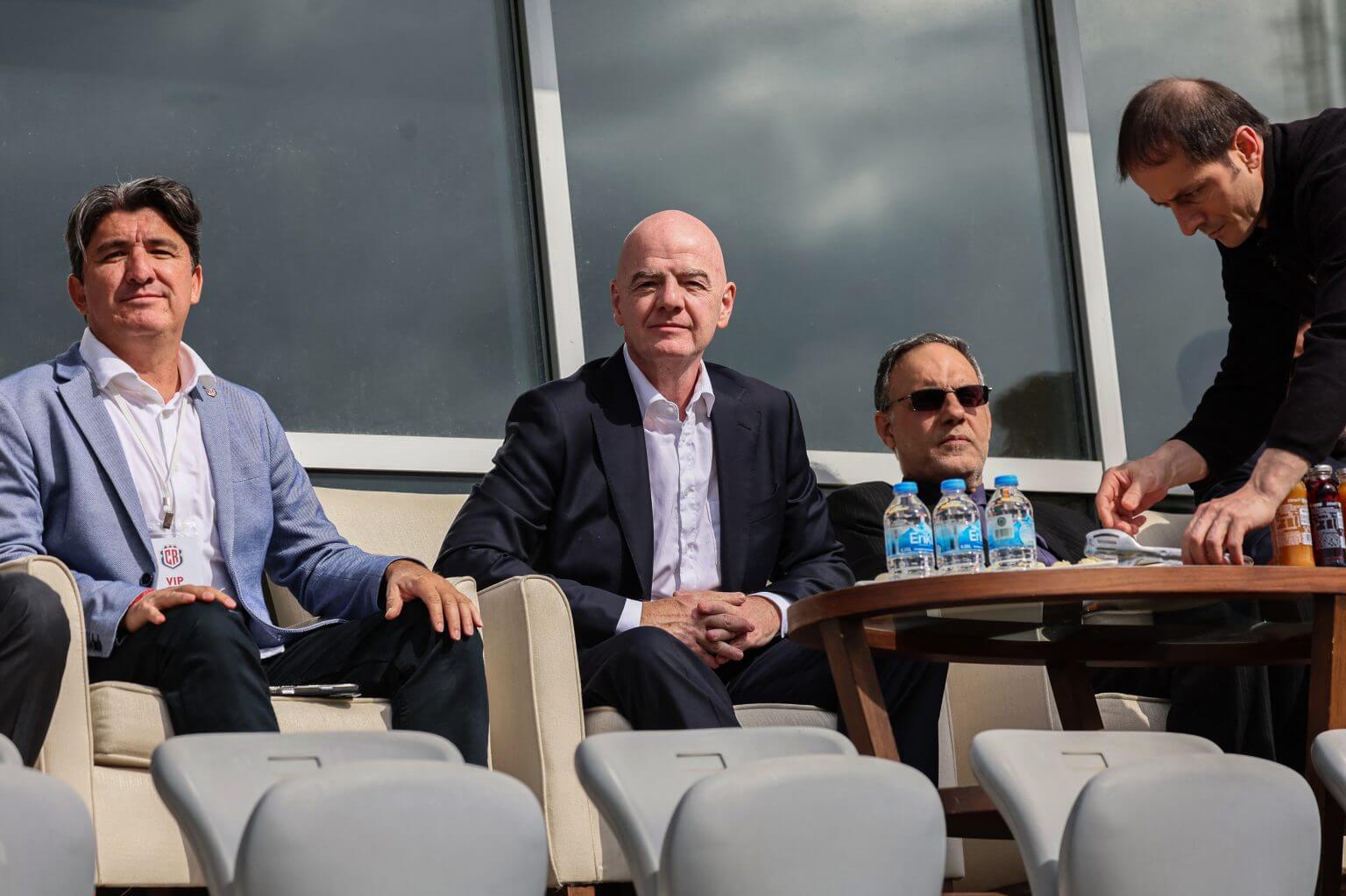
Infantino also spoke to the delegates at the AFC Congress before departing, flanked by the heads of other soccer confederations.
In his speech, the FIFA president also addressed the state of the world.
“Now, even more, we have to show the world that we are here and we are united, and we can come together from all over the world in a peaceful environment, that we can unite the world,” he said to the room of soccer officials.
“Now, even more, we have to send a strong message of unity and togetherness. Now, even more, the FIFA Congress, the AFC Congress, take a very, very important role.
“The world is going through a very, very delicate, difficult, dangerous time, with many conflicts. And many of you are directly affected and involved in these conflicts. Now, even more, we need to find ways to build these famous bridges — or maybe to build football fields instead, or build competitions where people can join and come together.”