

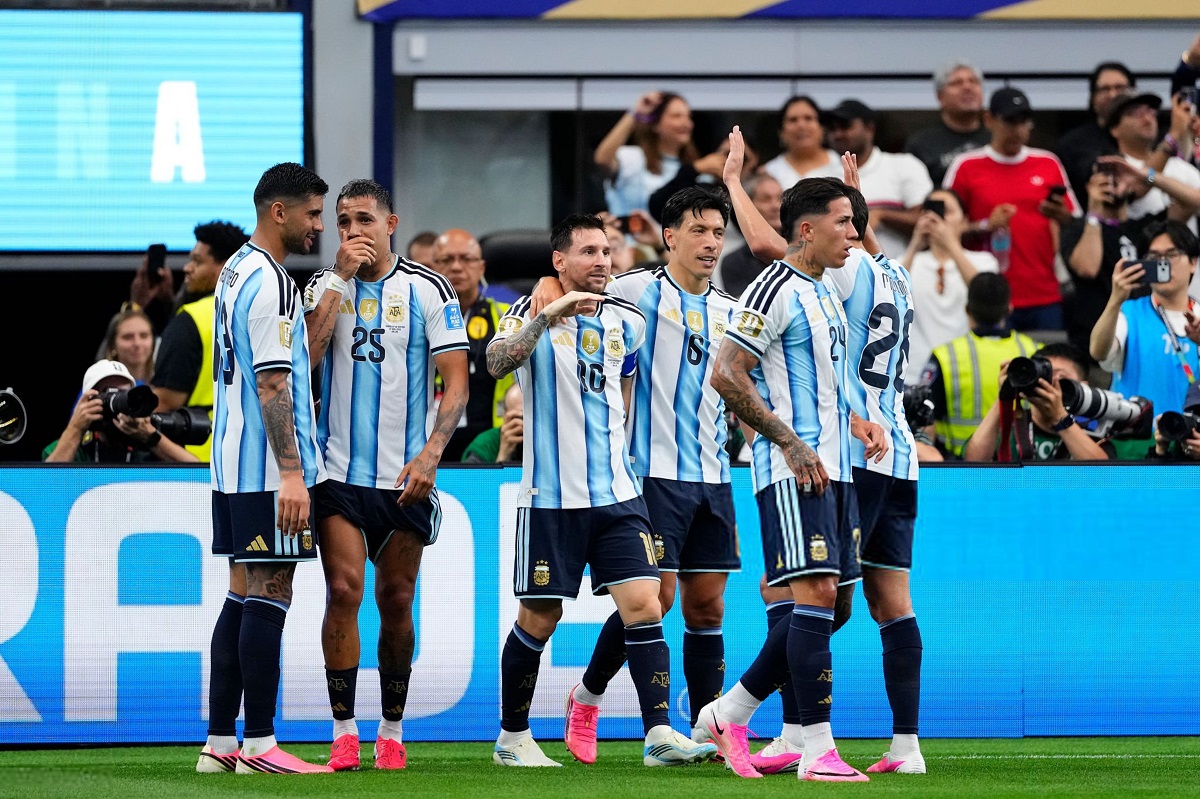
During Group D action between the United States and Turkey on Thursday, the FIFA World Cup 2026 became the highest-scoring edition in the tournament’s history, breaking the previous record for total goals in a single World Cup.
An early goal from Aston Trusty marked the 173rd goal of the tournament, surpassing the previous record of 172 goals set at the 2022 World Cup in Qatar. Following that milestone, four more goals were scored in the same match. Turkey ultimately secured a dramatic 3–2 victory in the closing moments, bringing the total number of goals in the tournament to 177.
The record was broken in just the 59th match of the competition. By comparison, the 2022 World Cup in Qatar ended with 172 total goals across all 64 matches.
The 2026 edition features a significantly expanded format, with 104 matches—40 more than the previous tournament—following FIFA’s decision to increase the number of participating teams from 32 to 48. This structural change has directly contributed to more attacking play and a higher goal tally.
FIFA President Gianni Infantino commented on the milestone via Instagram, stating that surpassing the 172-goal record from Qatar reflects the excitement and attacking intensity that has already made the 2026 World Cup an unforgettable competition.
With several matches still to be played, the newly set scoring record is expected to be broken again as the tournament progresses.
Record-Breaking Attendance Figures
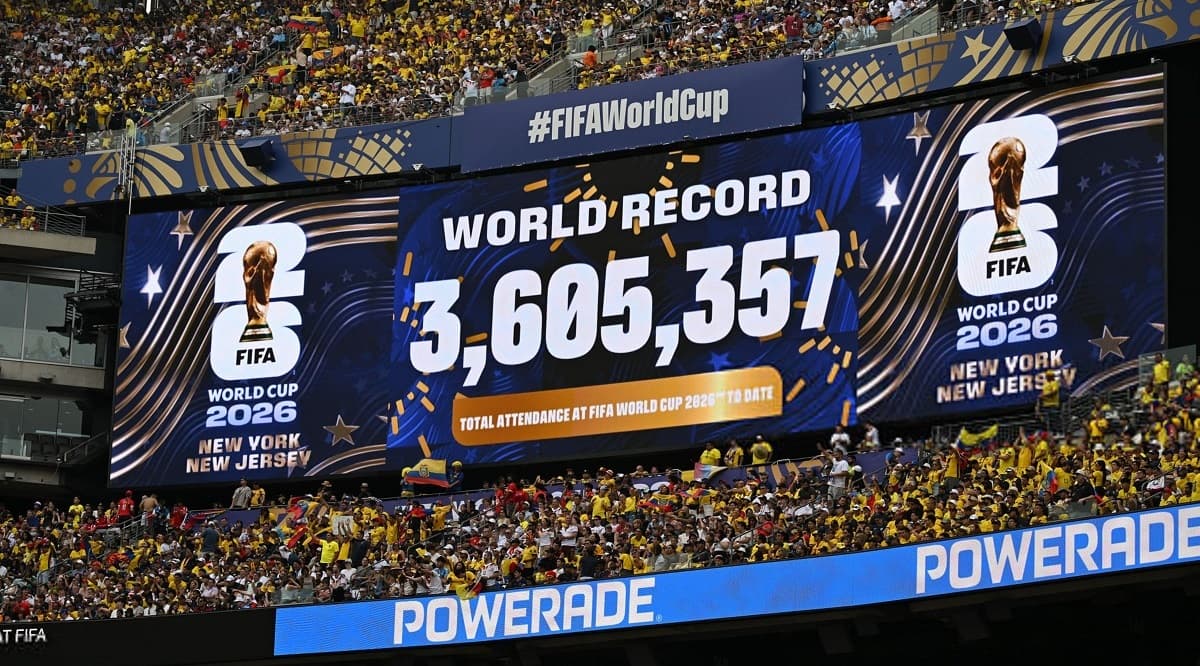
The FIFA World Cup 2026 has also already set a historic attendance record, surpassing 3.6 million spectators.
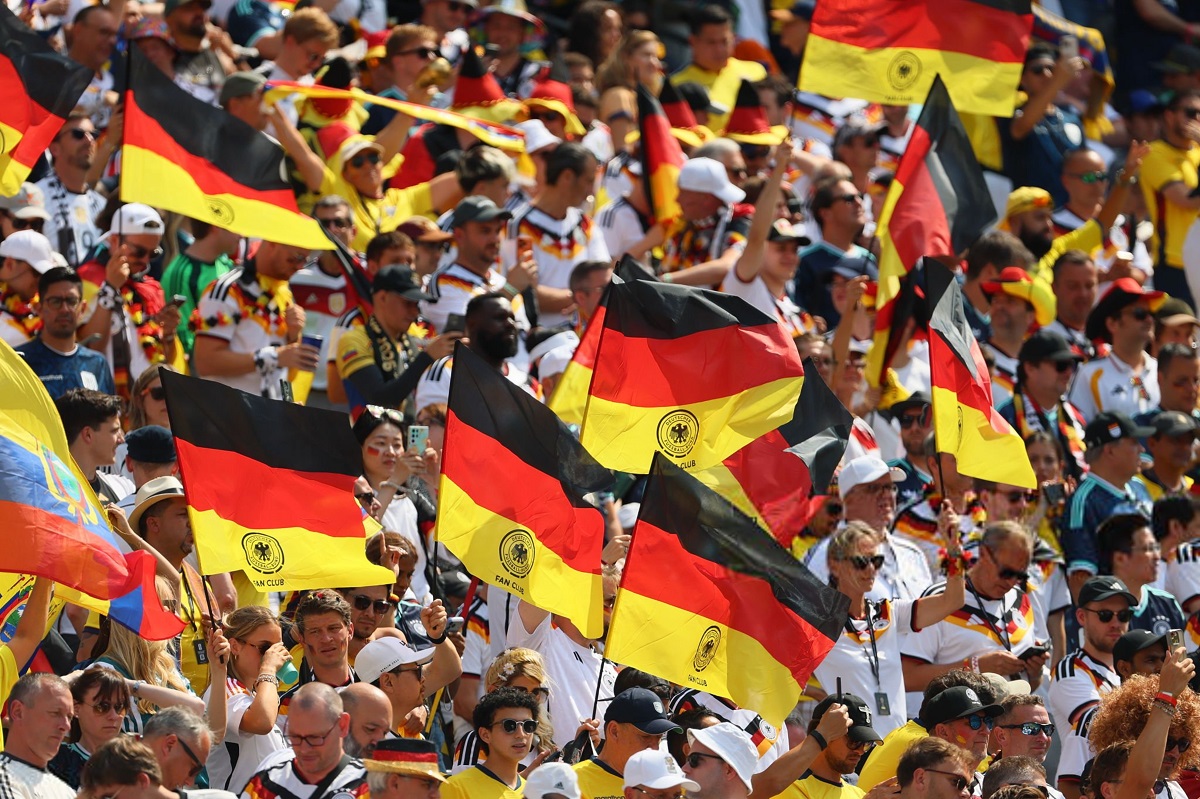
A key match between Ecuador and Germany on Thursday, held at MetLife Stadium in East Rutherford, New Jersey, drew 80,663 fans. This brought the total attendance for the tournament to 3,605,357, officially setting a new all-time record according to FIFA.
The previous attendance record was 3,587,538, set during the 1994 World Cup in the United States. However, with the 2026 tournament still before the round of 16, the figure is expected to rise significantly in the coming matches.
The tournament is also currently recording a stadium occupancy rate of 99.7%, the highest in World Cup history.
Thursday’s matches also broke the single-day attendance record, with a combined 384,206 spectators across stadiums in Philadelphia, Kansas City (Missouri), Arlington (Texas), Santa Clara (California), and Inglewood (California).
It is also important to note the structural differences between editions. The 2026 World Cup has already featured 56 matches so far due to its expanded format with 48 teams. By comparison, the 1994 World Cup in the United States featured 24 teams and 52 total matches, while since 1998 the tournament has included 32 teams and 64 matches.
Additionally, stadium capacity plays a major role in these records. While Qatar’s Lusail Stadium could host up to 88,000 spectators and welcomed 88,966 fans for the 2022 final, most of the other eight stadiums in that tournament had capacities of around 40,000.
In contrast, among the 16 host stadiums across the United States, Canada, and Mexico, only two have capacities near 40,000 (BMO Field in Toronto and Estadio Akron in Guadalajara). Meanwhile, in the United States, only MetLife Stadium has a capacity of around 80,000, significantly boosting overall attendance figures.