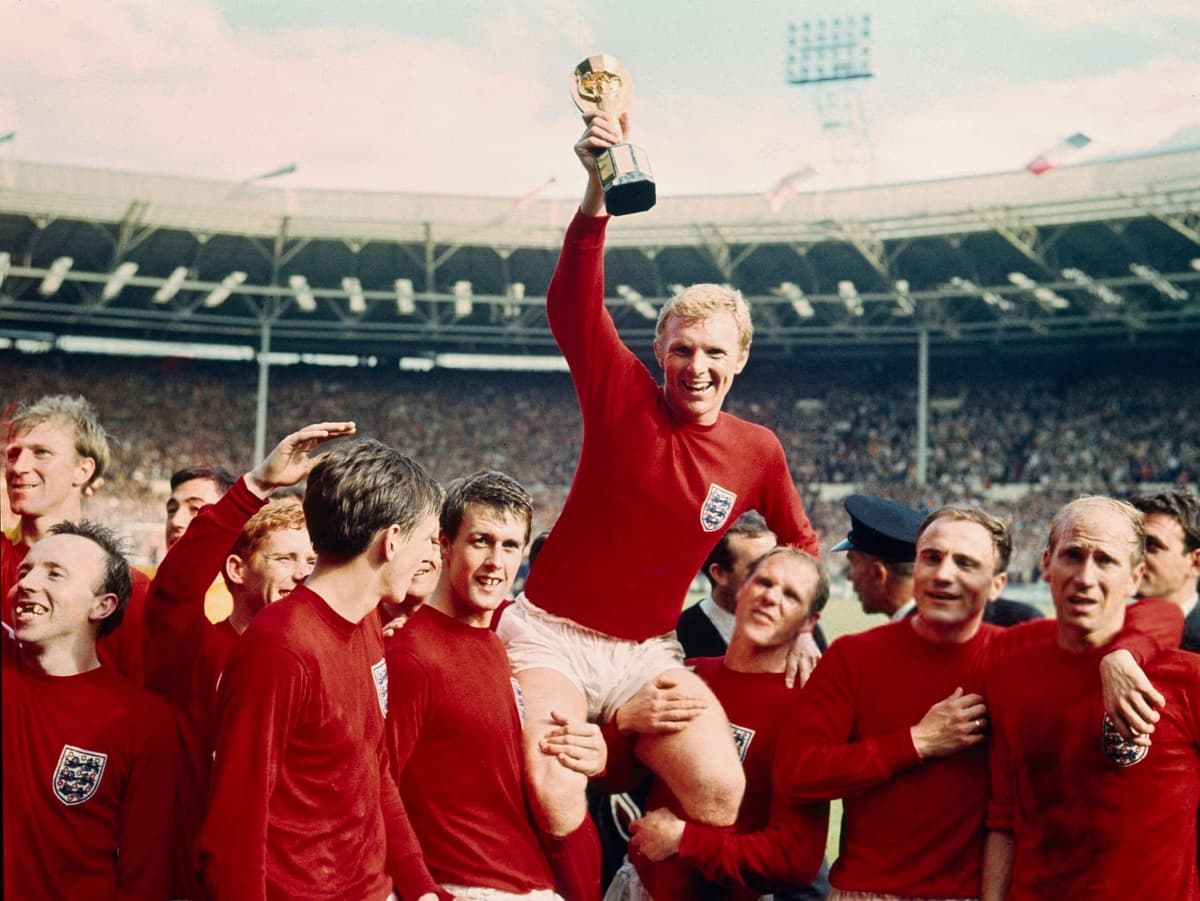
In 1966, a legendary final unfolded at Wembley Stadium, where England triumphed after extra time in a match defined by Geoff Hurst’s historic hat-trick and a goal that is still debated today.
Historical Background
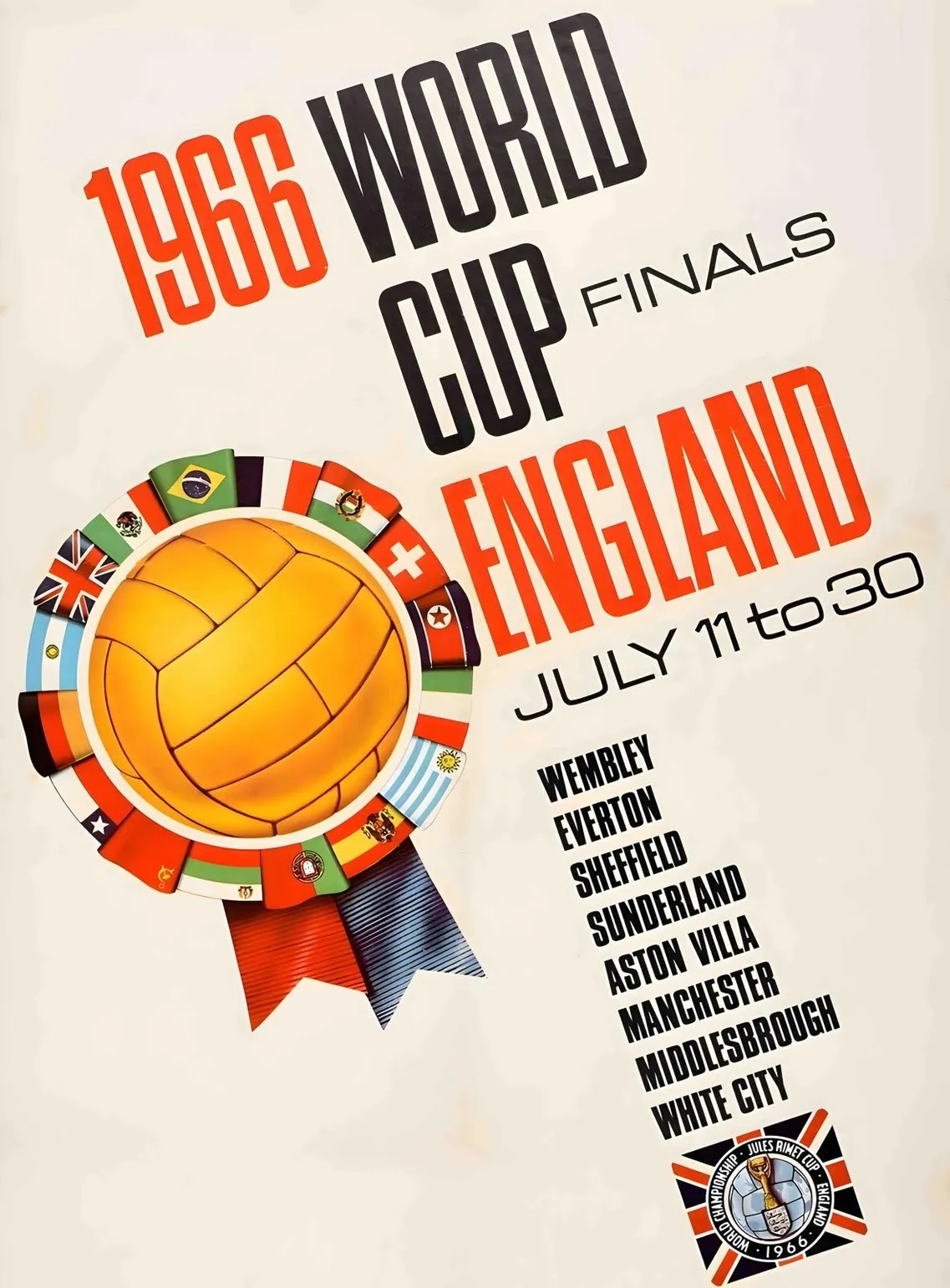
The 1966 FIFA World Cup was hosted by England, marking a significant moment as football returned to its birthplace for the biggest tournament in the world.
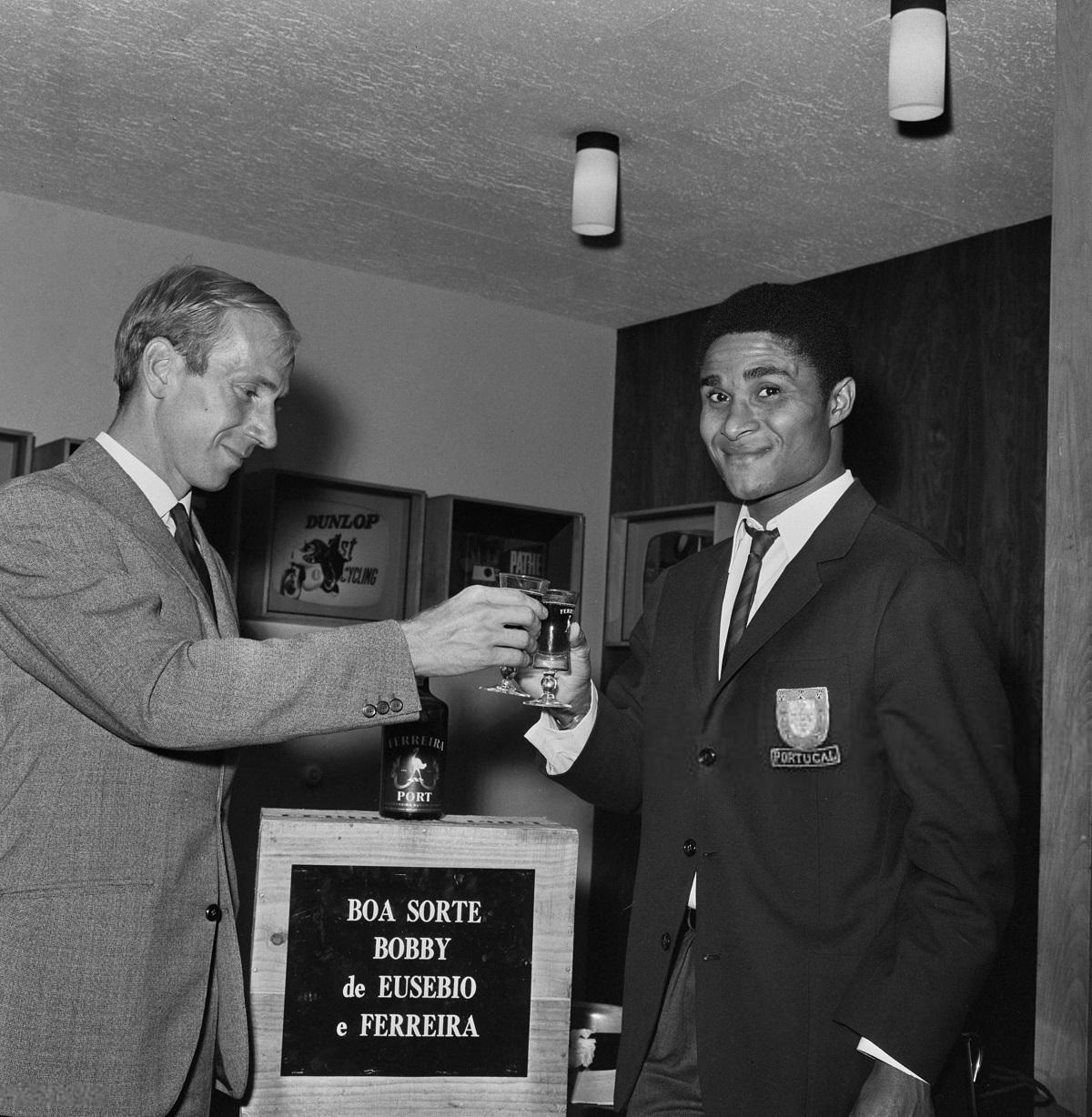
The competition featured strong contenders, including defending champions Brazil, a rising Portugal side led by Eusébio, and a disciplined West Germany team. However, England entered the tournament with a well-organized squad under manager Alf Ramsey, who famously claimed his team would win the trophy.
The Road to Glory: England’s Dramatic Final at Wembley
England progressed steadily through the tournament, building momentum with a strong defense and efficient attacking play.
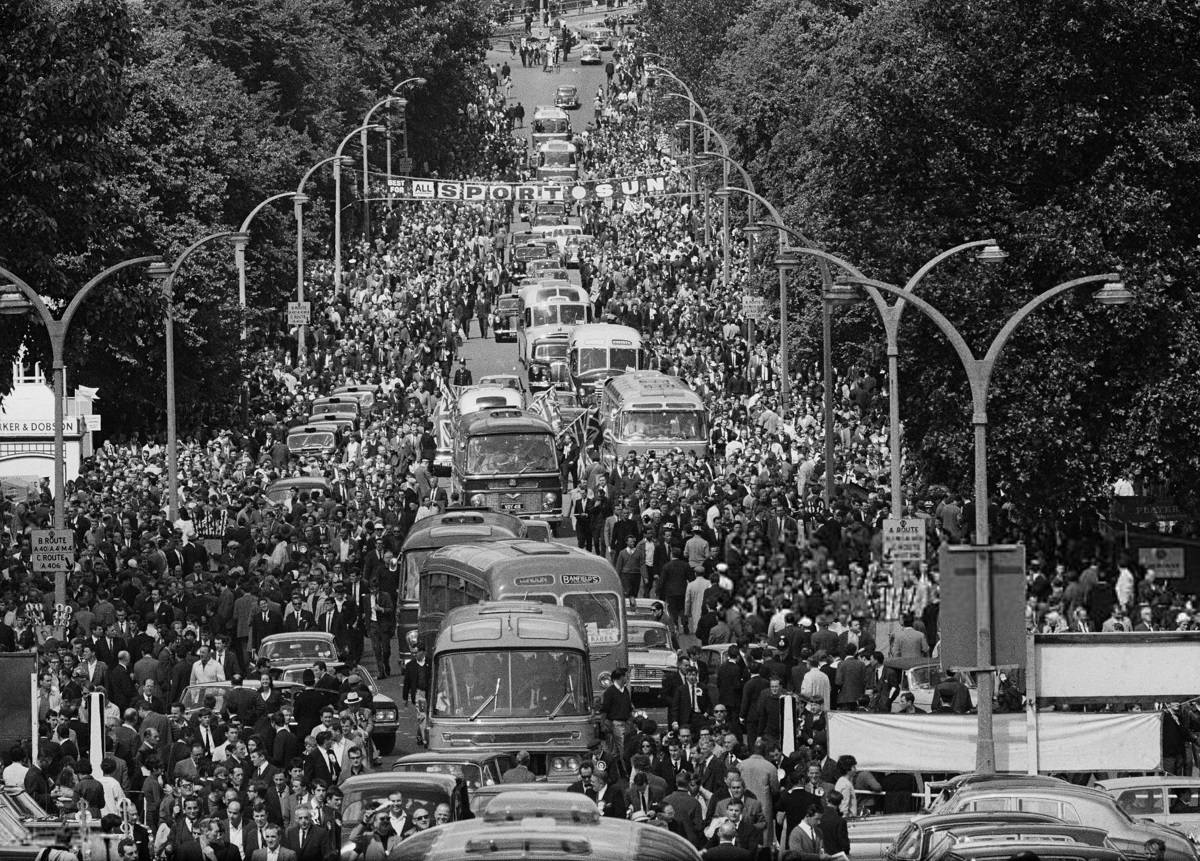
The final at Wembley Stadium against West Germany became one of the most iconic matches in football history. After a tense 2–2 draw in regular time, the game went into extra time.
Then came the defining moment.
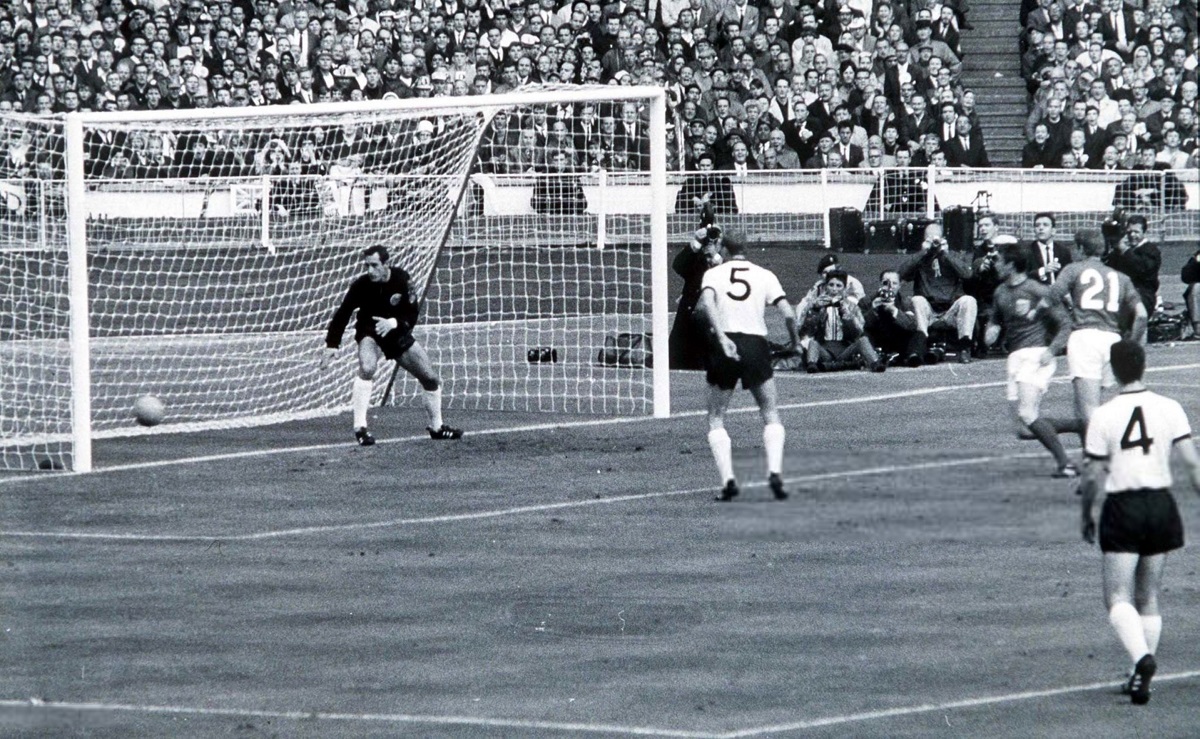
Geoff Hurst struck a powerful shot that hit the underside of the crossbar and bounced near the goal line. The referee awarded the goal, despite ongoing debate about whether the ball fully crossed the line. The decision remains one of the most controversial in World Cup history.
With West Germany pushing forward, Hurst sealed the match with a fourth goal, completing a historic hat-trick — still the only one ever scored in a World Cup final.
England won 4–2, lifting the trophy for the first time.
Interesting Facts from the 1966 World Cup
It remains the only time England has won the World Cup
Geoff Hurst is the only player to score a hat-trick in a World Cup final
Eusébio finished as the tournament’s top scorer and led Portugal to third place
The tournament introduced the official World Cup mascot for the first time
Top Scorer and Best Player
Eusébio (Portugal) – Top Scorer (9 goals)
Bobby Charlton (England) – Best Player of the Tournament