Cristiano Ronaldo has broken his silence over the controversy surrounding the latest Portugal national team camp, offering his detailed account of what happened behind the scenes.
In the statement below, Ronaldo explains his conversations with the Portuguese Football Federation, the national team manager and members of his staff, including what he says was an agreement over his involvement in the matches against Norway and Denmark. He also addresses his decision to leave the camp, apologises to the Portuguese supporters and his teammates, and makes it clear that he still wants to compete for Portugal.
Here is Ronaldo's full statement:
Cristiano Ronaldo has spoken out about the recent situation with Portugal and the national team, explaining in detail what happened during the latest international camp.
"As I promised, I decided to explain, in the first person and directly, the circumstances surrounding the latest national team camp.
After the 2026 World Cup, I prepared a letter to the Portuguese people, which I still have, with the words I want to address to them when I definitively leave our national team.
At the end of the competition, on the flight back from the United States, the President of the Federation asked and insisted that I reconsider my decision to leave because the FPF wanted me to continue.
Shortly afterwards, he asked me for my opinion on the current national team manager and said he was considering him, along with other names he did not reveal to me.
I told the Federation President that, in my opinion, he would be the right choice.
Therefore, on the day the current national team manager was presented, I was genuinely happy with the choice. It was the right option, as the results have been proving.
A few days later, I received an initial contact from the new national team manager, who said he would like to meet me in person. I agreed, and we scheduled it for the end of my holiday.
We met at Cidade do Futebol, where my club was holding its pre-season training camp.
That day, the national team manager told me that he was counting on me and that my presence was fundamental to his project. He presented me with a plan for my involvement. He said I would play the first game and the last game and that, for physical management reasons, he would always make three or four changes per game.
At that point, he suggested that I might not travel with the national team to Norway and Denmark. He proposed that I play the first game and stay in Portugal, before joining the team again ahead of the game at the Dragao.
I immediately rejected this proposal. It seemed obvious to me that I could not accept it. Not playing the away games would not mean I should stop captaining our team. That privilege of staying in Portugal would not set a good example.
The national team manager eventually agreed with my assessment.
This conversation was witnessed by Simao Coutinho, Al Nassr's sporting director, a person to whom the current national team manager reported throughout last season and one of those responsible for his appointment by the club in 2025.
On the eve of the camp starting, the national team manager came to my home in Lisbon to have another conversation with me, at his request. The conversation was calm, and all the principles agreed upon in August were maintained.
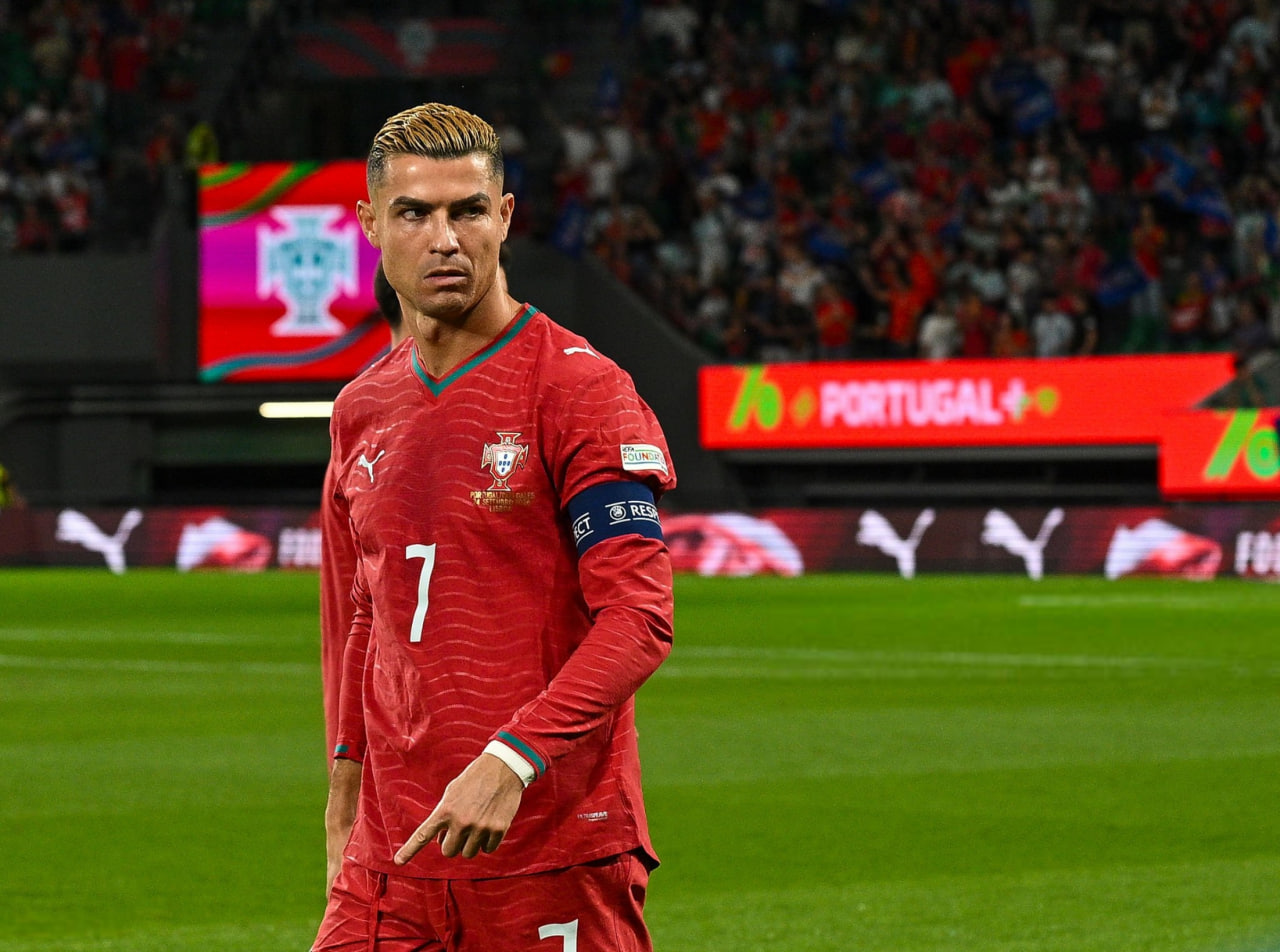
I played the game at Alvalade and, despite being substituted, I did not make an issue of it. I personally handed the captain's armband to Bruno Fernandes, far from imagining that I might be taking my final steps as a player and captain of the national team. The important thing for me that day was our victory. Winning is always good, and doing it for Portugal and my country is even better.
At lunchtime on the day of the game in Norway, one of the manager's assistants came to the table where the group was having lunch and informed me that the manager wanted to speak to me. To my absolute surprise, the manager asked me if I was ready to play 30 minutes. I was completely focused on my physical recovery, integrated with my teammates as always, and thinking that I would not play that day. I had no problem with that.
This request was outside my physical recovery and training plan, because I was only supposed to play on the 4th at the Dragao, but obviously I said yes. He replied that I should be ready because I would play 30 minutes.
The rest is known to everyone. I warmed up from half-time, watched the minutes go by and was not called on.
The manager had broken his word to me.
At the end of the game, I just wanted everything to be over and to be alone. I did not go over to greet the supporters. That failure is entirely my responsibility and should not have happened. I apologise to the Portuguese people who supported us so intensely there, I apologise to the supporters and I apologise to those who, without being Portuguese, may have travelled there to see me and whom I may have disappointed.
48 hours later, the manager, Simao Coutinho and I had a conversation, since he had been present during our conversations in August.
It was a profound and very frank conversation, without any kind of filter.
We agreed that there was only one way to put an end to this 'case': the manager should repeat what he had just told me privately, in the presence of Simao Coutinho, but in the press room.
What was agreed was simple: the manager would begin the press conference with this issue, seeking to close the matter by telling the truth. He would say that I had never asked to play any minutes, that it was the manager and nobody else who had proposed the plan for this camp, and that it was a mistake to have me warm up without bringing me on, and that if it happened again, he would not do it.
We ended that meeting with the manager asking me for a hug, promising me that he would say at the press conference what he had just told me, and that the matter would be put behind us. I would not play in Denmark and would play the game at the Dragao. All of this was in the presence of Simao Coutinho, throughout.
At the manager's request, a meeting was then held between him, Simao Coutinho and Tiago Craveiro by videoconference, in which what we had discussed was summarised.
A short document was produced, which I personally approved and which, with my knowledge, was delivered to the manager, as he had requested.
The press conference was as everyone knows: his attitude had nothing to do with our meeting. I heard expressions and an aggressiveness that I don't believe I deserved, an attitude of 'I want, I can and I command' that he had never shown me, not even remotely, in private the day before.
The notes I approved were as follows:
'I think it is important, especially because it is the truth, to clarify a few things before talking about Denmark:
I personally proposed a plan to Cristiano, with nobody else involved, for his involvement with the national team this season. It was a long and very good conversation.
I know how much he lives for and loves the national team and the weight it carries in the world, even more so the weight and positive influence he has had on the national team for 24 consecutive years.
The plan I proposed to Cristiano was accepted.
He never questioned my decisions. He was exemplary, loyal and professional.
The plan I drew up for him did not include the Norway game. However, I felt that he had recovered physically from the first game and I warned him that I might have to use him. Cristiano agreed.
I was wrong to have someone of the stature of Pele or Maradona warm up and then not put him into the game. If I had to do it again, I would not.
To put an end to the matter: I want Cristiano in the national team. In fact, I don't just want him, I want him very much. Fortunately, he also believes in me. He believed in me at Al Nassr and he believes in me here too.
Regarding his failure to greet the supporters. We have already spoken about that. Someone who has played more than 230 games for the national team does not need lessons from me about loving Portugal. It was a moment of frustration that erases nothing. He is the player who gives the most autographs, takes the most selfies and shows the most affection towards the supporters. Let's not invent problems where they don't exist. When we are unhappy, we react. That's all.'
None of these notes therefore said that the manager should even apologise to me.
It was the second time he had broken his word to me.
I decided to leave the camp without waiting for another broken promise. For me, the truth is still the most important thing in relationships between people. No matter how much it hurts, tell me the truth.
In fact, in a conversation I had with the FPF President and the manager on the morning of that press conference, they can certainly confirm that I reiterated that if they did not want me there, they should tell me. They only needed to be honest with me. I would have accepted that, and I promised that we would prepare something beautiful, as I dream it should happen, and nobody would be angry.
I remember it as if it were today. They both answered in unison: no. That my place was in the national team.
Never, at any point, have I interfered in any technical or tactical decision made by any coach or national team manager in almost 25 years of my career. I accept, whether better or worse, what I am asked to do. I respect the decision, and when my word is broken, I feel that my place is not there.
I also owe my national team teammates an apology for leaving the camp. Despite the absolute breach of trust in the manager's word, as anyone who witnessed these conversations can testify, I should not have done it. The responsibility is entirely mine.
I apologise to the Portuguese people once again, but a broken promise has, for me, a defining impact. I felt that, from that point on, my presence would only harm the group and I did what I have always said I would do if I did not feel useful: I packed my bags and left.
The consequence of my action should be assessed and punished by the Portuguese Football Federation. I understand that the punishment should have no mitigating factors. I am not just any player, I am the team captain and that constitutes an aggravating factor. I have already apologised, but I know that actions must have consequences. Anyone involved in football at my level knows that, regardless of anyone's status, the rules are the same for everyone.
On this subject, I have heard a lot about farewell games, that I need to have a dignified farewell and that the Federation wants to give me that opportunity.
I learned in life, often being hungry and having nothing to eat, that nobody gives anything to anyone.
I can promise all my fans, and naturally especially all the Portuguese people, that we will have one or more farewell games. There will be time for that.
But when I think about the national team, what I really think about is competing. That is what I thought about on the day I was given the news of my father's death. I was at the national team camp and decided to stay until the match the following day was over. I did it for my country, something I would never have done for any club.
Therefore, if I am physically fit, playing for my club, hopefully scoring goals, and after serving whatever suspension is imposed on me, I will be available, as I have always been until today, to compete and win for our national team.
This is, believe me, the purest truth.
Cristiano Ronaldo